Veiled chameleon
Chamaeleo calyptratus
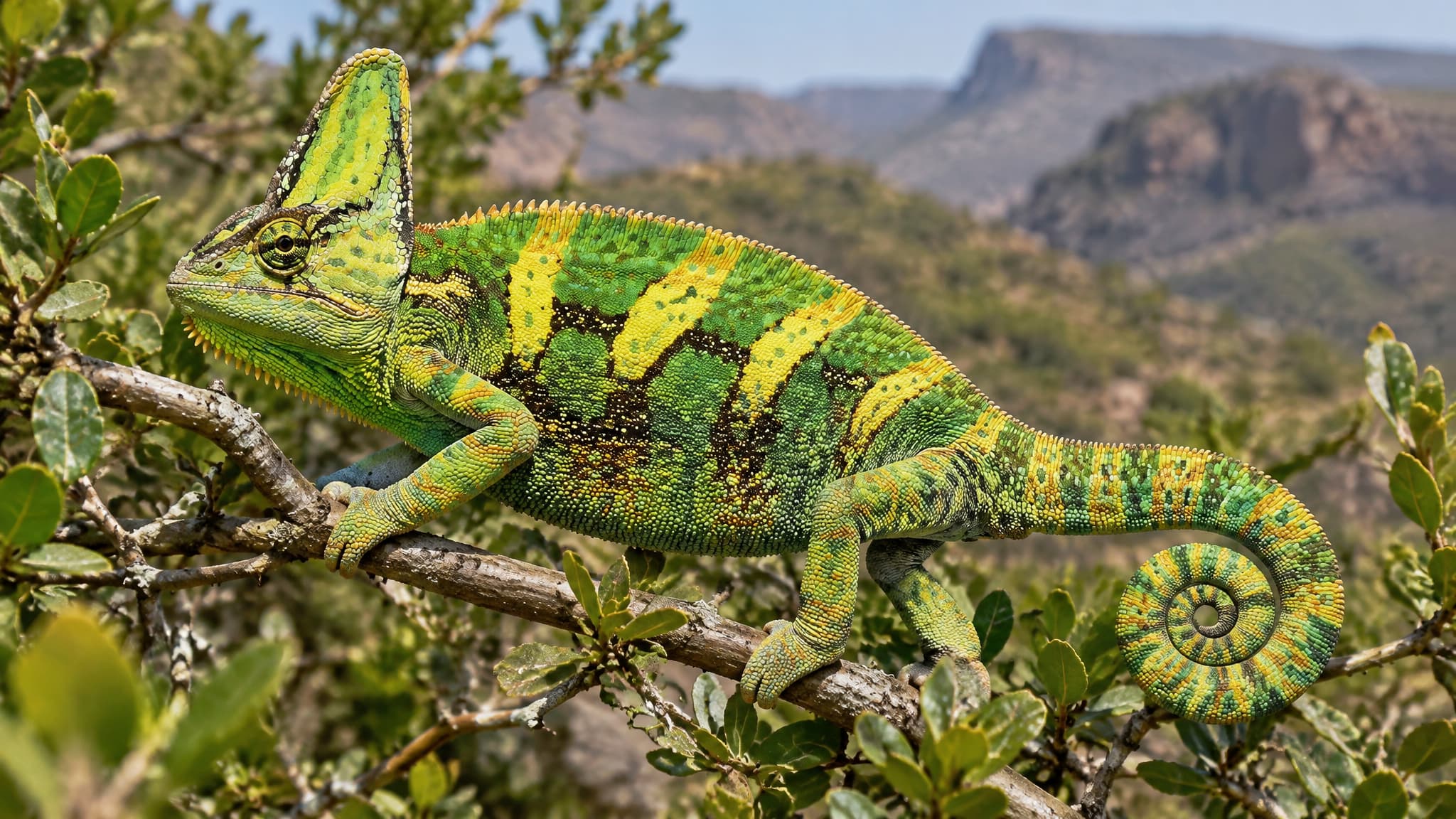 AI-generated
A brightly patterned veiled chameleon is shown in side profile, gripping a leafy branch with its casque, turreted eye, textured skin, and tightly curled tail clearly visible against a mountainous backdrop.
The veiled chameleon is a large chameleon from the south-western Arabian Peninsula, named for the tall helmet-like casque on its head. The casque is only a small bump in hatchlings but grows with age to about 5 cm in the largest adults, and it is thought to help channel dew and rain toward the mouth. Males measure 43 to 61 cm from snout to tail tip and carry small spurs on the hind feet from birth; females stay shorter, at up to about 35 cm, but are heavier-bodied and have a smaller casque.
Hatchlings are pastel green. Adult females are green mottled with white, orange, yellow or tan, while males are brighter, with clear yellow or blue bands. Like other chameleons, it shifts its colours to signal aggression, social status, breeding condition and stress. Two subspecies are recognised: the nominate form and C. c. calcarifer.
The species is native to Yemen and south-western Saudi Arabia, where it lives along escarpment foothills, mountains, plateaus and wadis up to 2,500 m. It is arboreal, climbing high in trees or lower in bushes and shrubs, and does best at about 24 to 35 °C. Escaped and released pets have founded wild populations in Florida and on Maui, Hawaii, where importing or keeping it without a permit has been illegal since 1992 because it eats native insects, birds, small lizards and plants.
It is mainly an insectivore that catches prey with its long, sticky tongue, and green insects are a favourite. It also eats leaves and other plant matter, apparently as a source of water in the dry season. It is shy and solitary: when threatened it curls up, darkens and stays still. Males are strongly territorial and do not tolerate one another.
Veiled chameleons mature fast, at 4 to 5 months. Within a day of a successful mating, the female darkens to blackish green with blue and yellow spots, and she lays 35 to 85 eggs 20 to 30 days later, up to three times a year. The embryos can pause their development for about 60 to 75 days before warmer ground temperatures restart it. Females live about 5 years and males up to 8 years.
The IUCN lists the species as Least Concern. Wild populations face habitat loss and collection for trade, including live and dead animals sold for rituals and as souvenirs.