
Western diamondback rattlesnake
Crotalus atrox
 AI-generated
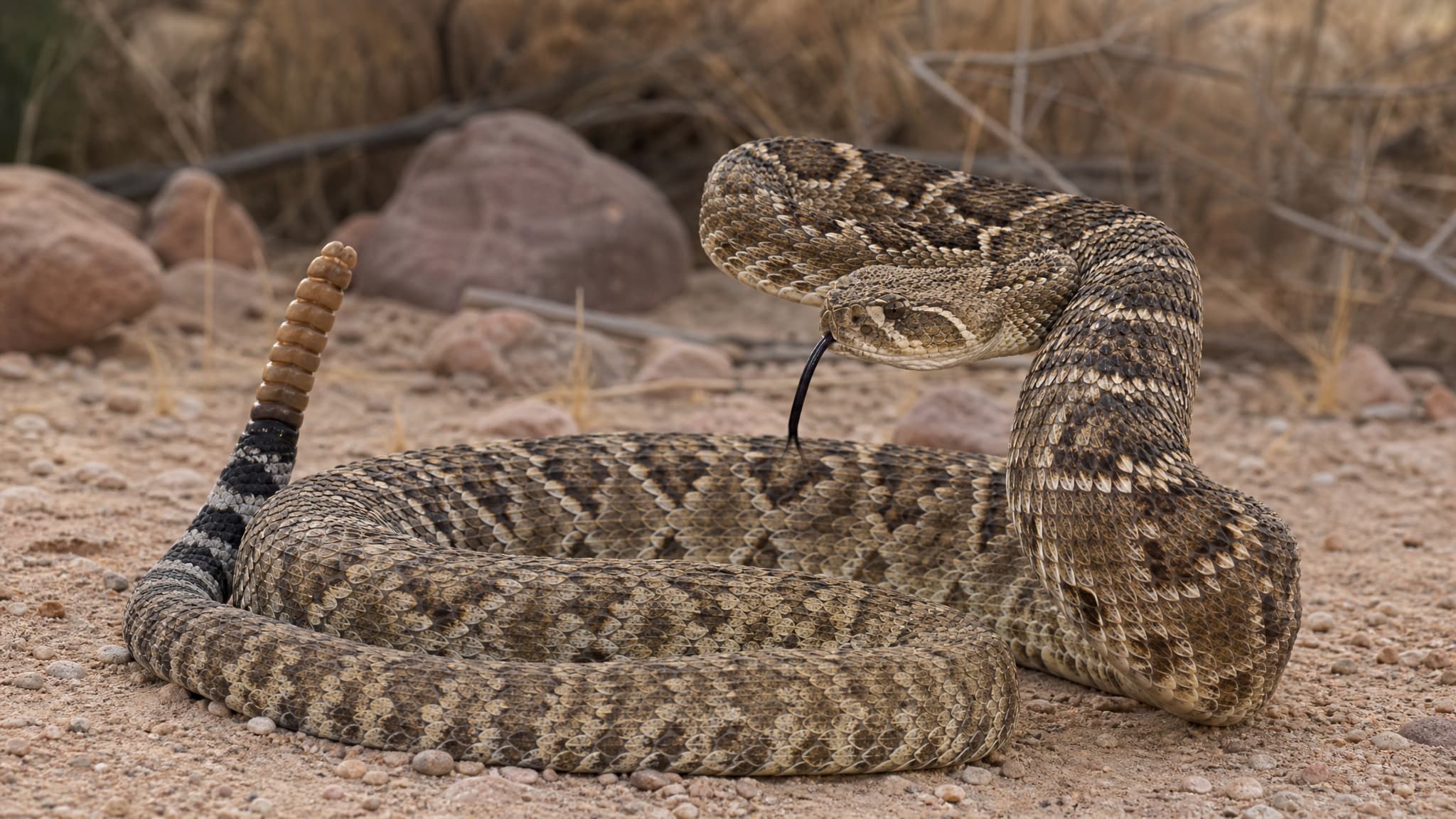
A Western diamondback rattlesnake is coiled on rocky, dry ground with its head raised, tongue extended, and segmented rattle held upright. Its broad triangular head, heavy body, dark diamond pattern, and pale-edged scales are clearly visible.
The western diamondback rattlesnake is a large, heavy-bodied venomous pit viper recognized by the chain of dark, pale-edged diamond marks along its back. Its background may be tan, yellowish gray, bluish gray, or pinkish. A broad, triangular head, heat-sensitive pits between the eyes and nostrils, and a conspicuously banded black-and-white tail ending in a keratin rattle are key features. As with other rattlesnakes, rattle segments are added during shedding but can break off, so they do not reliably reveal age.
This species occurs from the south-central and southwestern United States—especially Texas, Oklahoma, New Mexico, Arizona, southeastern California, and nearby areas—south through much of northern and central Mexico. It uses deserts, scrublands, grasslands, rocky slopes, washes, and other dry landscapes with cover. Rock crevices, brush piles, debris, and burrows made by mammals provide shelter from heat, cold, and predators.
Western diamondbacks are chiefly solitary ambush predators. They use camouflage, chemical cues, and infrared-sensitive facial pits to locate prey, taking mostly rodents and other small mammals; birds, lizards, amphibians, and other small animals may also be eaten. Their venom subdues prey, which is generally released and then tracked before being swallowed whole. By limiting populations of rodents, they play an important ecological role in arid food webs; they are also prey for such animals as raptors and kingsnakes.
They are often most active at night during hot weather, though activity shifts with temperature and season. A rattle is principally a warning signal, and the snake generally relies first on concealment or retreat; however, it can bite in defense if surprised, cornered, or handled. Its venom can cause a medical emergency, so people and pets should keep a safe distance and allow the animal an escape route.
Mating commonly follows seasonal activity in spring, and competing males may engage in ritualized combat. Females give birth to live young in late summer or fall rather than laying exposed eggs. Litters often contain roughly 10–20 offspring, and females may remain with newborns through their first shed before they disperse. Sexual maturity is reached at about three years; documented captive lifespans average more than two decades. The species is assessed as Least Concern, although local animals can still be harmed by deliberate killing, roads, and loss of sheltering habitat.



