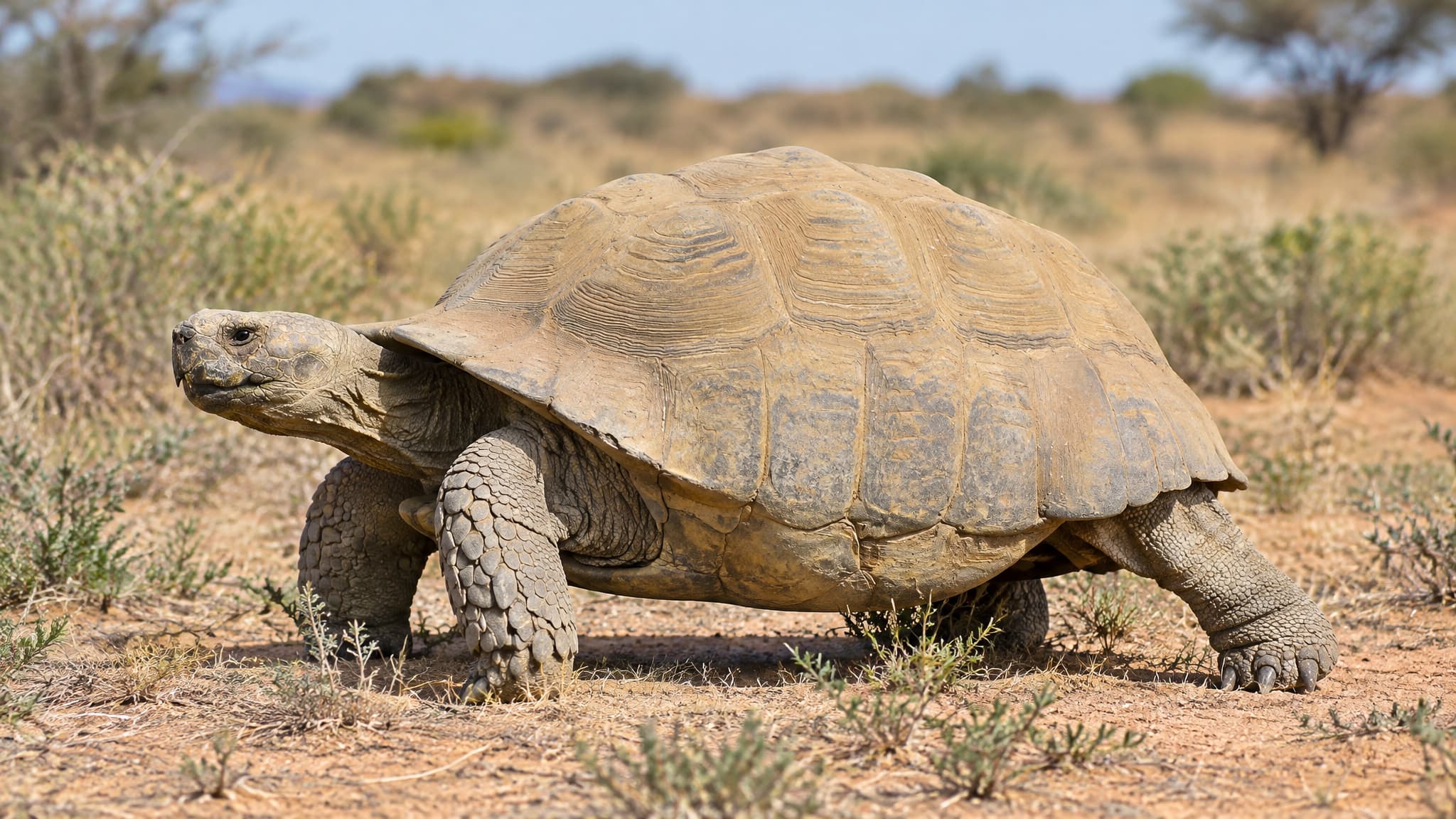
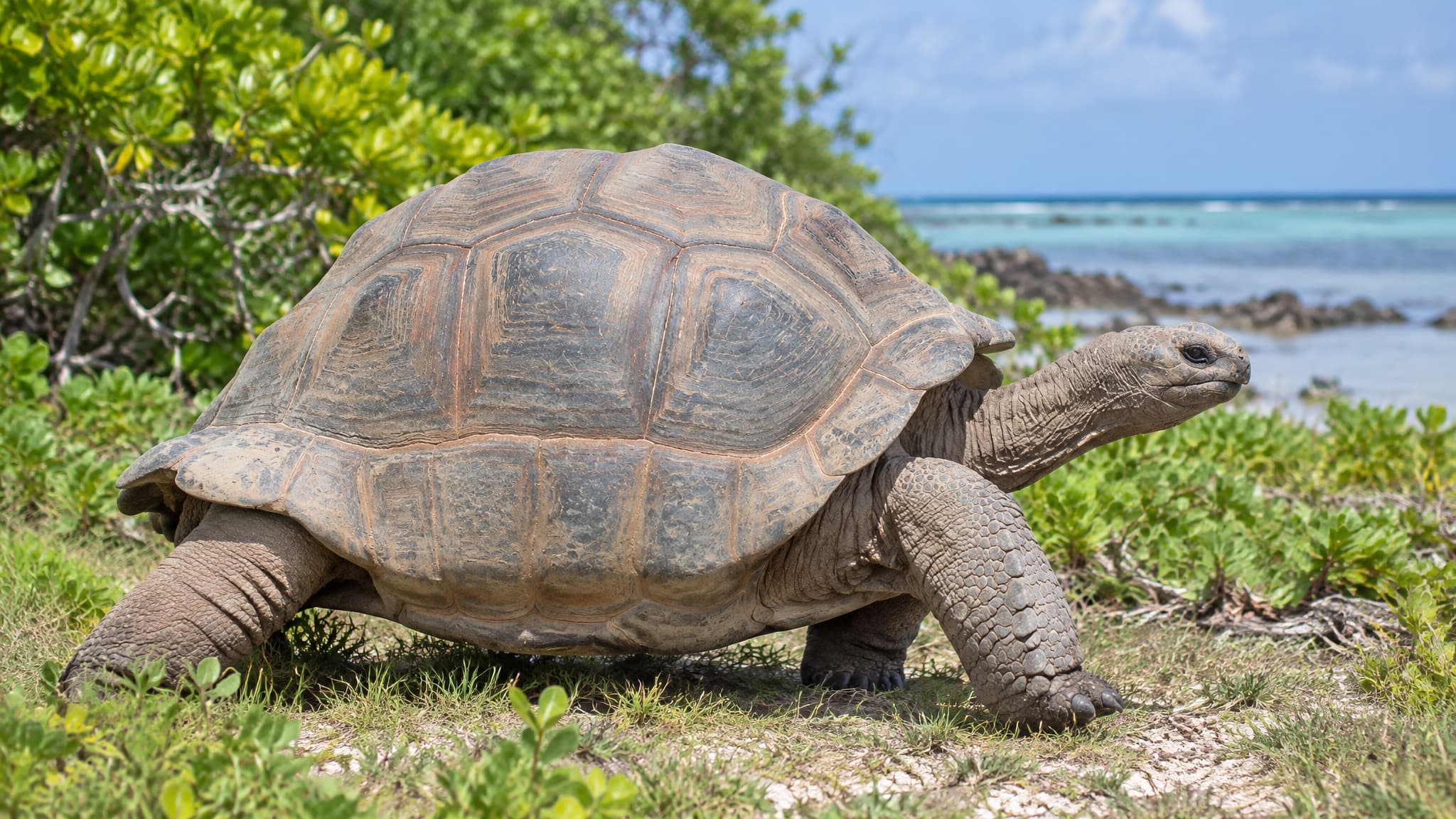
Yellow-footed tortoise
Chelonoidis denticulatus
 AI-generated
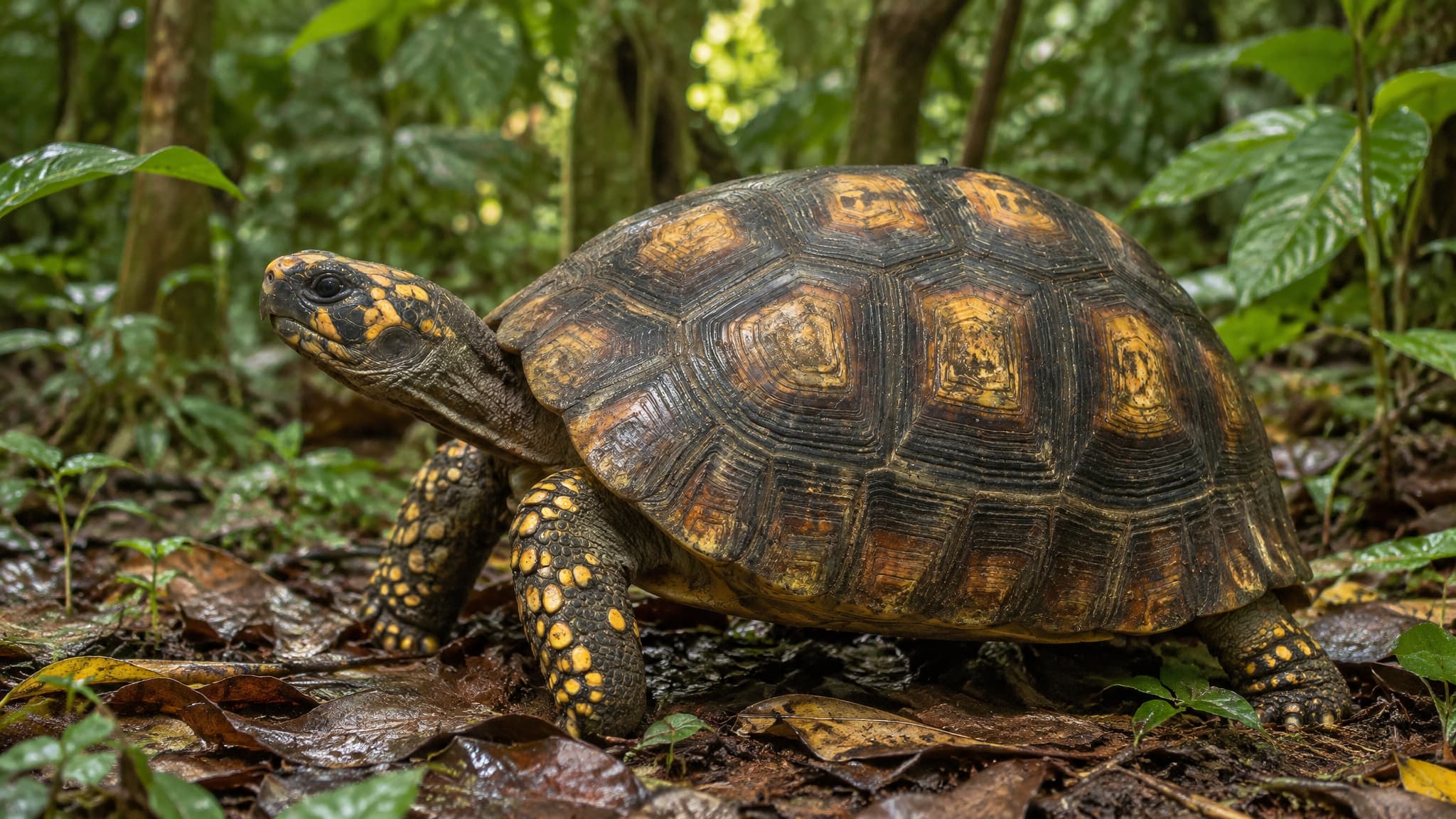
A yellow-footed tortoise stands on wet leaf litter in a lush tropical forest, with its head extended and yellow-marked legs visible beneath a dark, patterned shell.
The yellow-footed tortoise (Chelonoidis denticulatus) is the largest tortoise living on the South American mainland. Adults usually measure about 40 cm in shell length, and the biggest specimen on record, a female, reached 94 cm; males can grow to about 82 cm. The carapace is a long oval, yellowish brown with darker brown to black edges on each scute, and it lacks a nuchal scute. The head and legs are dark, set off by yellow to orange scales around the eyes and on the limbs, which give the species its name. Males have a concave plastron, a slight "waist" in the shell and a longer, thicker tail.
The species lives east of the Andes, across the Amazon Basin and neighbouring lowlands of Venezuela, Guyana, Suriname, French Guiana, Brazil, Colombia, Ecuador, Peru and Bolivia, with records from Trinidad and an introduced population on Guadeloupe. It is mainly a tortoise of dense tropical rainforest and also uses deciduous forest and seasonally flooded várzea forest, while largely avoiding open country, which separates it from its close relative, the red-footed tortoise (C. carbonarius).
It feeds mostly on plants: fallen fruit, leaves, vines, roots, flowers and fungi. It also takes carrion, snails, worms and other slow invertebrates when it finds them. By swallowing fruit whole and travelling across the forest floor, it disperses the seeds of many forest plants.
Courting males bob their heads rhythmically, and mating can take place throughout the year, although nesting is linked to the rainy season. Clutches range from 3 to 20 eggs but usually hold 1 to 8, and a female may lay up to four clutches in a season. Incubation averages about 4.5 months, and hatchlings are independent from birth, with no parental care. Sources disagree on age at maturity, giving about 8 to 10 years or 12 to 15 years for females. Lifespan is about 50 to 60 years.
The IUCN Red List classifies the yellow-footed tortoise as Vulnerable, and it is listed in CITES Appendix II. It is one of the most hunted land vertebrates in Amazonia, taken for meat, eggs and the pet trade, and in 2026 Brazil's national list moved it to Endangered.