Red-and-green macaw
Ara chloropterus
 AI-generated
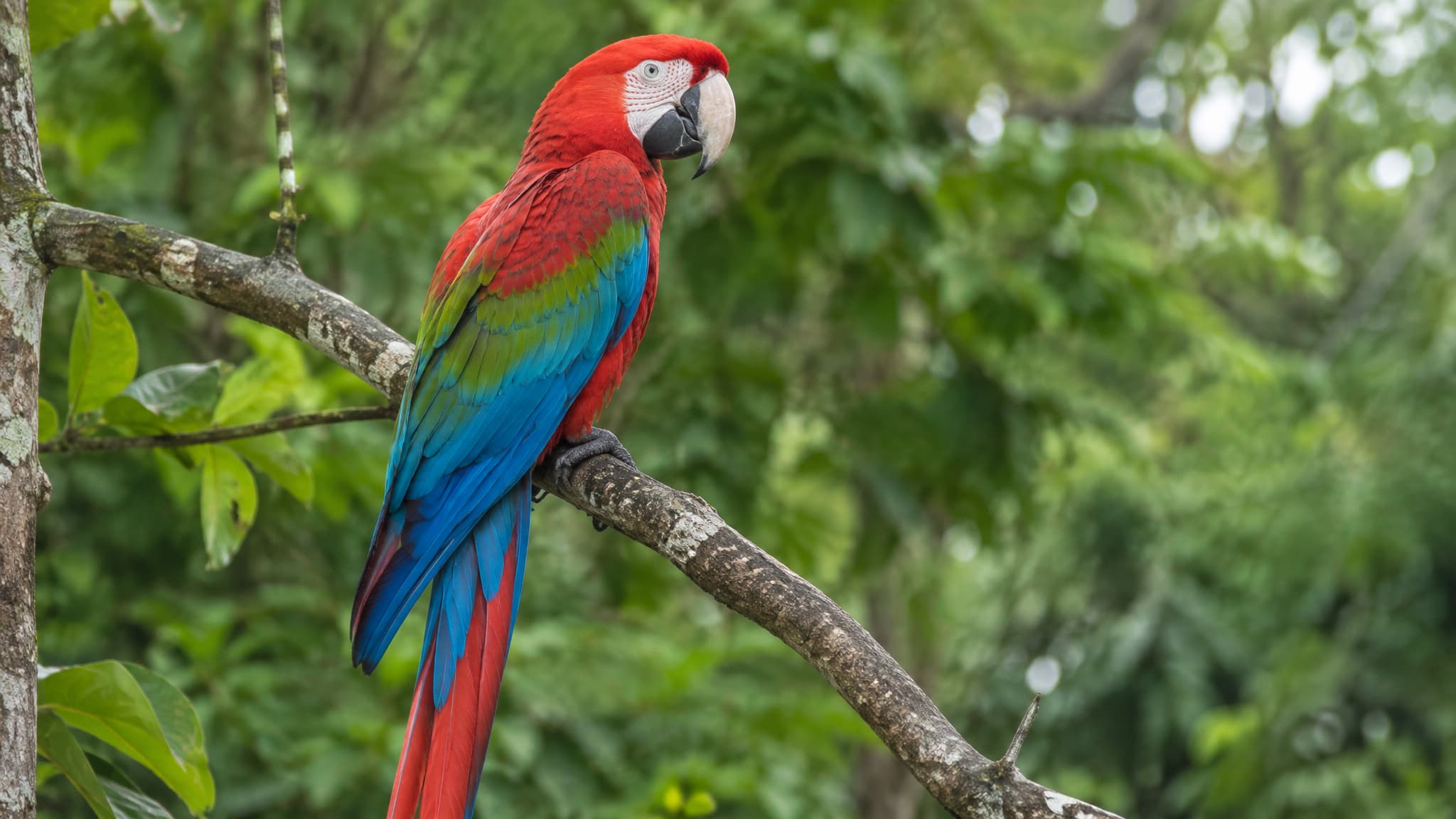
A red-and-green macaw perches on a diagonal tree branch in lush forest, showing red plumage, blue-and-green wings, a long tail, a pale facial patch, and a large hooked bill.
The red-and-green macaw is a very large Neotropical parrot, also widely known as the green-winged macaw. It is chiefly scarlet-red, with green central wing coverts that grade into blue outer wing feathers and a long tail tipped in blue. Its bare white facial skin is crossed by fine red feather lines; the upper bill is horn-colored with a dark base, while the lower bill is black. Adults measure about 90–95 cm long and weigh roughly 1.05–1.7 kg. Males and females look much alike, while juveniles usually have shorter tails and brownish irises.
This macaw occurs from Panama and northern South America south through the Amazonian region to Bolivia, Brazil, and Paraguay. It is most strongly associated with humid lowland forest, especially landscapes containing large emergent trees with cavities suitable for nesting. It also uses deciduous woodland and, less often, savanna-like plains. Pairs and small family groups travel noisily through the canopy, and larger mixed gatherings may form at riverbanks or clay licks.
Its powerful bill opens hard seeds and nuts, but the diet also includes fruit pulp, flowers, leaves, and bark. Visits to mineral-rich clay or sand banks may help the birds cope with compounds in some foods. By carrying, dropping, and sometimes passing seeds through the landscape, red-and-green macaws contribute to plant regeneration and forest seed dispersal. Their loud calls keep companions in contact and can alert a flock to danger.
Pairs are generally monogamous and may reuse nest holes in tall trees or cavities in cliffs. The female incubates a clutch, while the male brings food; afterward both parents feed and protect the chicks. Young typically fledge at around three months and can remain with their family for many additional months. Captive individuals have averaged about 50 years and may exceed 60 years, whereas survival in the wild is much more variable. The species is listed as Least Concern globally and is included in CITES Appendix II, but forest conversion, hunting, and removal of nestlings for the pet trade can cause local declines.