Atlantic Puffin
Fratercula arctica
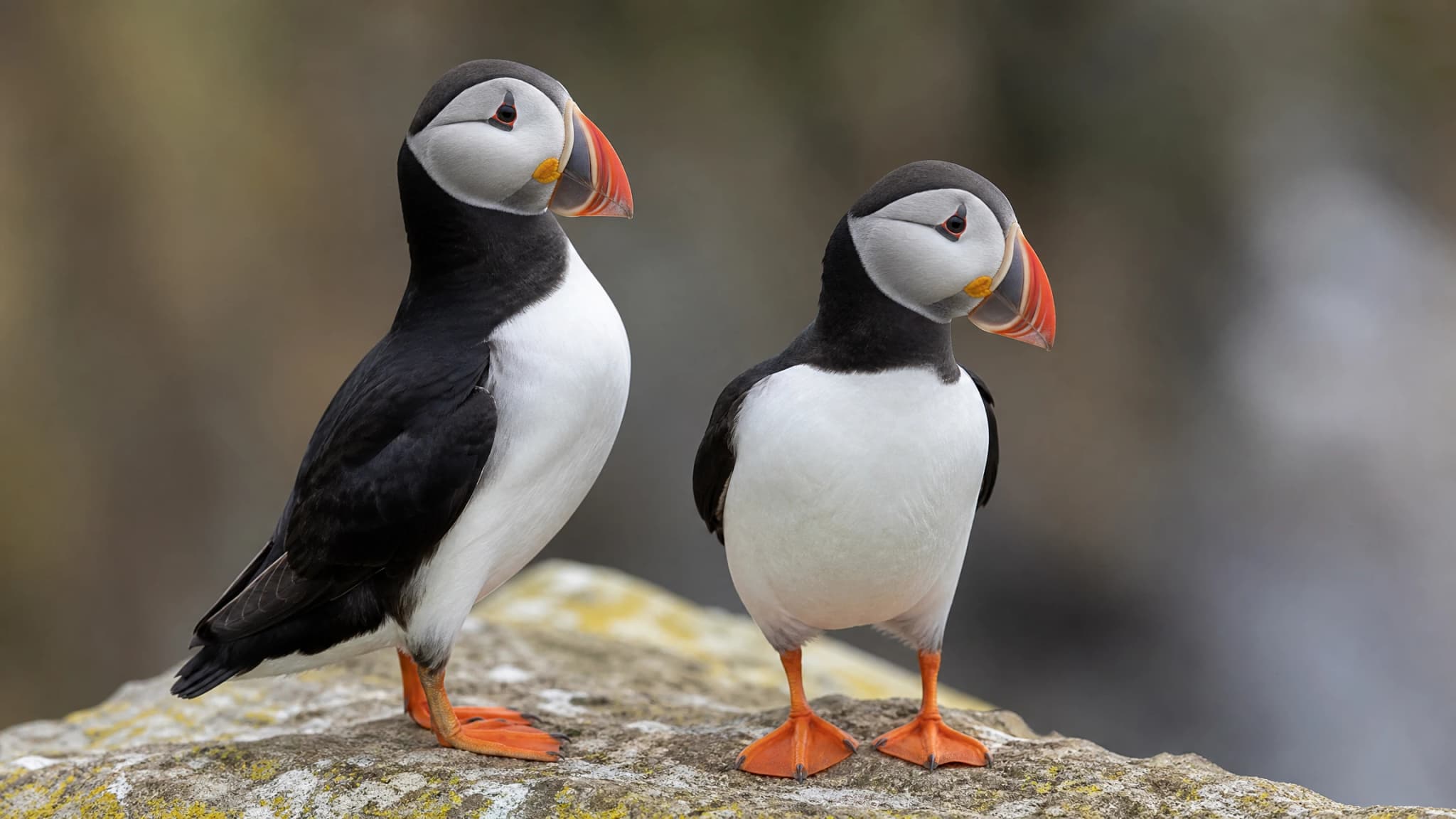
Two Atlantic Puffins standing together on a rocky coastal cliff, displaying their distinctive colorful bills and bright orange feet. 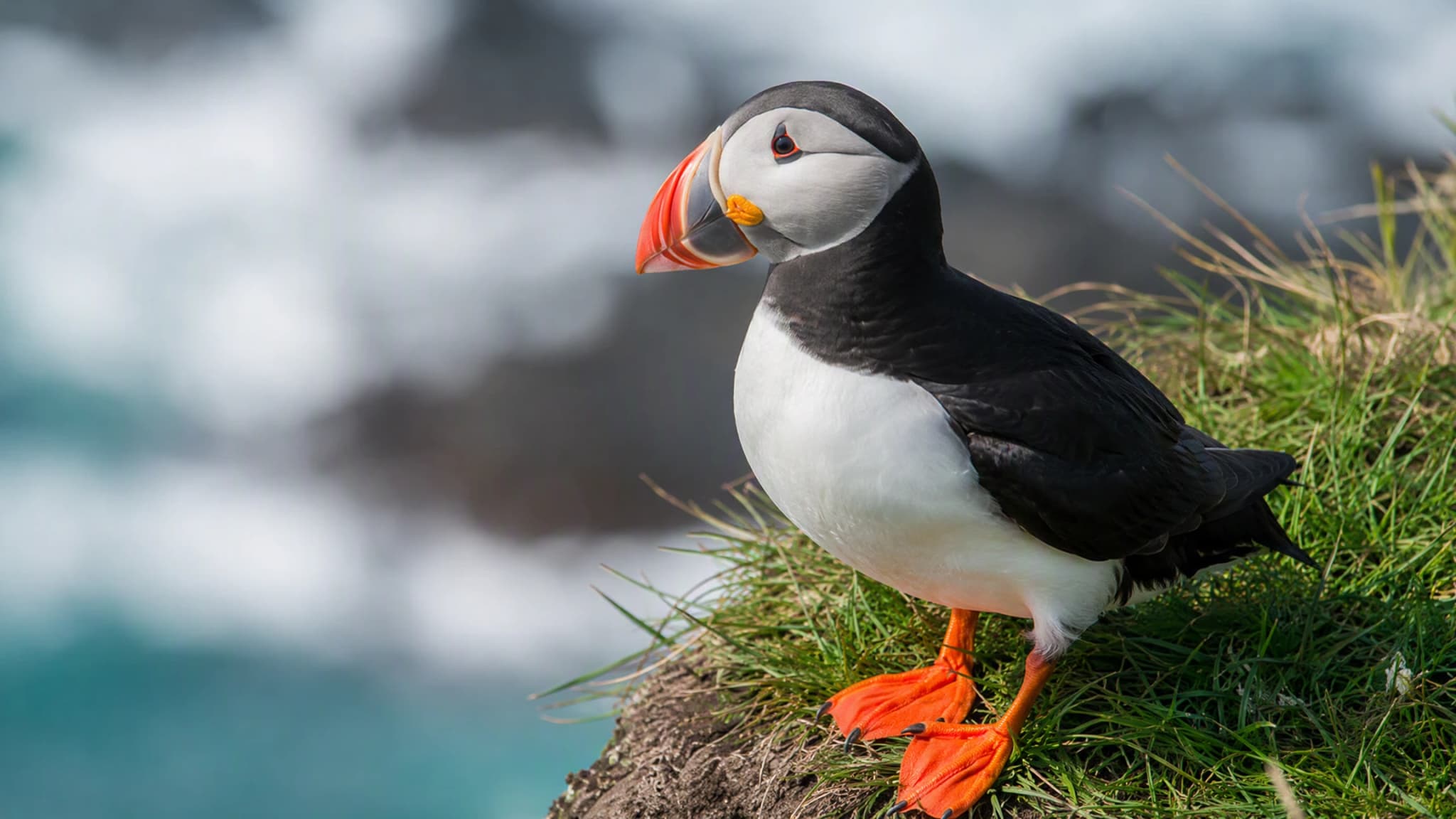
An Atlantic Puffin perched on a grassy coastal cliff, overlooking the sea with its vibrant bill in profile. 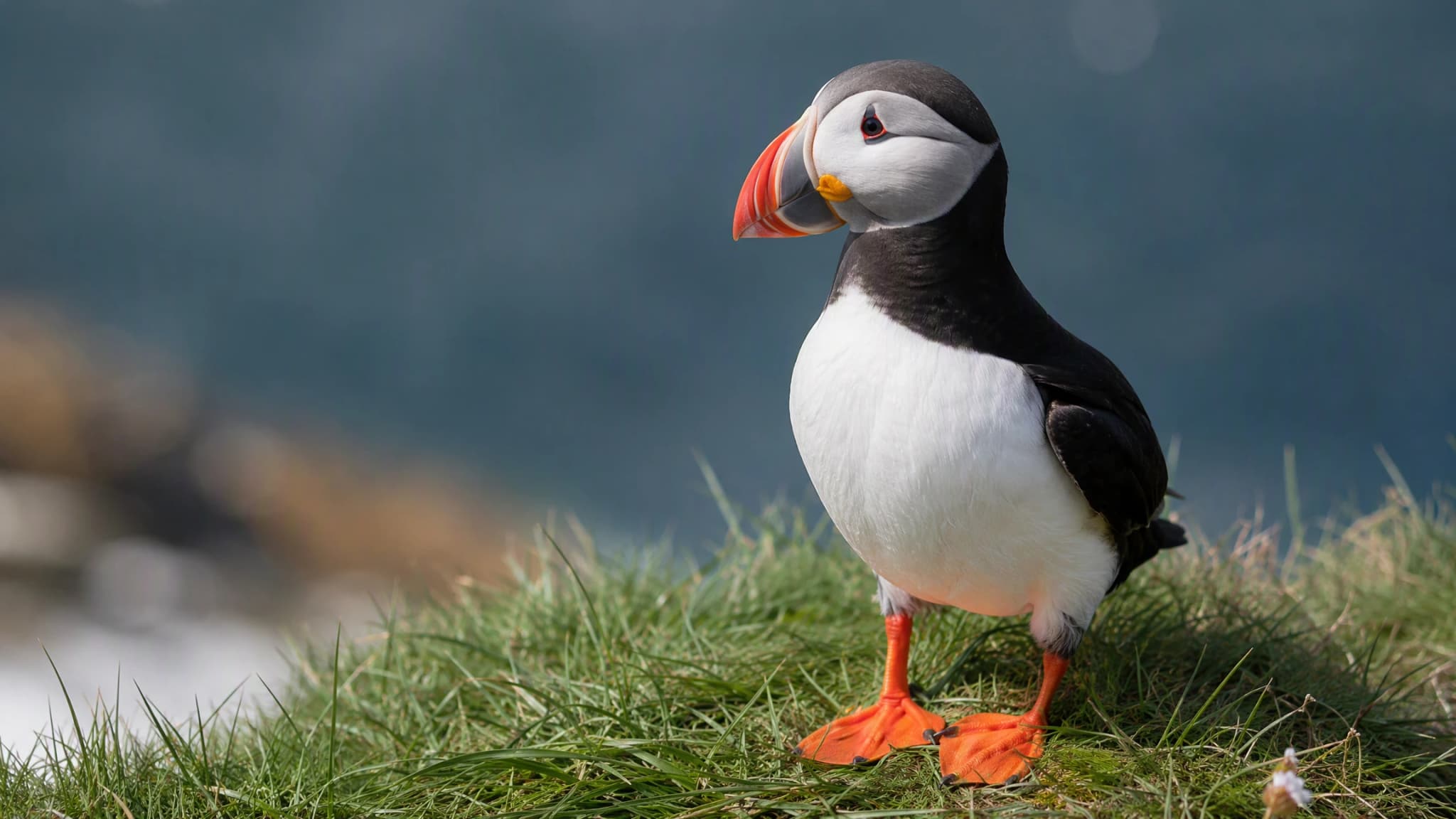
An Atlantic Puffin standing on coastal grass, highlighting its striking black-and-white plumage and colorful feet. 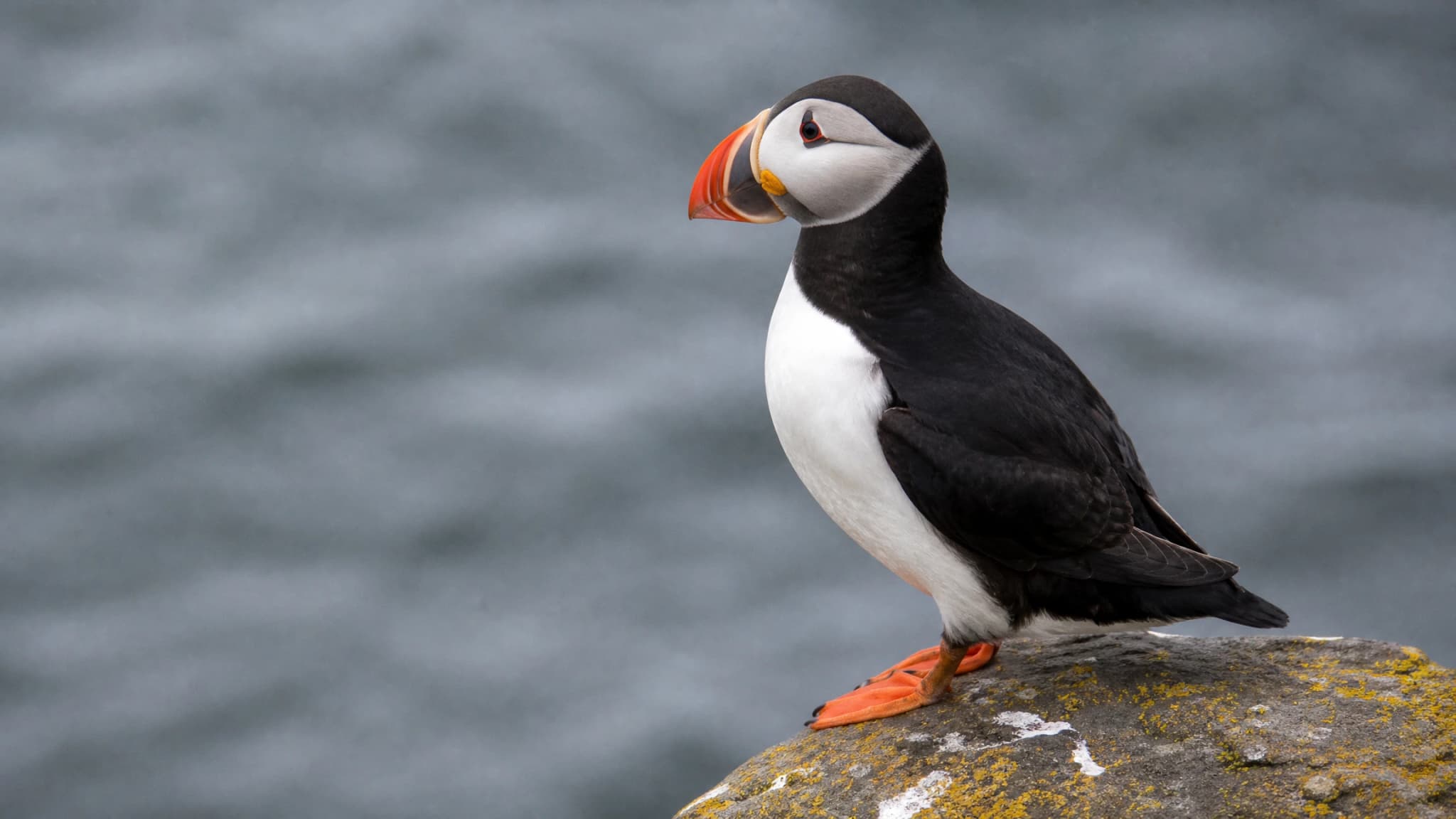
An Atlantic Puffin standing on a lichen-covered rock above the sea, showing its distinctive profile and colorful bill. 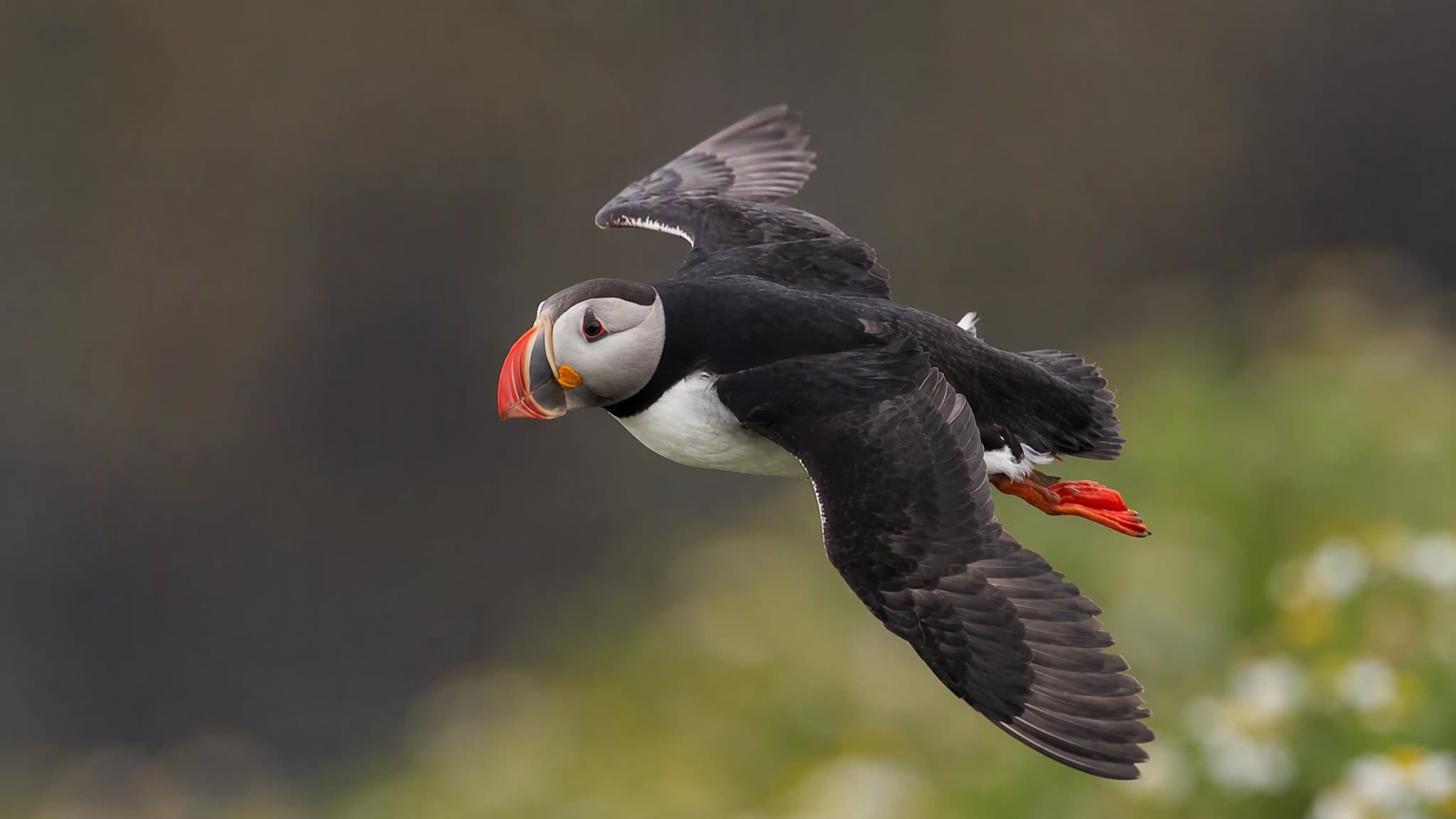
An Atlantic Puffin flying low with its wings fully extended, showcasing its powerful flight over the coastal landscape. Two Atlantic puffins perched on a grassy cliff in Iceland

The Atlantic puffin is a stocky seabird in the auk family (Alcidae), recognized by its black back, white belly, orange webbed feet, and large laterally compressed bill that turns vividly yellow, red, and orange during breeding season. Often nicknamed the “clown of the sea,” it nests in dense colonies on rocky cliffs and islands around the North Atlantic, from Iceland and the British Isles to eastern Canada and Maine, while spending most of the year traveling and resting on the open ocean.
Atlantic puffins are wing-propelled pursuit divers that “fly” underwater to catch small fish such as sand eels, herring, and capelin, using a ridged bill and rough palate to hold many fish crosswise at once. Pairs are usually monogamous, reuniting at the same colony and often the same burrow each spring; both parents incubate a single egg and provision the chick until it fledges after roughly six weeks.
The species is classified as Vulnerable on the IUCN Red List (assessed 2018), with declining populations linked to climate-driven shifts in prey availability, marine pollution including ingested plastics, and other pressures on North Atlantic seabird colonies. Protected under laws such as the U.S. Migratory Bird Treaty Act, puffins also support ecotourism in coastal regions where breeding colonies are accessible.