Maroon-bellied Parakeet
Pyrrhura frontalis
 AI-generated
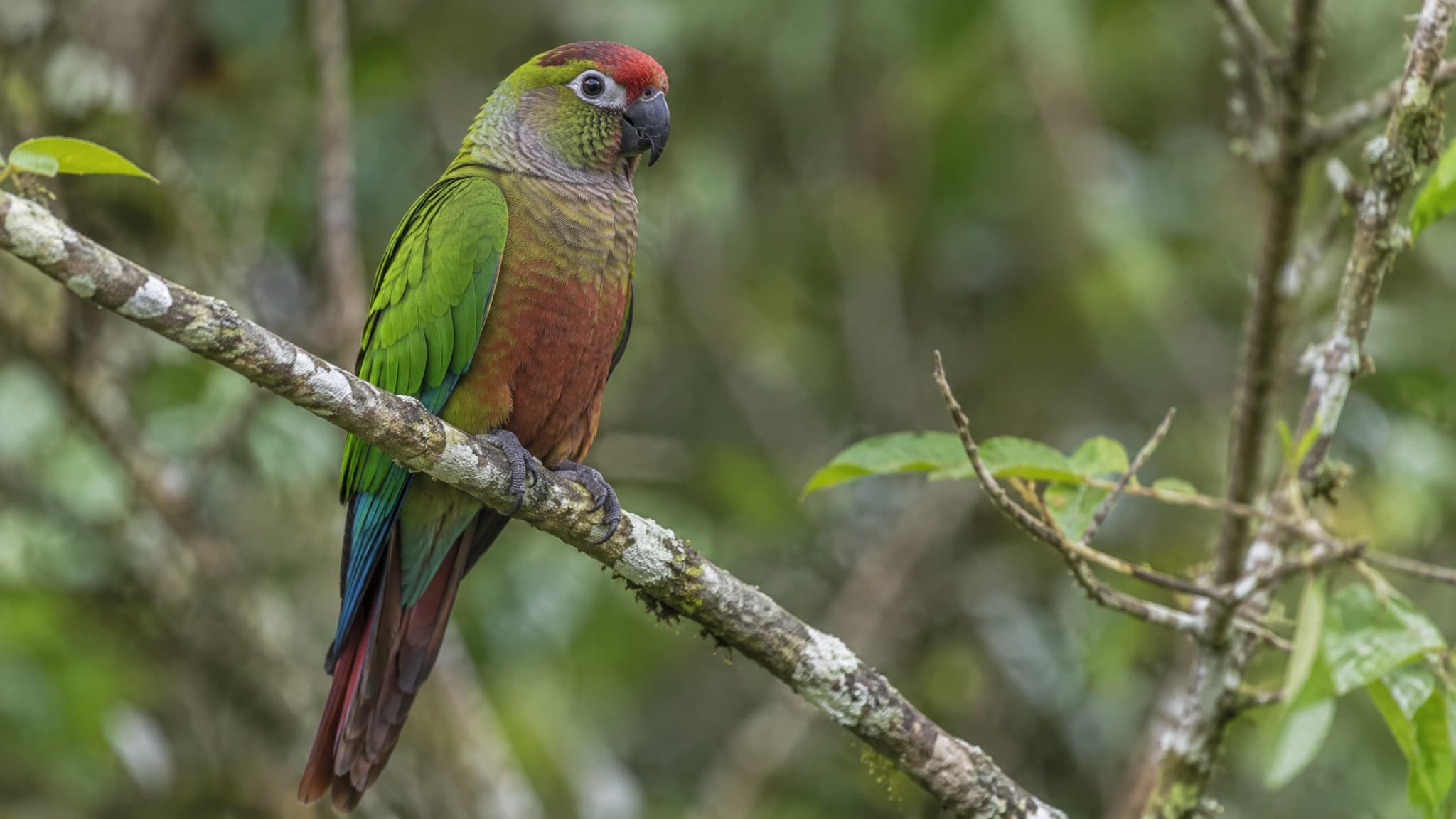
A Maroon-bellied Parakeet perches upright on a lichen-covered branch in leafy forest, facing right. Its red forehead, pale eye-ring, dark hooked bill, scalloped gray-green throat, maroon belly, and long blue-tinged tail are visible. 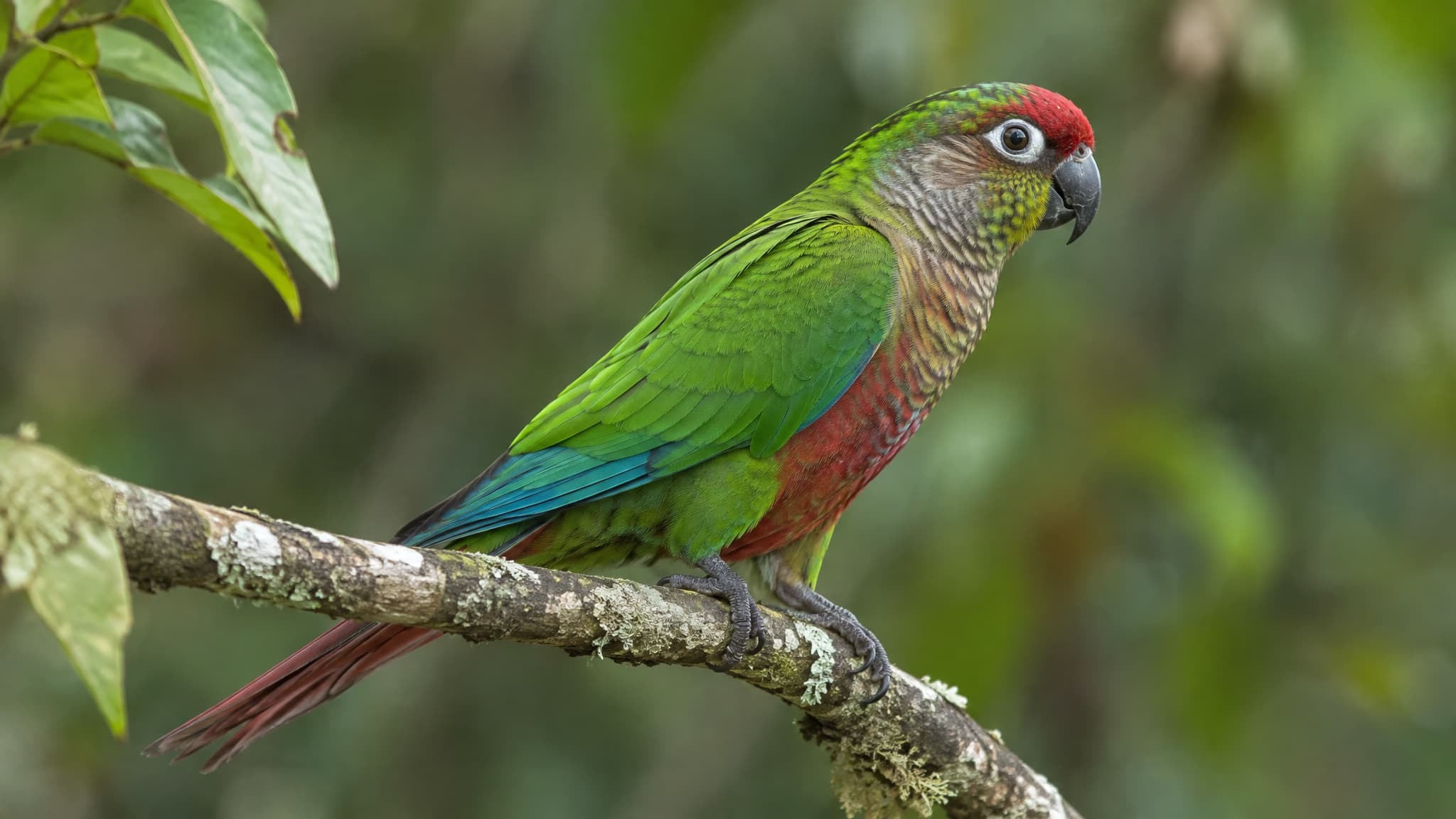 AI-generated
A maroon-bellied parakeet perches side-on on a lichen-covered branch in leafy forest, showing a red forehead, green wings with blue edging, a barred throat, maroon underparts, and a long pointed tail.
The Maroon-bellied Parakeet is a compact South American parrot, usually 24–28 cm long. It is predominantly green, but is distinguished by its reddish forehead, pale bare-looking area around the eye, dusky brownish ear coverts, and deep maroon-red belly and underside of the tail. Males and females look alike externally, while young birds tend to appear less vividly marked.
It occurs chiefly in Brazil, from Bahia south to Rio Grande do Sul, with populations also in eastern Paraguay, northeastern Argentina, and Uruguay. Its stronghold is the Atlantic Forest region, where it uses humid forest, forest edge, gallery woodland, and Araucaria-associated forests. It can also persist in altered settings, including gardens and urban parks where mature trees remain.
This parakeet is active by day and is commonly encountered in pairs or noisy flocks, often numbering roughly 10–40 birds. It feeds mainly on fruit, seeds, nuts, and other plant material; Araucaria seeds can be an important seasonal resource. It also takes some invertebrate larvae. While feeding and moving between trees, flocks can link scattered food patches across a fragmented landscape.
Breeding generally takes place in spring and early summer in southern Brazil. Pairs nest in cavities in tree trunks, laying about 3–5 eggs. The female incubates, while both parents provision the young; nestlings remain dependent in the nest for several weeks. Its lifespan in the wild is insufficiently documented in the consulted references.
By consuming and sometimes transporting seeds, including those of the Paraná pine (Araucaria angustifolia), the species can contribute to plant dispersal and forest regeneration. It is assessed as Least Concern globally, but local populations face the continuing effects of forest clearing, fragmentation, and the loss of old cavity-bearing trees.