Scarlet Macaw
Ara macao
 AI-generated
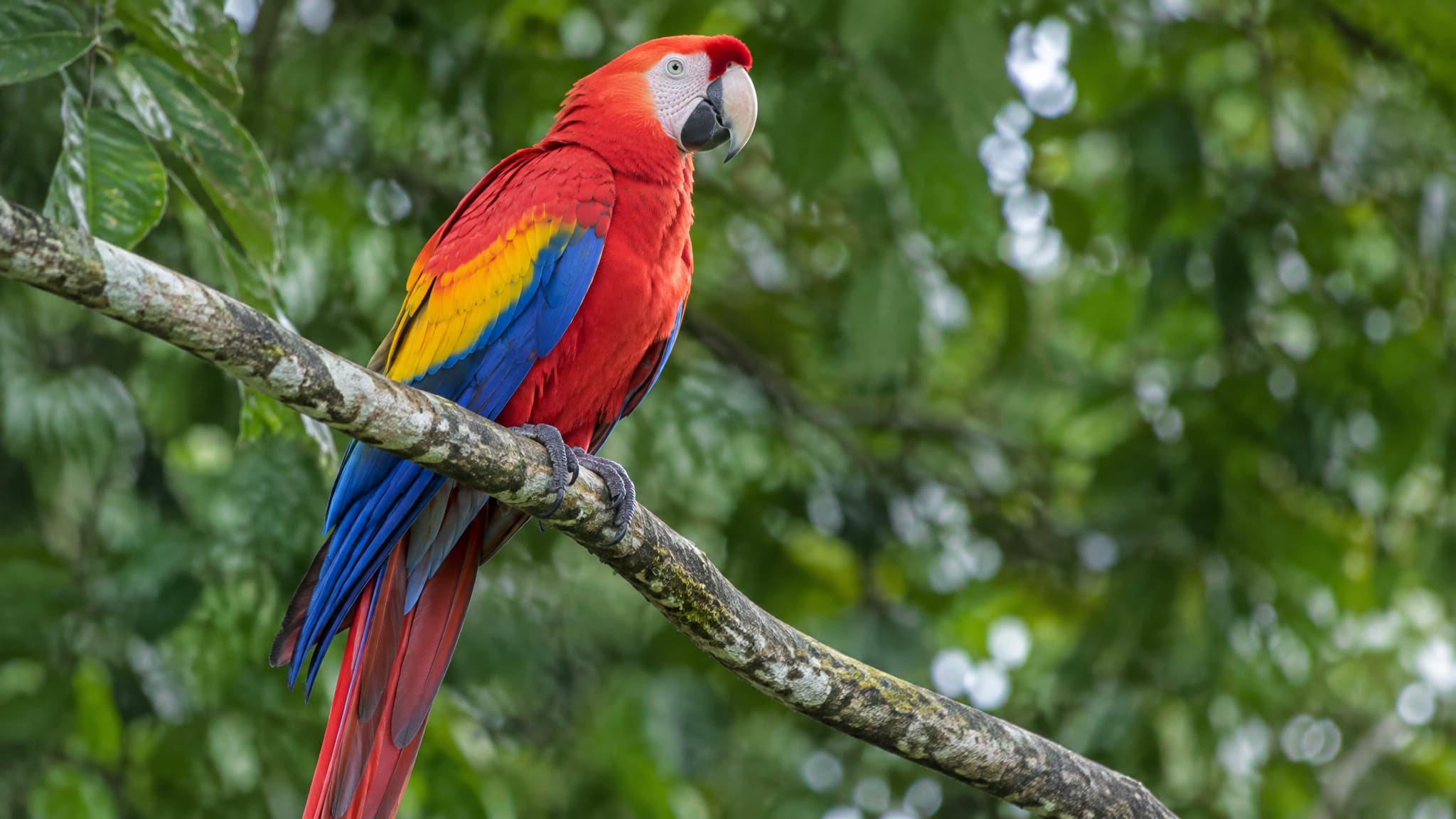
A Scarlet Macaw perches on a lichen-covered branch in lush green forest, facing right. Its red plumage, yellow-and-blue wing feathers, long red-and-blue tail, pale facial patch, and large curved bill are clearly visible.
The scarlet macaw is a very large, long-tailed Neotropical parrot renowned for its vivid scarlet body, broad yellow wing panels, and blue flight feathers and tail. Bare white facial skin surrounds pale eyes, while its deep, hooked bill is built to crack hard fruits and seeds. Adults are about 89 cm long; males and females look broadly alike.
This species occurs from southern Mexico through Central America and across northern and central South America, reaching northeastern Argentina in parts of its range. It is most closely associated with tropical lowland forest, especially rainforest canopy, generally below 1,000 m, but it may also use nearby semi-open places where large nesting and feeding trees remain.
Scarlet macaws usually travel in pairs or small groups and may gather in larger roosting flocks. Their loud, carrying calls help maintain contact in dense forest. They eat principally fruit, seeds, nuts, flowers, and nectar, handling food with their feet and powerful beaks. By consuming large tree fruits and destroying many seeds, they can affect forest-tree regeneration and composition.
Pairs are generally long-lasting and nest in cavities high in mature trees. A typical clutch contains two to four eggs; incubation lasts roughly 24–25 days, and young can remain dependent on their parents for one to two years. Wild birds commonly live around 40–50 years. The species is listed globally as Least Concern, but deforestation, loss of old cavity-bearing trees, and illegal capture for the pet trade threaten populations locally; international trade is regulated through CITES Appendix I.