Wood Stork
Mycteria americana
 AI-generated
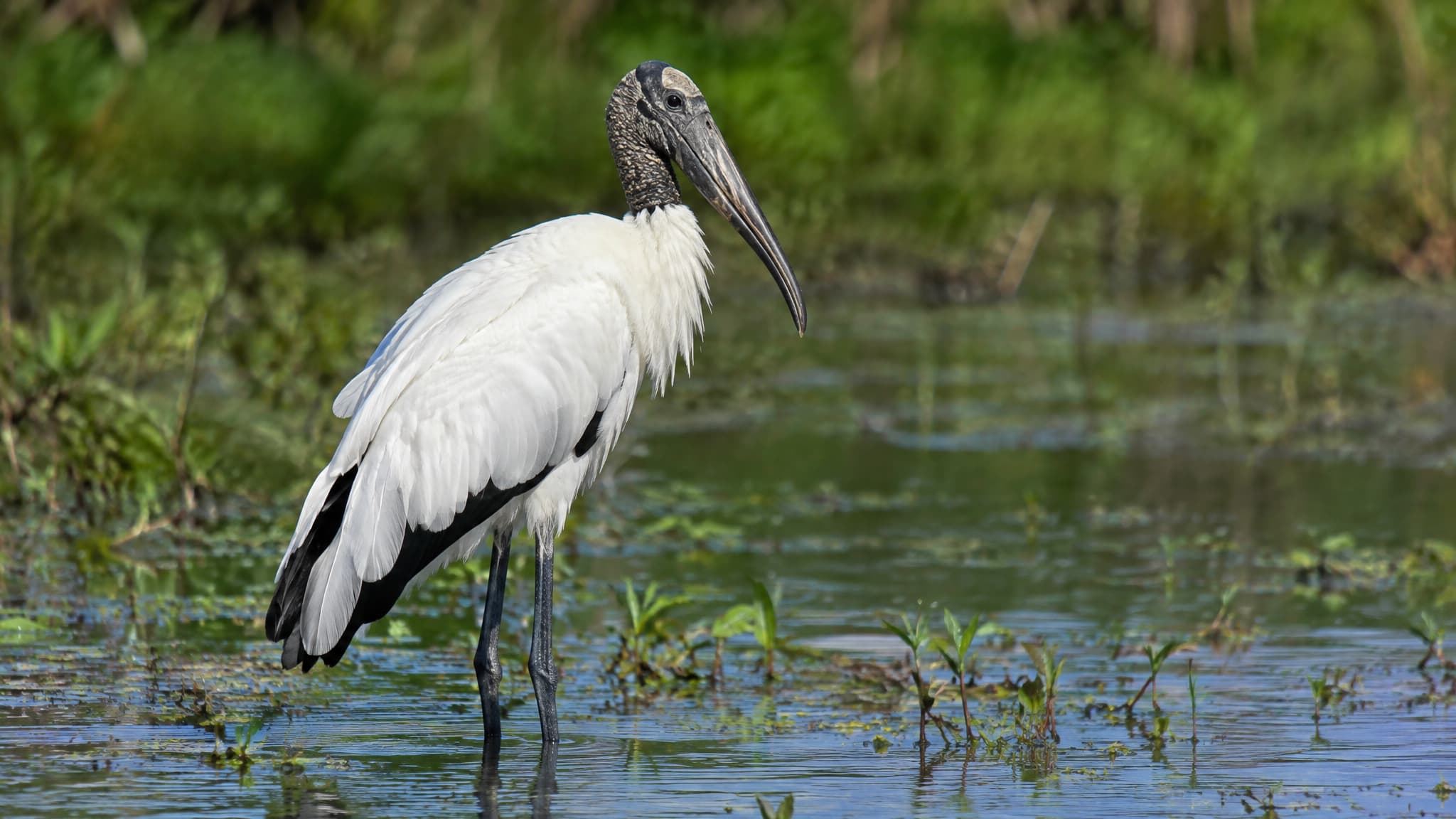
A Wood Stork stands in shallow, plant-filled wetland water in side profile, showing its long slightly downcurved bill, dark bare head and neck, white body, black wing feathers, and long dark legs.
The Wood Stork is a very large, unmistakable wading bird of the stork family. Its body is mainly white, with black flight feathers that are especially conspicuous in flight. Adults have a bare, dark gray to black, scaly-looking head and neck, long legs, and a heavy, slightly downcurved bill. Young birds initially retain grayish feathering on the neck and have paler bills.
It occurs across warm parts of the Americas, from the southeastern United States and Mexico through Central America and the Caribbean to much of South America, reaching northern Argentina. It uses freshwater and brackish wetlands, including marshes, swamps, ponds, flooded forests, mangroves, and shallow seasonal wetlands. In the United States it is the only stork that breeds naturally.
Wood Storks usually hunt by touch rather than sight. Walking slowly through shallow water with the bill submerged, they snap it shut remarkably quickly when prey touches it. Fish make up most of the diet, supplemented by crustaceans and other aquatic invertebrates; amphibians, reptiles, and occasional other small foods may also be taken. The birds often forage socially and may soar high on thermal currents with the neck stretched forward and legs trailing behind.
Breeding takes place in colonies, commonly in trees standing over water, sometimes alongside herons and egrets. Both parents build a bulky stick nest; clutches contain one to five eggs, and nestlings generally remain in the nest for about 50–55 days. Wetlands are vital to the species because seasonal changes in water levels can concentrate fish for feeding, but altered hydrology and wetland loss can reduce nesting success. The oldest documented individual was at least 22 years and 6 months old. Globally, the species is assessed as Least Concern, though local populations remain vulnerable to wetland degradation and water-management changes.