African Bullfrog
Pyxicephalus adspersus
 AI-generated
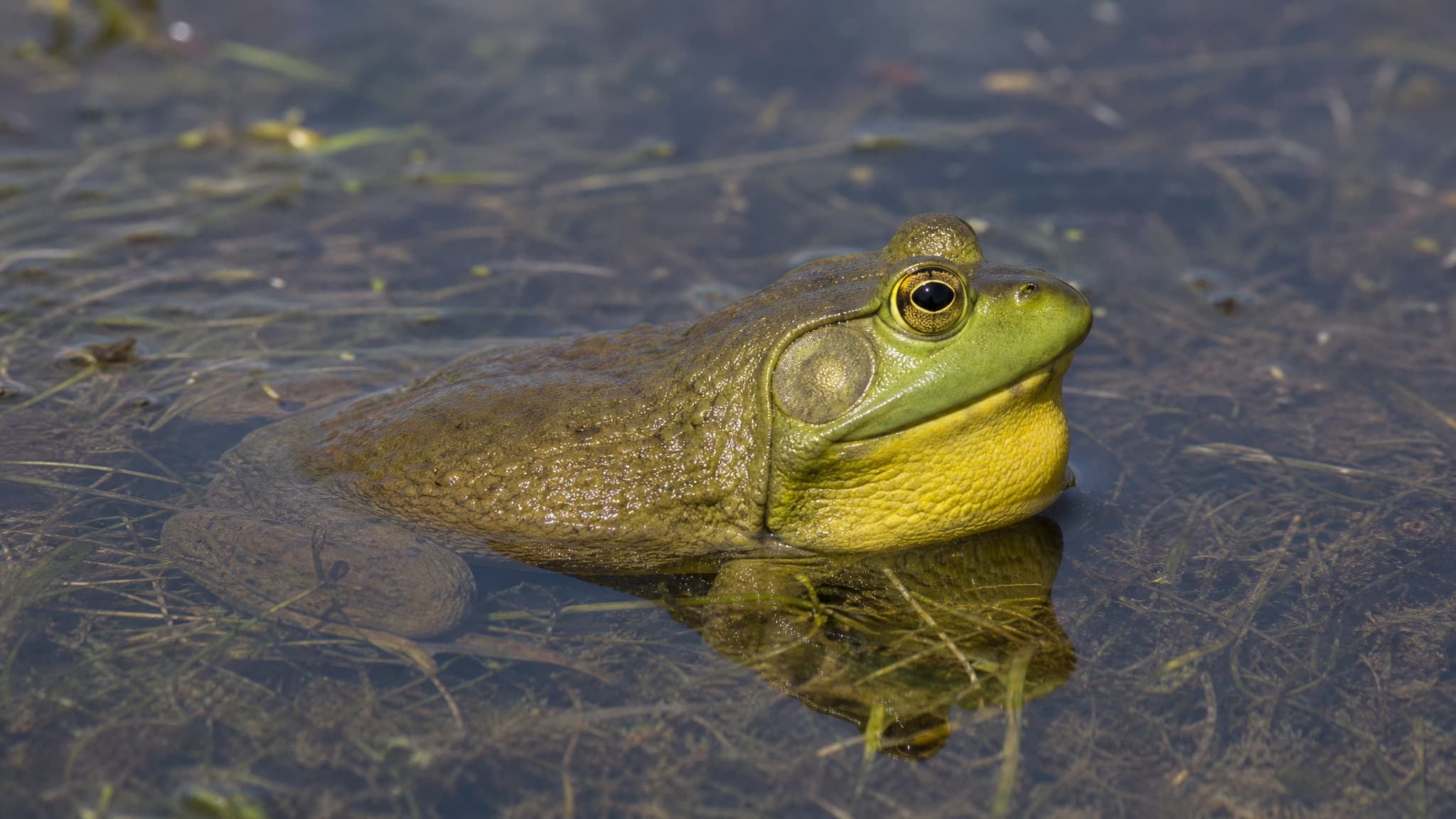
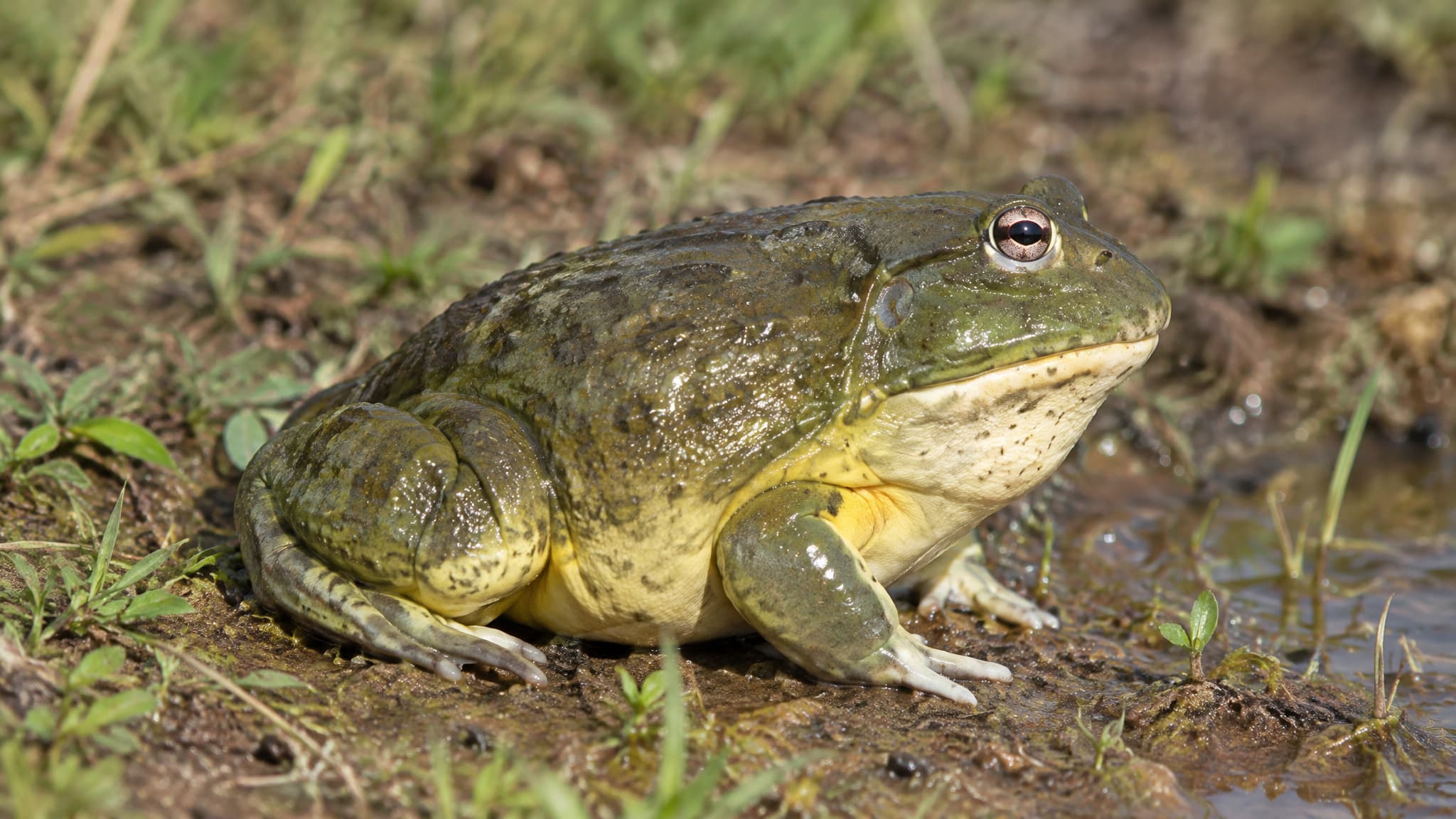
A large African bullfrog crouches in profile on muddy ground beside shallow water, showing a broad mottled olive body, pale throat and belly, prominent eye, and stout limbs.
The African bullfrog (Pyxicephalus adspersus), also called the giant bullfrog or South African burrowing frog, is the largest amphibian in southern Africa. In most frogs the females are bigger, but here the males are much larger. They can reach about 24–25 cm in snout–vent length and weigh well over a kilogram, while females stay much smaller. The head is very broad and the mouth is huge, with tooth-like bony projections on the lower jaw. The back is olive to green with skin ridges running along it. Males have a yellow to orange throat, and females have a cream-colored one.
Distribution and habitat
This frog lives across the drier parts of southern Africa, including South Africa, Botswana, Namibia, Zimbabwe, Zambia, Angola and Eswatini. It is one of the most adaptable amphibians and can survive in harsh, seasonally dry places such as the Kalahari edges and the high veld grasslands. It also lives in savanna, shrubland, marshes and farmland, wherever temporary rain-filled pools form.
Diet and behavior
The African bullfrog is an aggressive ambush predator that eats almost any animal it can overpower and swallow. Its prey includes insects and other invertebrates, other frogs, reptiles, small rodents and birds, and it is sometimes cannibalistic. During long dry spells it digs backward into the soil with its hind feet. Underground it wraps itself in a protective cocoon made of shed skin and can stay dormant for a year or more until the rains return.
Reproduction and lifespan
Breeding happens in a short burst after heavy rains fill shallow temporary ponds. Males gather in breeding arenas and fight for central positions, and the dominant males mate with most of the females. The tadpoles grow fast and change into frogs within a few weeks. The dominant male stays to guard the eggs and tadpoles. He may even dig channels to connect drying pools to deeper water, though he sometimes eats some of the young he guards. These frogs live about 20 years in the wild, and records suggest they can reach 35–45 years.
Ecological role and conservation
As a large predator, the species helps keep populations of invertebrates and small vertebrates in check. Birds prey on adults, and turtles and monitor lizards eat the tadpoles. The IUCN lists it as Least Concern worldwide. However, urban growth, roads and the loss of seasonal wetlands have caused local declines, especially in South Africa's Gauteng region.