Axolotl
Ambystoma mexicanum
 AI-generated
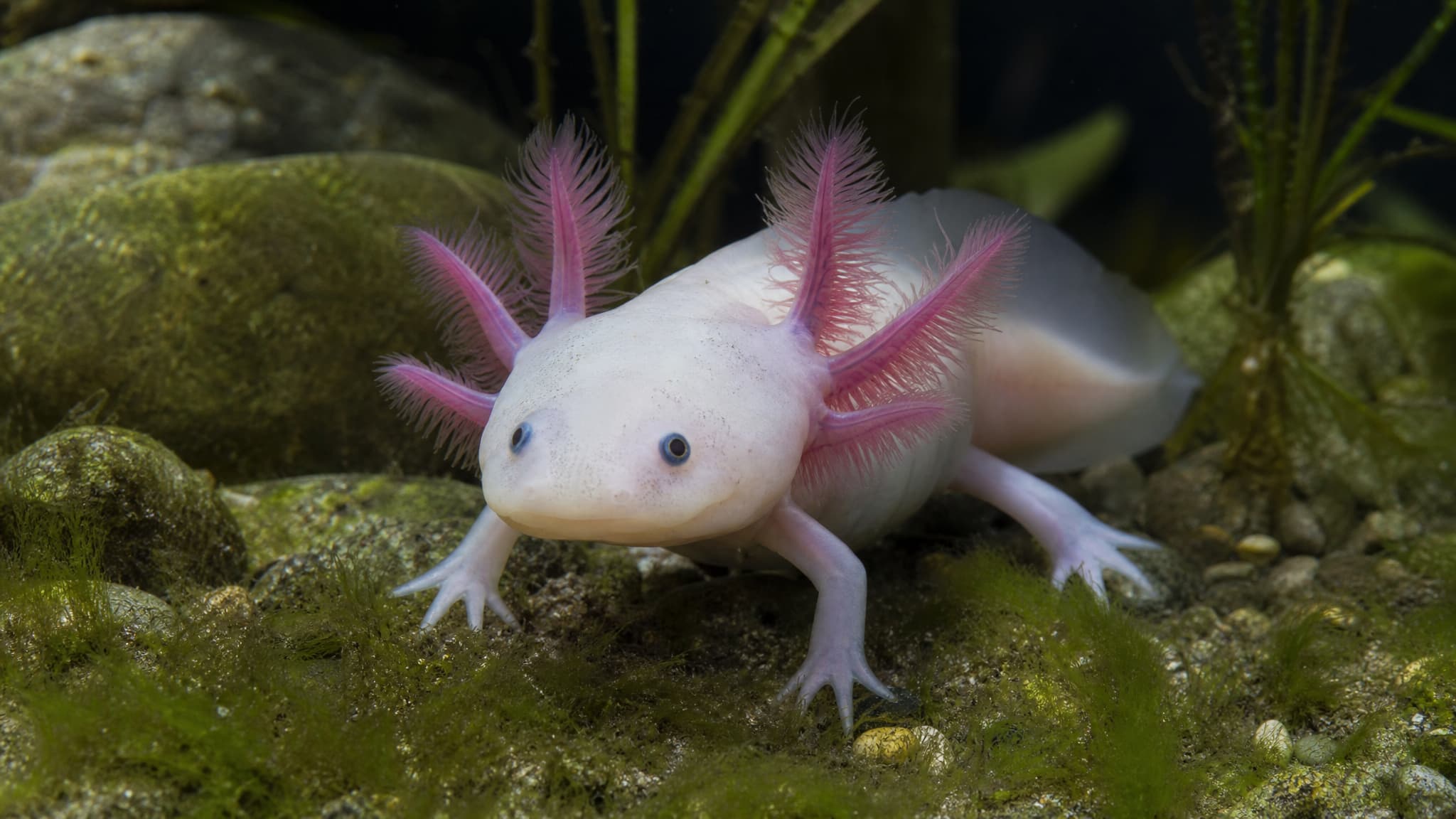
A pale axolotl faces the camera on a mossy, rocky aquarium substrate, with four limbs, a broad head, and prominent pink feathery external gills visible among aquatic plants.
Axolotl
The axolotl is a fully aquatic mole salamander distinguished by its broad head, lidless eyes, finned tail, and three conspicuous, feathery external gill stalks on each side of the head. Unlike most salamanders, it normally becomes sexually mature while retaining larval features—a condition called paedomorphosis or neoteny. Wild animals are usually dark and mottled brown to olive; pale, white, golden, and other striking color forms are chiefly familiar from captive stocks. Adults commonly reach roughly 20–23 cm, although larger individuals occur.
This species is endemic to the high-elevation freshwater wetlands of the Valley of Mexico. It historically inhabited Lakes Xochimilco and Chalco near Mexico City; Chalco was drained, and its surviving natural range is now centered on the canal and wetland system of Xochimilco. It depends on cool, permanent, vegetated freshwater, where submerged plants and other structure provide shelter and surfaces for eggs.
Axolotls are primarily solitary carnivores. They take worms, aquatic insect larvae, small crustaceans, mollusks, fish, and other small animals, sometimes including other axolotls. They use visual, chemical, and electrical cues to locate prey. As predators in their native wetlands, they help regulate invertebrate and small-vertebrate populations and are indicators of the ecological condition of the Xochimilco aquatic system.
During courtship, a male performs displays and deposits a spermatophore, which the female picks up for internal fertilization. Females lay individual, jelly-coated eggs on aquatic vegetation or other submerged surfaces; reported clutches range from about 100 to 300 eggs, and hatching may occur in 10–14 days. The young receive no parental care. Wild lifespan is often estimated at 10–15 years, while laboratory averages of 5–6 years and captive records up to about 15 years have been reported.
The axolotl is Critically Endangered. Habitat loss, water extraction and pollution, urban pressure, and introduced carp and tilapia threaten the remaining wild population through predation and competition. Protecting and restoring Xochimilco’s wetland water quality and refuges is therefore central to the species’ survival. Its exceptional ability to regenerate limbs, spinal-cord tissue, and parts of internal organs also makes it an important organism in biomedical and developmental research.