Amano Shrimp
Caridina multidentata
 AI-generated
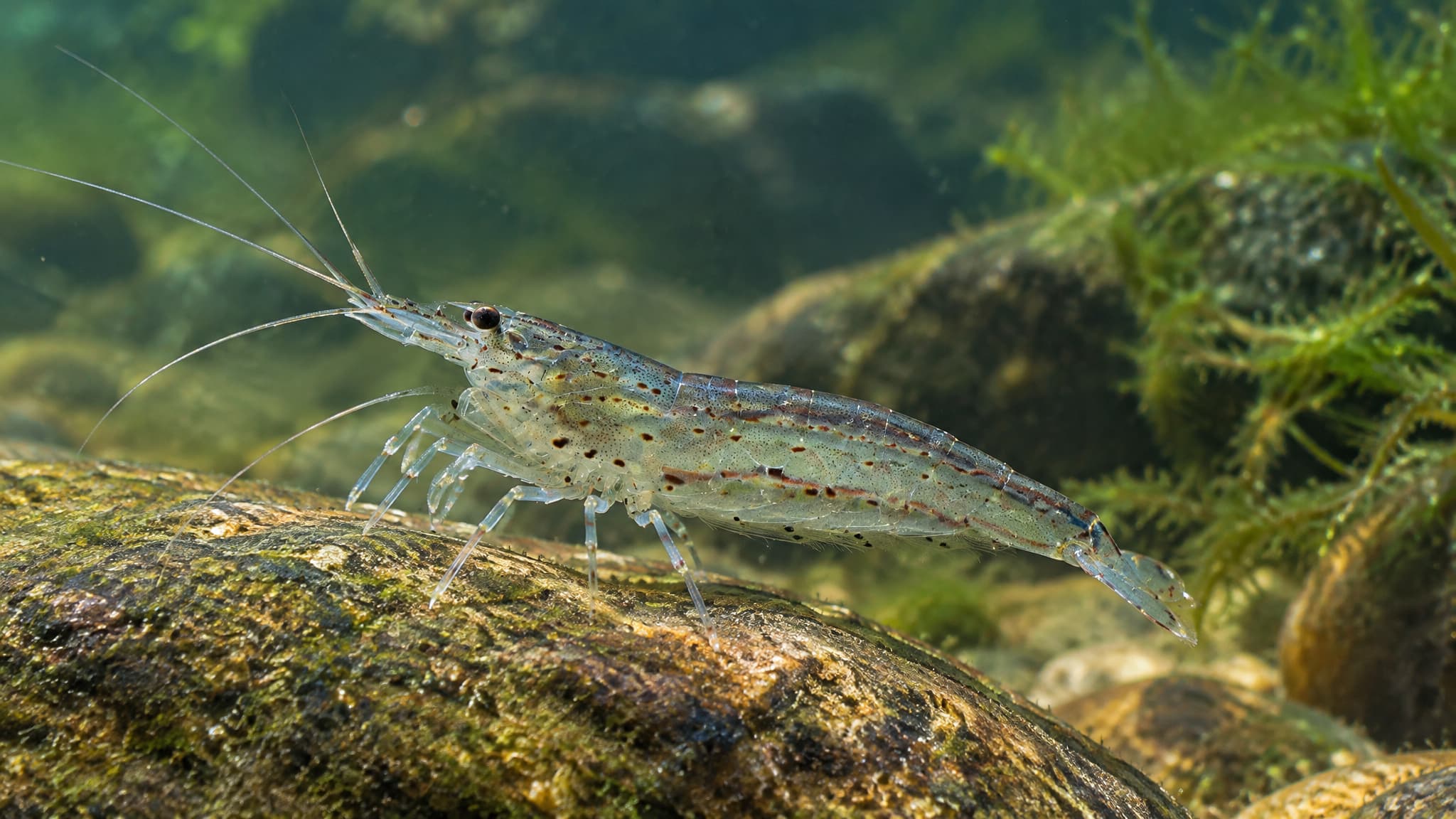
A translucent, brown-speckled shrimp rests sideways on a moss-covered rock in an aquatic habitat, with long antennae, a prominent eye, and slender walking legs visible.
The Amano shrimp (Caridina multidentata) is a small freshwater shrimp of the family Atyidae, best known to aquarists as a tireless algae eater. Adults usually measure about 25 to 35 mm. The body is nearly translucent, often with a grey or greenish tint, and is marked by a pale stripe running along the back from head to tail and a broken row of reddish-brown to bluish dots along each side. The rostrum is short and broad, a shape linked to life in fast-flowing water. Females grow larger than males, have a deeper abdomen and show a longer lower row of dots. For decades the species was sold as Caridina japonica, until a 2006 study of the shrimps described by William Stimpson in 1860 showed that C. multidentata is the older, valid name.
The species is native to Japan and Taiwan and is common in southwestern Japan; Stimpson's original material came from the Bonin (Ogasawara) Islands. Older records from Fiji and Madagascar are now regarded as misidentifications of other species. In the wild it lives in rivers, especially large rivers with boulder beds, as well as streams and marshes. Studies of Japanese populations found little genetic difference between distant rivers, consistent with larvae that travel long distances at sea.
Amano shrimp are peaceful, social animals that forage almost constantly, picking algae and biofilm from rocks and plants. Algae form the bulk of their diet, supplemented by detritus, carrion and small invertebrates such as insect larvae. They are most active around dusk, hide when threatened or under bright light, and stay under cover while their new shell hardens after each moult.
The life cycle is amphidromous. Mating takes place in fresh water shortly after the female moults, and she carries the eggs under her abdomen until they hatch. The tiny larvae, called zoeae, drift downstream to brackish and marine water, where they develop before the young shrimp return to rivers. In laboratory tests at 20 to 32 °C, larvae coped with a wide salinity range of 17 to 34 ppt. Because the larvae need salt water, breeding in home aquariums is very difficult. Lifespan is commonly reported as about 2 to 3 years.
As grazers, Amano shrimp help recycle algae and organic debris in streams, and they are prey for fish, frogs and birds. Their sea-going larvae also link river and coastal food webs.
The IUCN lists the species as Least Concern. It has been popular in the aquarium trade since the planted-tank designer Takashi Amano introduced it in the early 1980s, and most animals sold are collected from the wild. Like other crustaceans, it is very sensitive to copper in the water.