Atlantic horseshoe crab
Limulus polyphemus
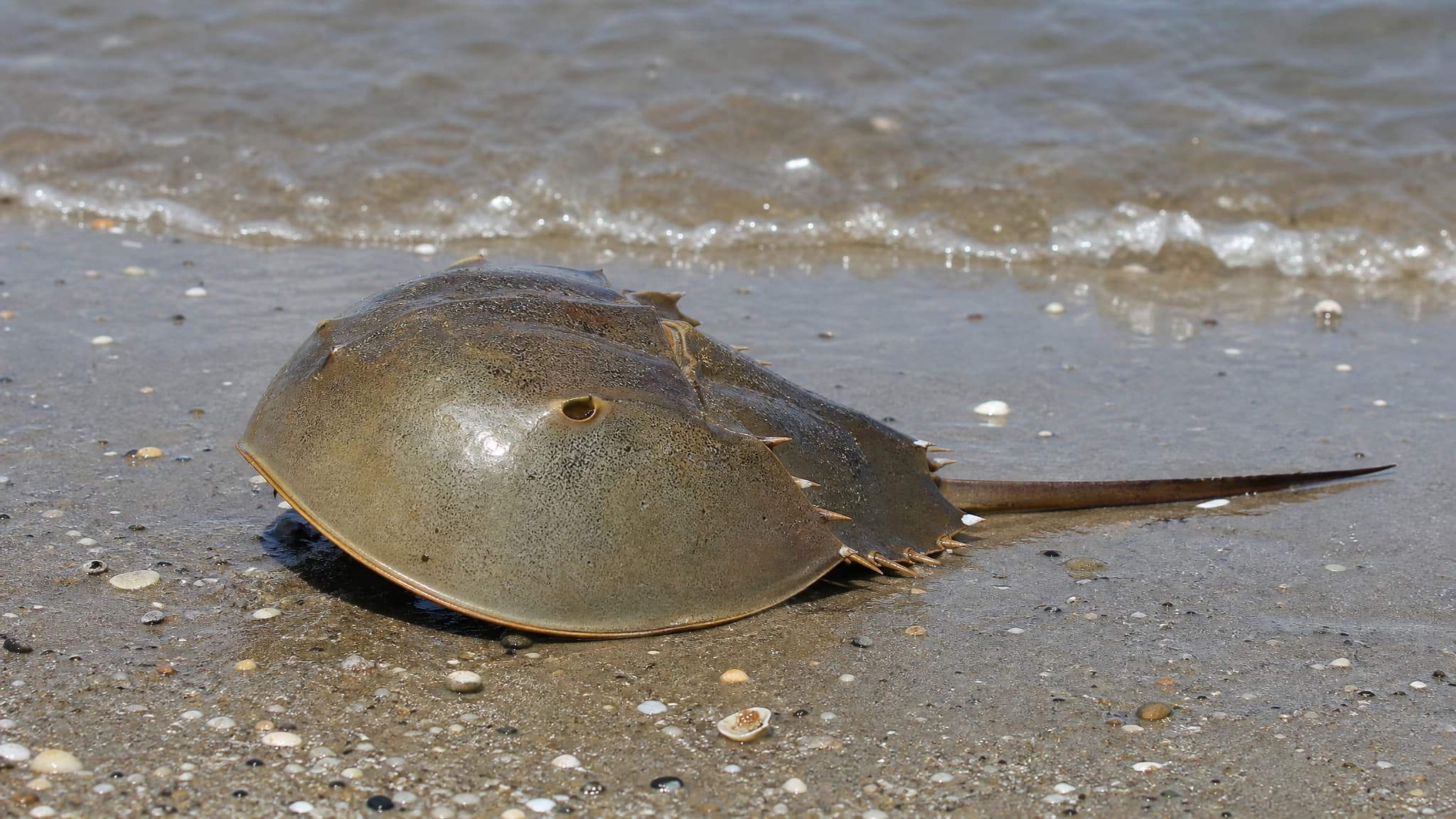 AI-generated
An Atlantic horseshoe crab rests on wet, shell-strewn sand at the water’s edge, with its rounded armored carapace, lateral spines, visible eye, and long pointed tail clearly shown.
The Atlantic horseshoe crab is a large marine chelicerate, not a true crab. It is more closely related to spiders and scorpions than to crustaceans. Its body has a broad, horseshoe-shaped front shell, a smaller abdomen edged with movable spines, and a rigid tail spine called a telson. The telson is chiefly used for steering and for righting the animal if waves overturn it; it is not a stinger. Females are generally larger than males.
This species occurs along the Atlantic and Gulf coasts of North America, from Maine southward to Mexico, including an important population around the Yucatán Peninsula. It uses different habitats as it grows: eggs develop on protected sandy beaches, young animals occupy shallow tidal flats and estuaries, and older individuals range into deeper coastal waters, reaching the continental shelf.
Atlantic horseshoe crabs usually move over the seafloor, where their bristly leg bases crush and pass food to the mouth. Juveniles consume small organic particles from plant and animal sources; larger animals feed on bottom-dwelling invertebrates such as marine worms, mollusks, and other small prey. Their book gills allow both gas exchange and swimming, and their digging and feeding continually disturb and rework coastal sediments.
In late spring and early summer, adults gather on sheltered beaches, often near high tides associated with new and full moons. A male clasps a female while she deposits eggs in nests beneath the sand, where they are fertilized. Larvae hatch in roughly two to four weeks under suitable conditions, then settle and molt repeatedly as they grow. Sexual maturity takes about 9–12 years, and some individuals live for more than 20 years.
The species is a major link between coastal food webs and people. Its eggs are important seasonal food for migratory shorebirds, fish, and sea turtles, while its copper-based blue blood has long been used in tests for bacterial contamination in medicines and medical devices. Despite its ancient lineage, it is classified as Vulnerable globally. Coastal habitat loss, harvest for bait and biomedical use, and climate-related changes to nesting beaches remain significant concerns.