White-spotted puffer
Arothron hispidus
 AI-generated
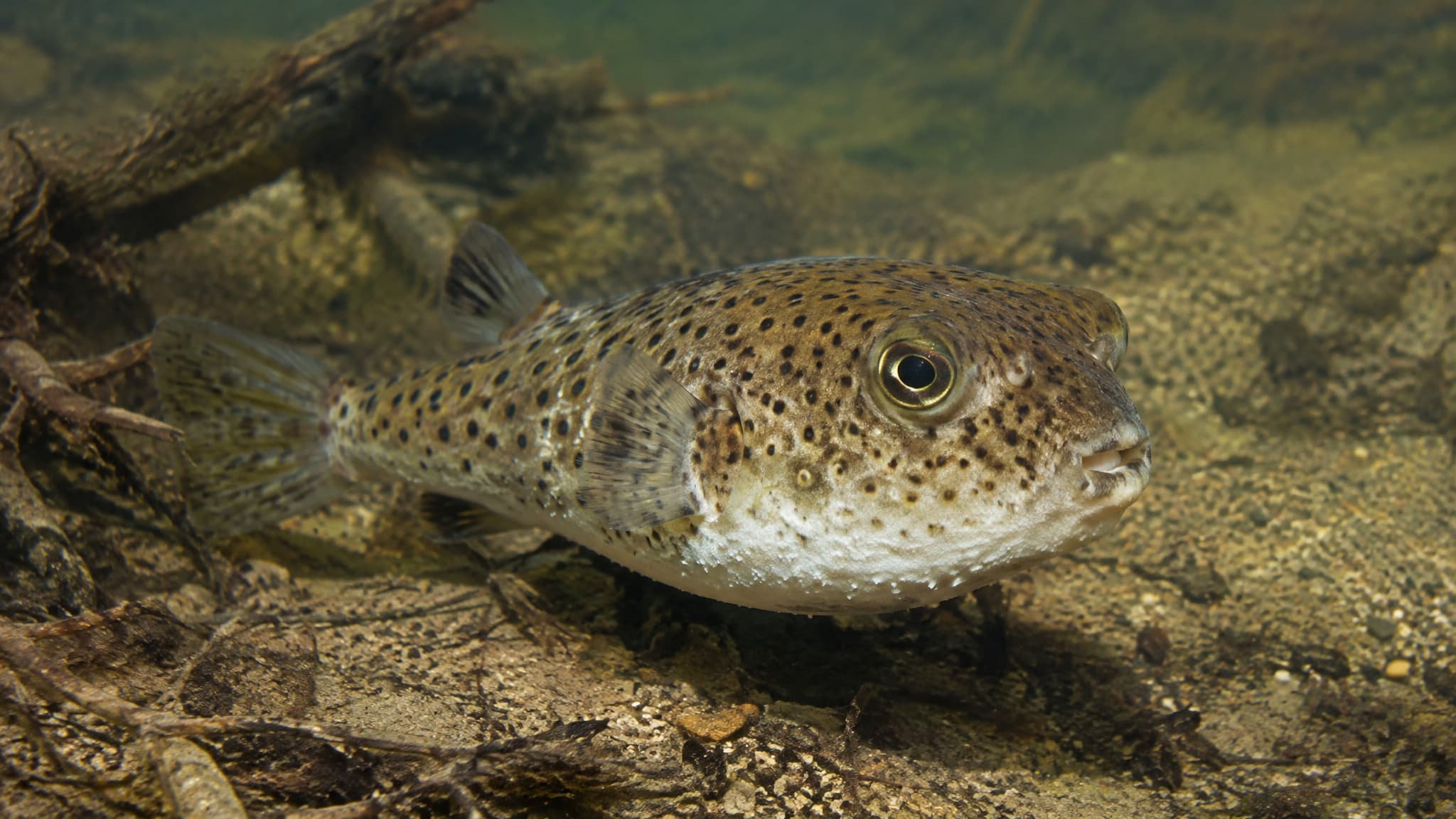
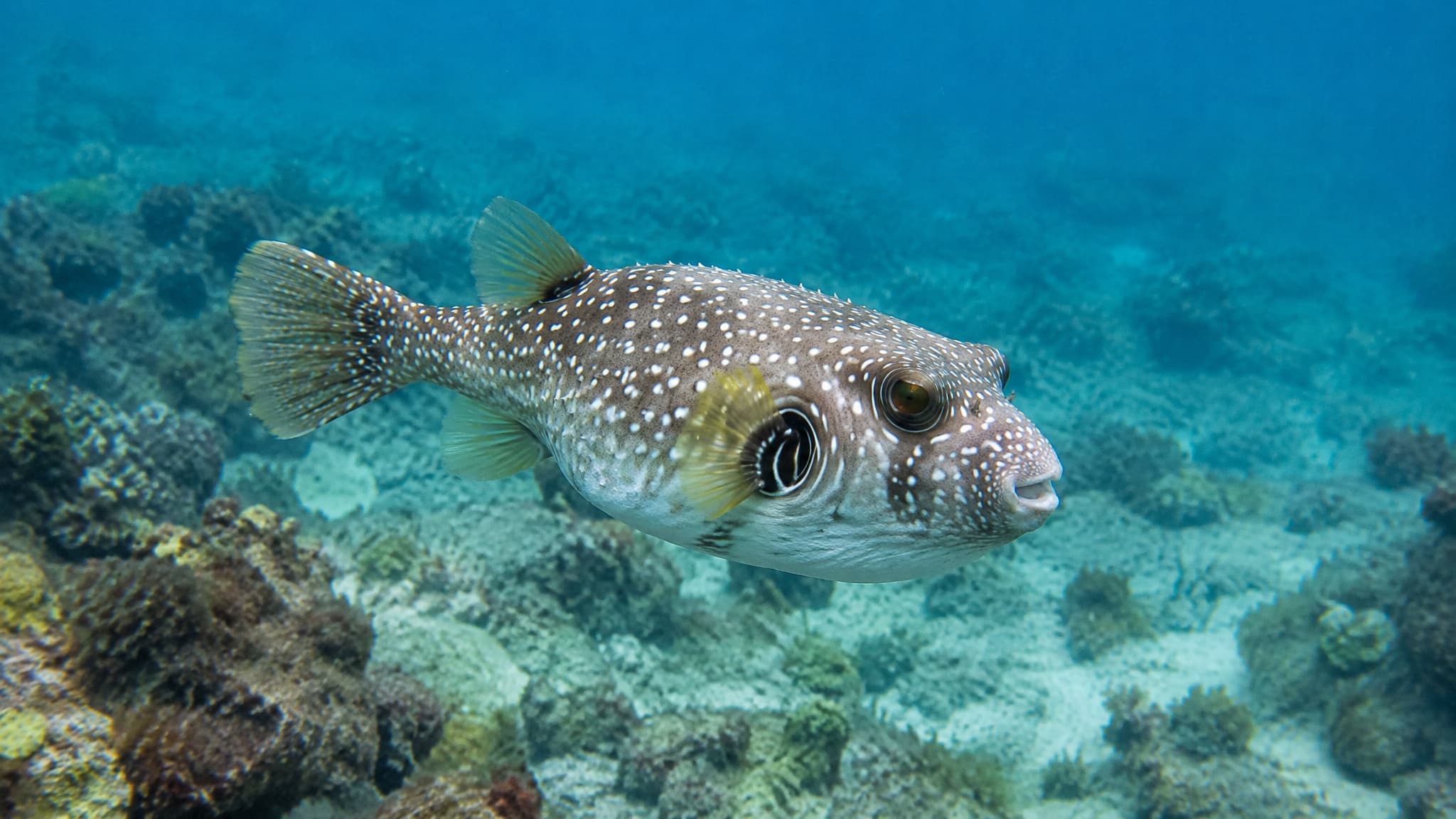
A white-spotted puffer swims in side profile above a coral reef, showing a rounded body, prominent eyes, a beaklike mouth, and translucent dorsal, anal, pectoral, and tail fins. Its gray-brown body is covered with numerous white spots, with small visible spines along the back.
The white-spotted puffer is a large, deep-bodied pufferfish distinguished by a greenish-brown to gray-brown body densely sprinkled with small white spots. Its underside carries pale bars, and the fish has a short blunt snout, conspicuous eyes, small gill openings, and fleshy paired nasal tentacles. Like other puffers, it has small skin spines and can inflate when threatened. Individuals may reach about 50 cm (20 in) in total length.
Arothron hispidus occurs broadly in warm seas of the Indo-West Pacific, from the Red Sea and East Africa across the Pacific to southern Japan, Hawaiʻi, Lord Howe Island, and Rapa; it is also recorded in the eastern Pacific from Baja California and the Gulf of California to Panama. It is reef-associated, using outer reef slopes, lagoons, reef flats, coastal bays, and estuaries from very shallow water to roughly 50 m. Juveniles are especially associated with weedy estuarine habitat.
Usually seen alone, this puffer is a benthopelagic forager that may defend space over sandy or rubble-bottomed reef areas. Its powerful fused teeth allow it to eat a notably varied diet: algae and detritus as well as mollusks, crabs, tube worms, sea squirts, sponges, corals, zoanthids, and other echinoderms. By grazing and consuming attached invertebrates, it participates in reef food webs and may influence the abundance of benthic organisms.
The species is oviparous, meaning reproduction involves eggs, but accessible sources provide limited detail on its courtship, nesting, development, and natural longevity. Its wide range and use of several coastal habitats support a global IUCN status of Least Concern. Nevertheless, reef degradation, coastal habitat loss, and collection or incidental capture can affect local populations. It is listed as poisonous to eat, so it should never be treated as a food fish without expert, species-specific safety knowledge.