Atlantic Bluefin Tuna
Thunnus thynnus
 AI-generated
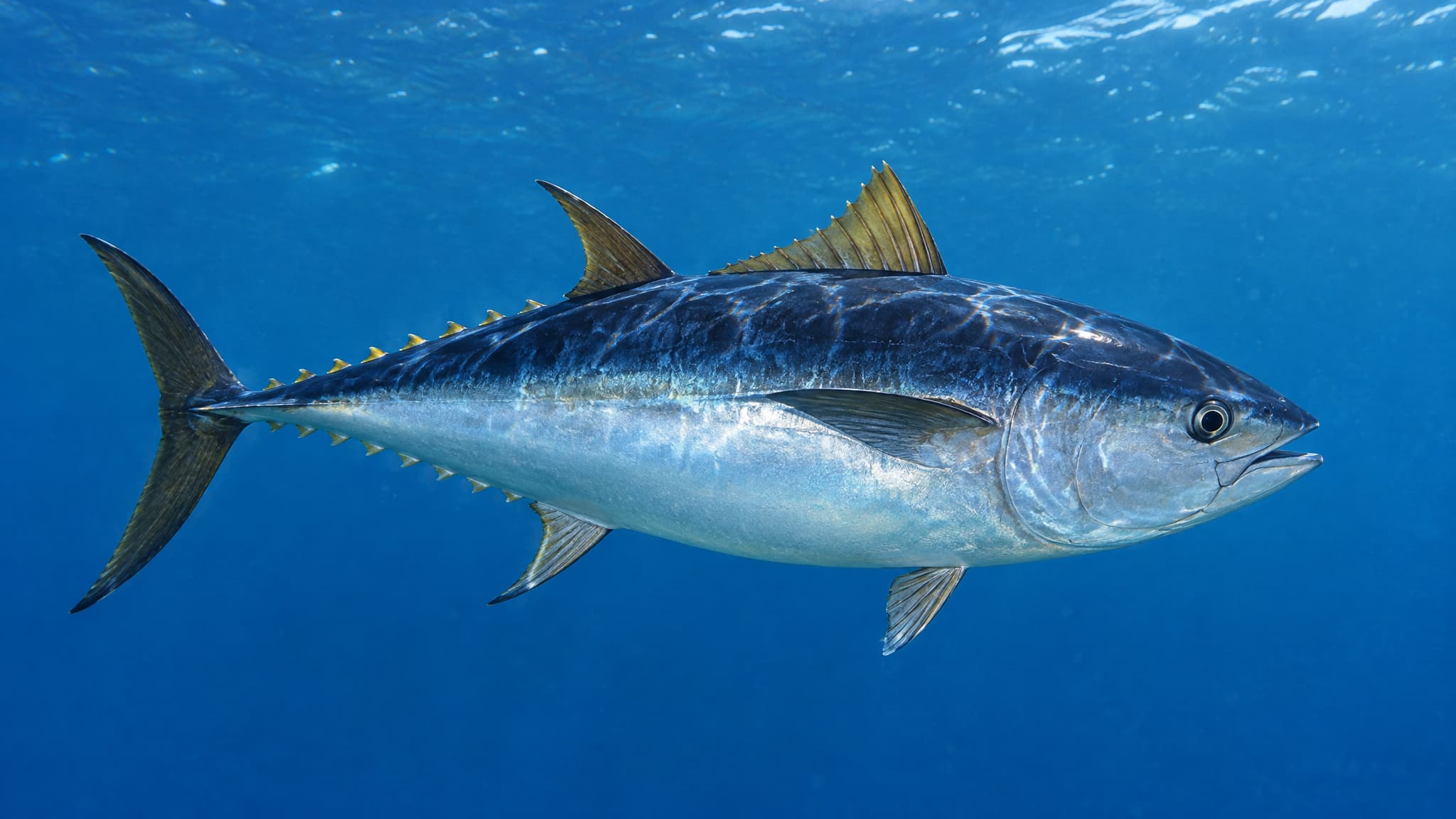
An Atlantic bluefin tuna swims in a streamlined side profile through clear blue seawater. Its robust, deep body shows a dark blue back, silvery underside, prominent dorsal fins, numerous finlets, and a deeply forked tail.
The Atlantic bluefin tuna (Thunnus thynnus) is the largest tuna and one of the biggest bony fishes in the ocean. Its body is massive, torpedo-shaped and nearly round in cross-section. The back is dark metallic blue and the flanks and belly are silvery. A row of small yellowish finlets runs toward the crescent-shaped tail. Most adults are 0.5 to 2 meters long, but exceptional giants approach 4.5 meters and weigh several hundred kilograms.
The species lives in the Atlantic Ocean and its adjoining seas. In the west it ranges from Newfoundland and Labrador to the Gulf of Mexico, the Caribbean and as far south as Brazil. In the east it ranges from Norway to the Canary Islands and throughout the Mediterranean. It is mainly a fish of temperate waters near the surface, but tagging studies show it often dives to between 500 and 1,000 meters. Some individuals cross the entire Atlantic in about two months.
Bluefin tuna are top predators. Their speed lets them chase down schooling fish such as herring, mackerel, anchovies and bluefish, as well as squid and crustaceans. They school by size rather than by species. A specialized countercurrent blood-vessel system keeps their body warmer than the surrounding water. This rare trait among fishes supports bursts of speed and lets them hunt in cold northern waters.
Reproduction depends on long migrations to two main spawning grounds: the Gulf of Mexico, where spawning runs from mid-April to June, and the Mediterranean Sea. There the fish gather in large groups and release eggs and sperm into open water. A female can produce up to about 10 million eggs a year, and the eggs hatch in roughly two days. Bluefin grow more slowly than other tunas and mature at about 4 to 8 years old. They typically live 15 to 20 years or more, and some reach 30 years or older.
Young bluefin are eaten by bluefish and seabirds. Adults fall prey to sharks, killer whales and pilot whales. Because bluefin both eat prey fish and feed large predators, they play a central role in ocean food webs.
The species has extremely high commercial value, especially in the sashimi market, and suffered heavy overfishing during the twentieth century. Strict international quotas set by ICCAT have helped stocks recover. In 2021 the IUCN reclassified the species as Least Concern, but the western stock is still well below its historical levels and needs close management.