Atlantic Cod
Gadus morhua
 AI-generated
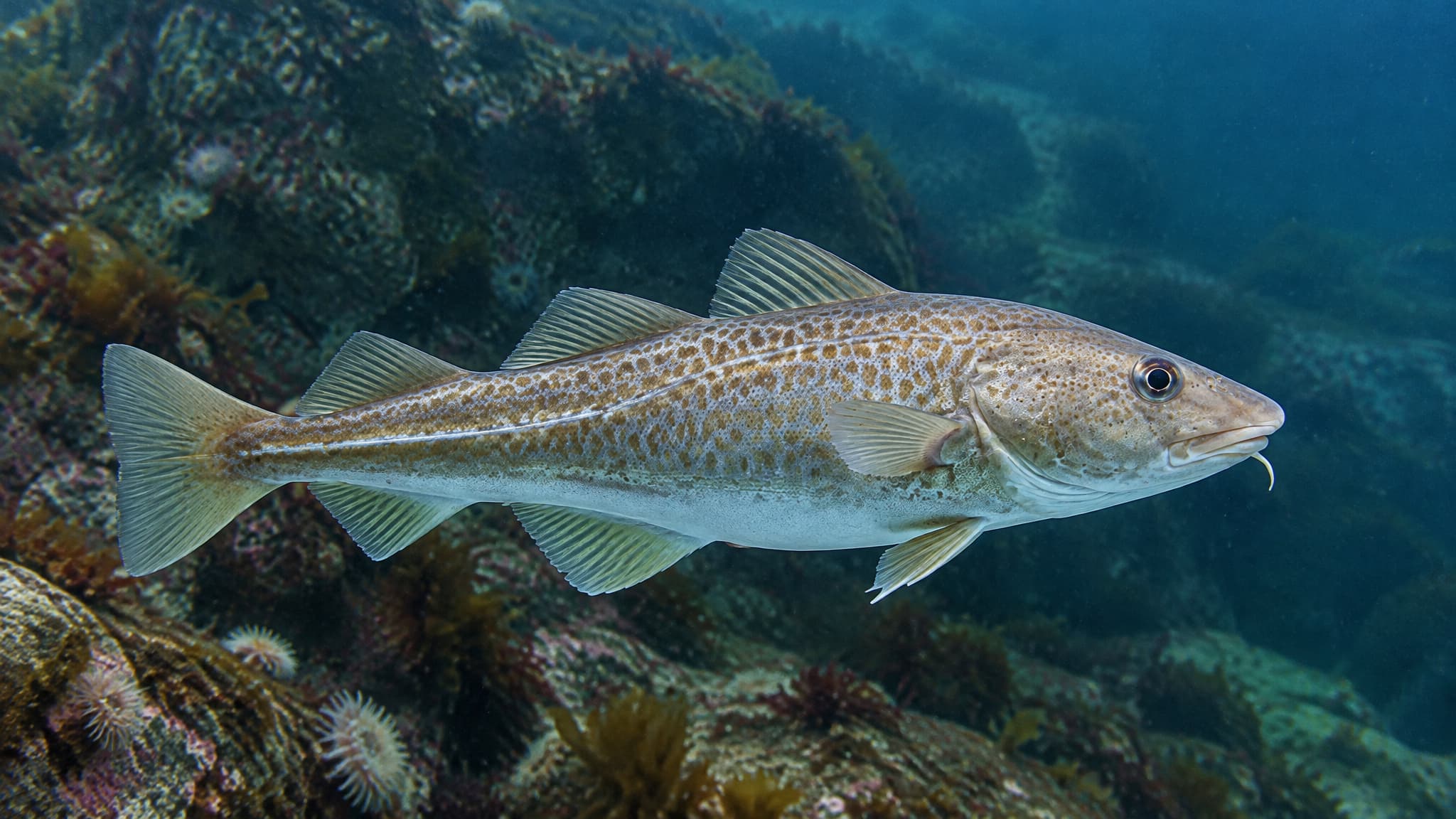
An Atlantic cod swims in right-facing side profile above a rocky, algae-covered seabed. Its mottled brown body, pale lateral line, three dorsal fins, and chin barbel are clearly visible.
The Atlantic cod (Gadus morhua) is a large fish in the cod family, Gadidae. For centuries it has been one of the most important food fishes of the North Atlantic. It has a heavy body, a large head and a blunt snout. It is easy to recognize by the single barbel under its chin, its three dorsal fins and two anal fins, and a pale lateral line along each side. Its color ranges from greenish to sandy brown or golden, with many dark spots, and the belly is lighter.
Most adults are under about 130 cm long, but the largest fish on record reached about 200 cm and nearly 100 kg. The species lives on both sides of the North Atlantic. In the west it ranges from Greenland to Cape Hatteras, North Carolina. In the east it occurs from the Bay of Biscay north to the Arctic, including the waters around Iceland, the North Sea and the Barents Sea, and it also enters the brackish Baltic Sea.
Atlantic cod live near the seafloor in cold water, usually between 0 and 15 °C. They are often found along rocky slopes and ledges, from the shallows down to about 600 m, but usually at 150 to 200 m. They often form large schools. Their larvae eat copepods, krill and other small crustaceans. Adults are opportunistic predators that eat bottom-dwelling worms, crustaceans and other fish. Adults also readily eat young cod.
Cod gather in large groups to spawn once a year, with most spawning in winter and spring. Many populations migrate to their spawning grounds. Eggs and sperm are released into open water and fertilized there. A large female can produce several million eggs in a season, and the floating eggs drift near the surface. Parents provide no care, so very few young survive. According to NOAA, cod can begin breeding at 2 to 3 years old and can live more than 20 years, and the oldest recorded fish were about 25.
The Atlantic cod is an important predator in its ecosystem. It is also eaten by larger predators such as sharks and seals. After cod declined sharply in some regions, numbers of some of its prey animals rose quickly, which changed local food webs.
Heavy fishing has caused severe declines. In the Northwest Atlantic, cod populations collapsed in the 1990s, and some have not recovered despite fishing bans. The IUCN lists the species as Vulnerable, based on an assessment that needs updating. Today, catch limits and rebuilding plans are used to manage the remaining stocks.