Atlantic Herring
Clupea harengus
 AI-generated
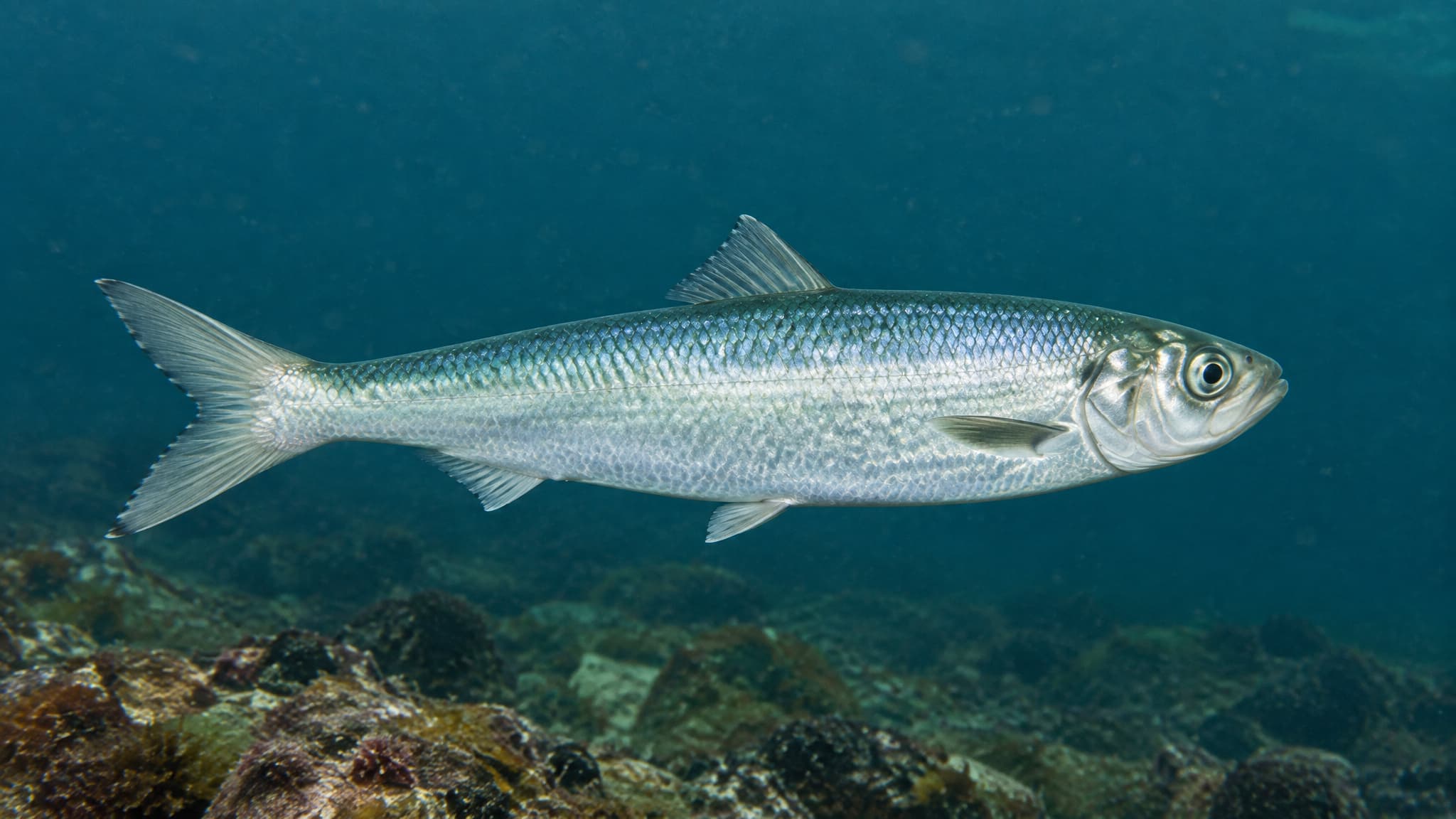
A silvery fish swims horizontally from left to right above a rocky seabed, with a deeply forked tail, reflective scales, and prominent dorsal, pectoral, pelvic, and anal fins visible.
The Atlantic herring (Clupea harengus) is a small, streamlined schooling fish in the family Clupeidae. It is one of the most abundant and commercially important fishes of the North Atlantic. Its body is slender and slightly compressed, with a rounded belly, a small head, a protruding lower jaw and a forked tail. The back is blue to greenish-blue and the sides are bright silver. Adults usually reach about 30–35 cm, rarely up to 45 cm, and weigh up to about 1.1 kg.
Distribution and habitat
The species lives on both sides of the North Atlantic. In the west it ranges from Greenland and Labrador south to Cape Hatteras. In the east it reaches from the Bay of Biscay to Iceland, Spitsbergen and Novaya Zemlya, and it also enters the brackish Baltic Sea. It lives in open-water and coastal zones, usually at depths of about 10–200 m, though it has been recorded down to roughly 360–400 m.
Diet and behavior
Herring are plankton feeders. They eat mainly copepods, krill, other small crustaceans and fish larvae, often rising toward the surface at night to feed. They form huge schools, some of them enormous, and pack tightly together when predators approach. Many populations make long seasonal migrations between feeding, wintering and spawning grounds. Herring are also known to produce and detect sounds.
Reproduction and lifespan
Fertilization is external. Unlike many open-water fishes, herring lay sticky eggs on the seabed, on gravel, rock, sand or seaweed. Different stocks spawn in different seasons, and spawners often return to the same sites year after year. Larvae are about 6 mm long at hatching. Most fish mature at 3–4 years of age, and individuals may live about 20 years.
Ecological role and conservation
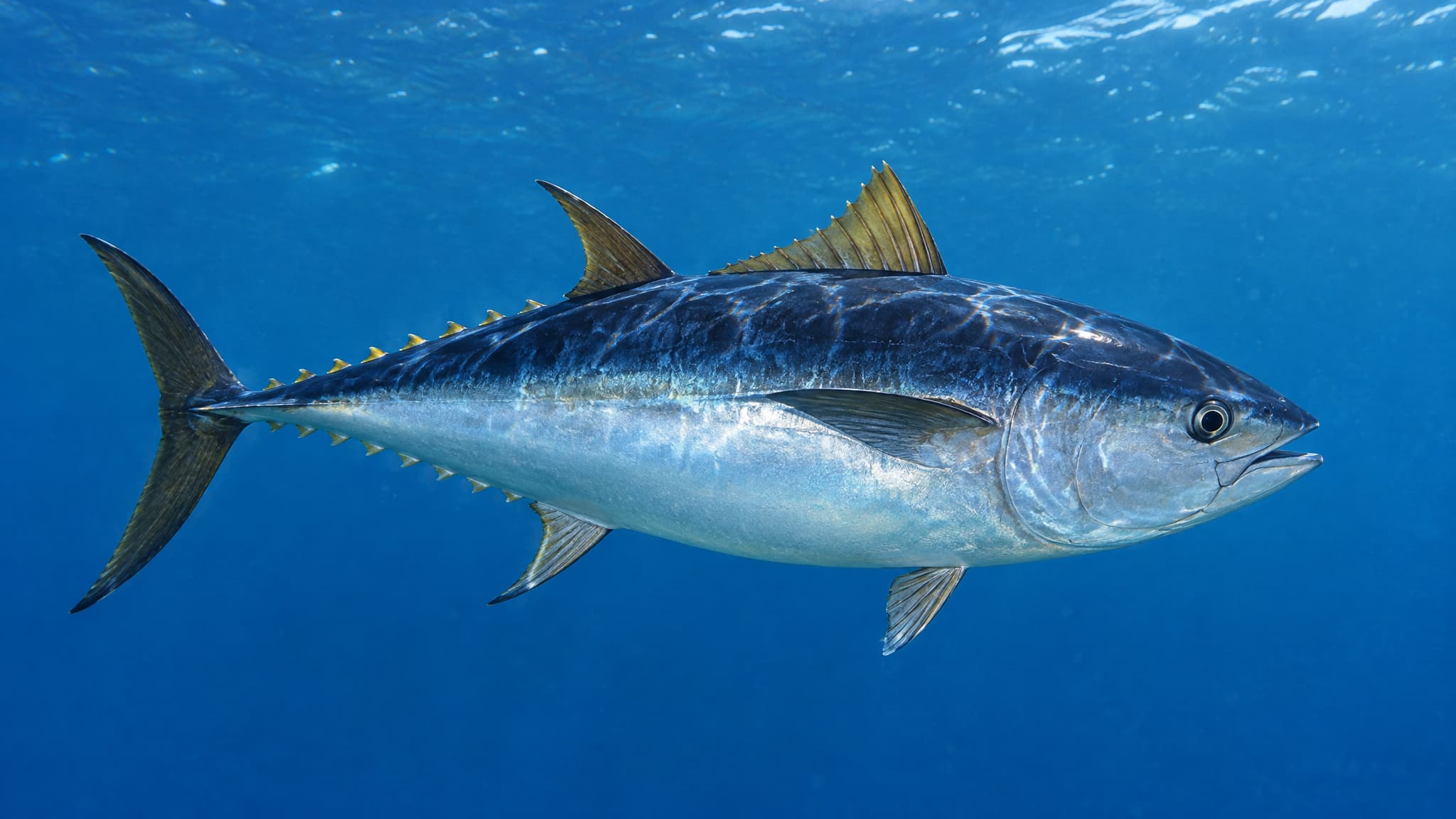
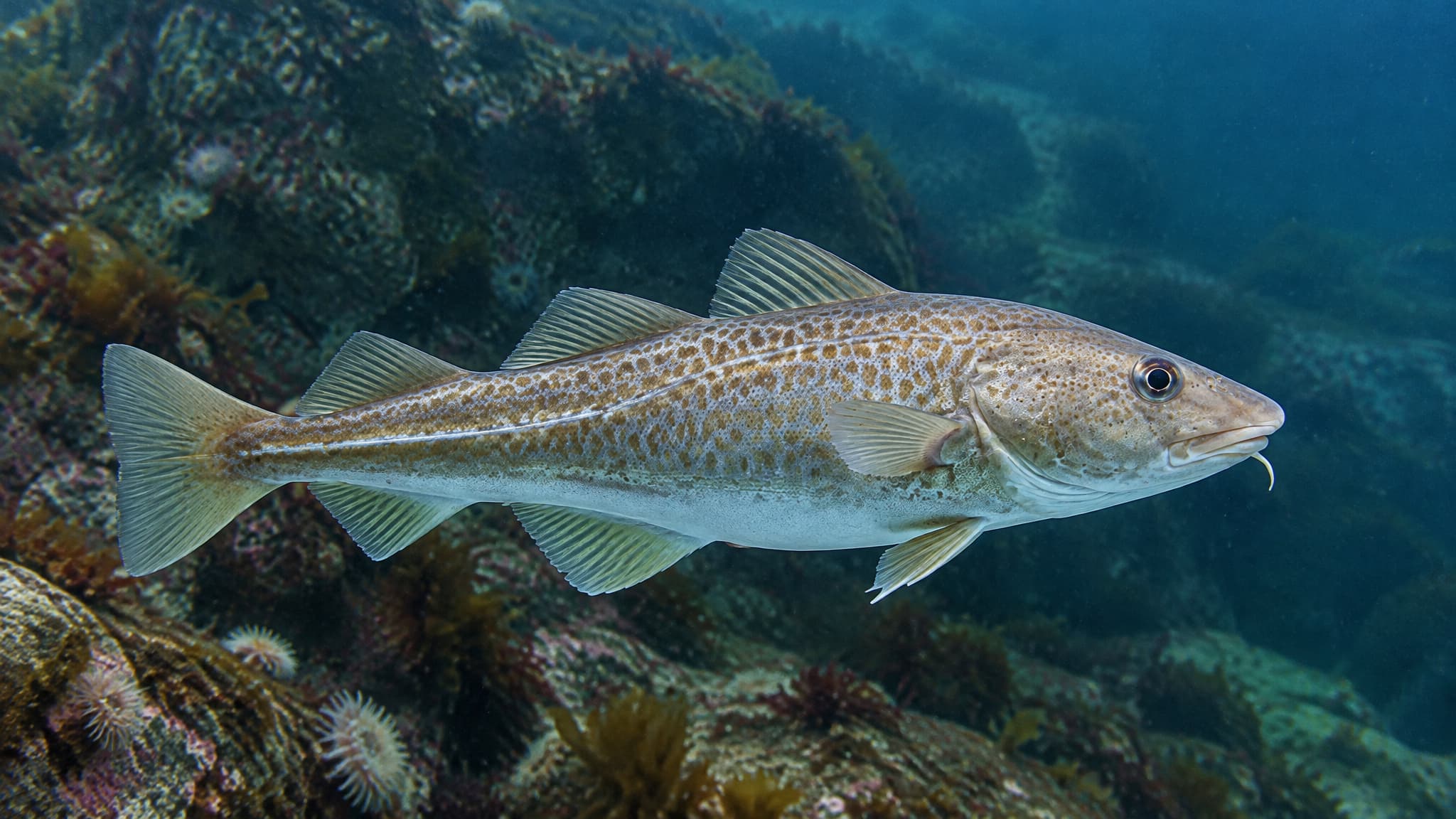
As a key forage fish, the Atlantic herring links plankton to cod, haddock, tunas, seabirds, seals and whales. Bottom-dwelling fishes also eat its eggs. The species is listed as Least Concern by the IUCN, but some stocks have collapsed in the past from overfishing. Today fisheries are managed with catch limits, and warming seas may shift where the fish are found.