Atlantic Mackerel
Scomber scombrus
 AI-generated
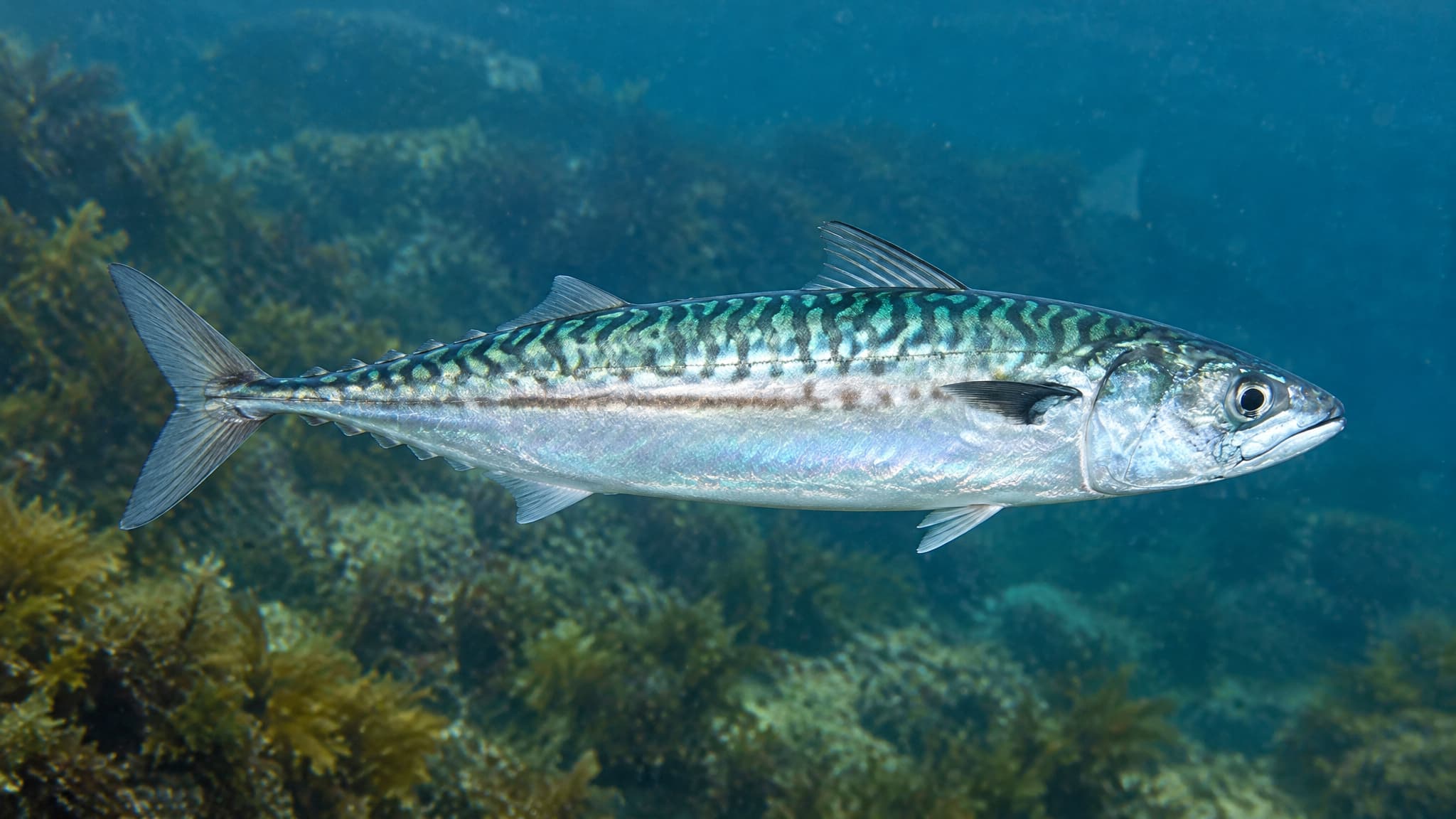
A streamlined mackerel swims horizontally to the right in clear blue water above a rocky, algae-covered seabed. Its silvery body shows dark wavy markings along the back, with two dorsal fins, small finlets, and a deeply forked tail visible.
The Atlantic mackerel (Scomber scombrus) is a fast-swimming, streamlined schooling fish of the family Scombridae, the group that also includes tunas and bonitos. Its back is blue-green with dark, wavy transverse bars, while the flanks and belly are silvery white. Adults commonly measure around 30 cm in fork length, with a recorded maximum of about 60 cm; NOAA notes typical growth up to roughly 42 cm and 1 kg.
The species lives on both sides of the North Atlantic and in the Mediterranean and Black seas. It is pelagic and neritic, most common over cold and temperate continental shelves at depths down to about 200 m, although it has been reported much deeper. Mackerel overwinter in deeper water and move toward the coast in spring as waters warm, undertaking long seasonal migrations between spawning and feeding grounds.
Atlantic mackerel form huge, tightly coordinated schools near the surface and are mainly active by day. They feed heavily on zooplankton, especially copepods, krill and shrimp, and also take squid and small fish. Because they rely on ram ventilation, they must keep swimming to push water over their gills.
Mackerel mature at about 2 to 3 years of age. They are batch spawners, releasing eggs several times per season in surface waters; depending on size, a female may produce from a few hundred thousand to nearly two million eggs. The floating eggs hatch within about a week, and larvae drift in the plankton. Individuals can live up to around 20 years, though most are caught much younger.
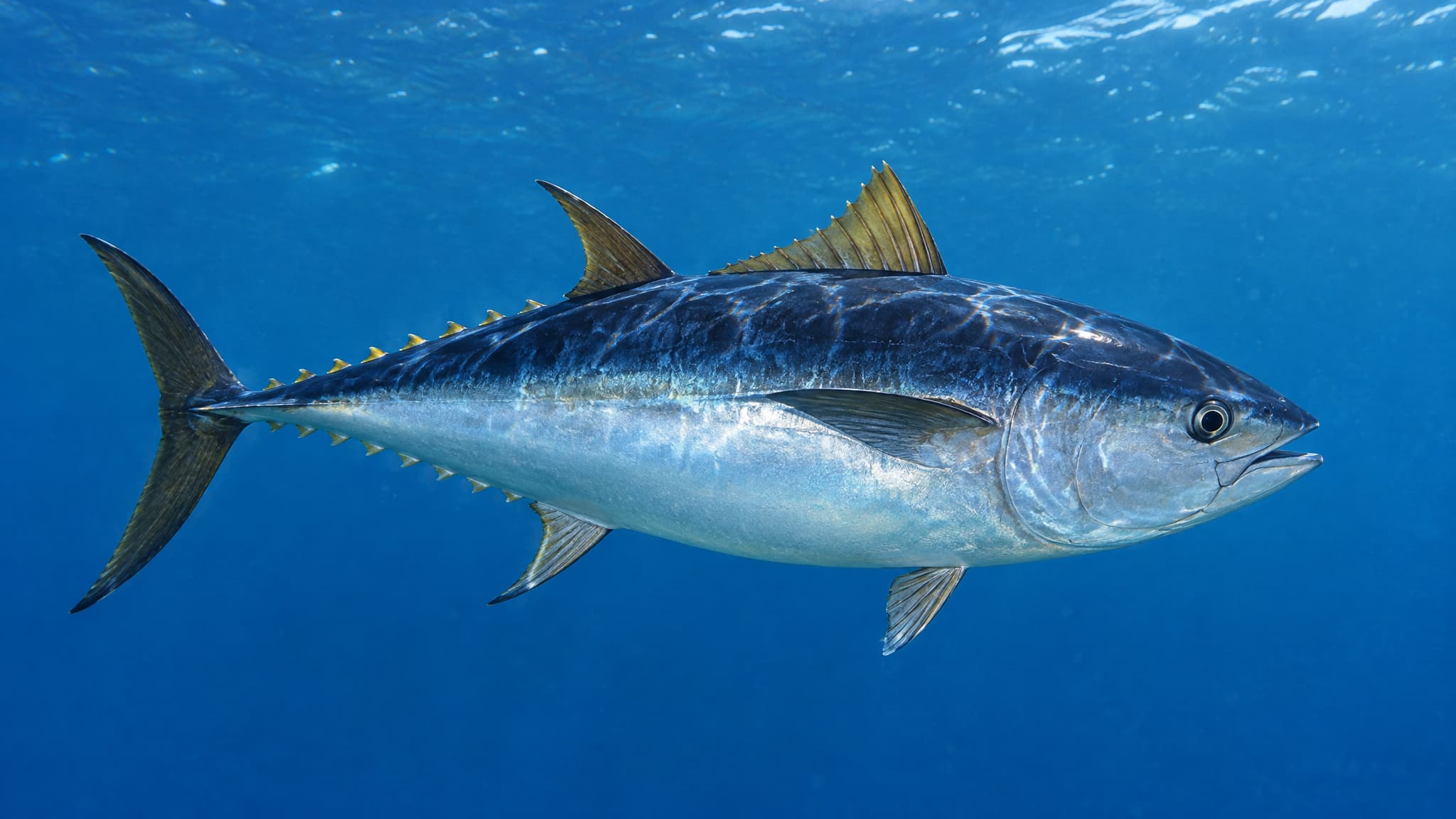
Ecologically, the species is a key link that transfers energy from plankton to larger predators such as Atlantic bluefin tuna, other fishes and marine mammals. It is also one of the most commercially important fishes of the North Atlantic.
The IUCN Red List classifies the Atlantic mackerel as Least Concern. Even so, some stocks have suffered from heavy fishing: the North Sea stock collapsed in the 1960s, and the US stock is still rebuilding under management. Climate-driven shifts in distribution are also changing where the species is caught.