Blue chromis
Azurina cyanea
 AI-generated
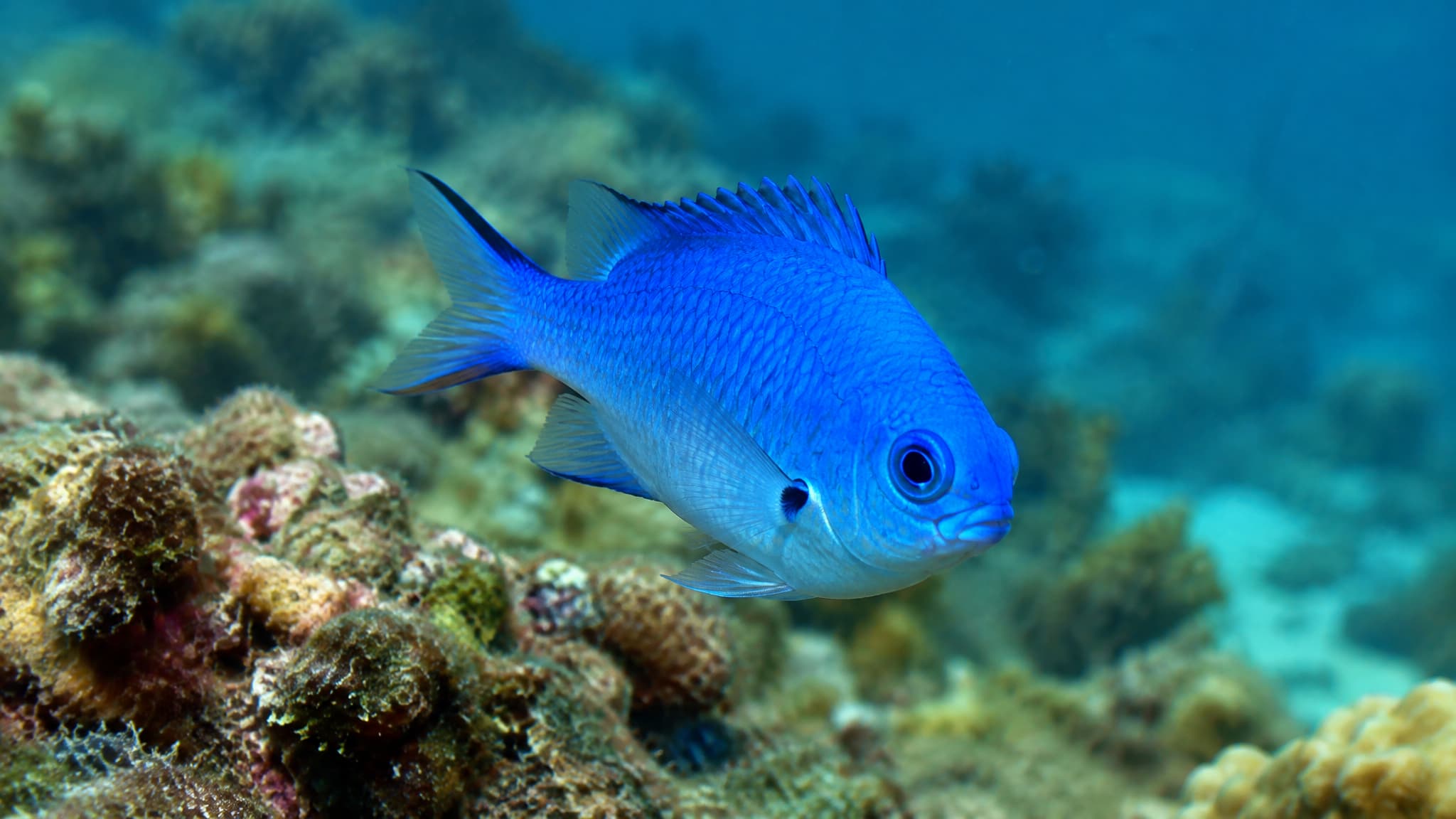
A vivid blue fish swims rightward just above a coral-covered reef, with its dorsal, pectoral, pelvic, and forked caudal fins visible. Its bright blue scales and large dark eye are prominent.
Blue chromis
The blue chromis is a small, brilliantly blue damselfish of tropical western Atlantic coral reefs. Its body is laterally compressed and oval, with large dark eyes, nearly transparent pectoral fins, and a deeply forked tail. Adults can reach about 15 cm in total length, although many are smaller. A dark stripe and black edging along the dorsal and tail fins help distinguish it from similarly colored reef fishes. The name Chromis cyanea remains common in older references, but current FishBase and WoRMS treatment places the species in Azurina.
It occurs from Bermuda and southern Florida through the Bahamas, Gulf of Mexico, Caribbean Sea, and Antilles. This non-migratory fish lives around lagoons, patch reefs, and especially outer reef slopes, from roughly 3 to 60 m deep, most often near 10–20 m. Coral heads, branching corals, crevices, and overhangs provide essential shelter from predators as well as sites for nesting.
Blue chromis are daytime planktivores. They commonly hover above the reef, often in aggregations, and snap up copepods and other zooplankton carried past by currents; tunicates, shrimp larvae, siphonophores, fish eggs, and small crustaceans can also be eaten. Juveniles school more readily, whereas breeding males maintain and defend small territories. When threatened, the fish quickly retreat into coral cover and may darken in color near the substrate.
Reproduction is oviparous. Females attach demersal eggs to a prepared hard surface, after which the male guards the clutch, removes debris, and fans water over the eggs to aerate them until hatching. Larvae subsequently spend a planktonic stage before recruiting to reef shelter. Captive individuals have lived for at least five years, but wild longevity remains poorly known. By transferring plankton-derived energy to larger predatory fishes, blue chromis are an important link in reef food webs. The species is assessed as Least Concern, though its dependence on healthy reef habitat means coral loss and degradation are relevant long-term risks.