Basking Shark
Cetorhinus maximus
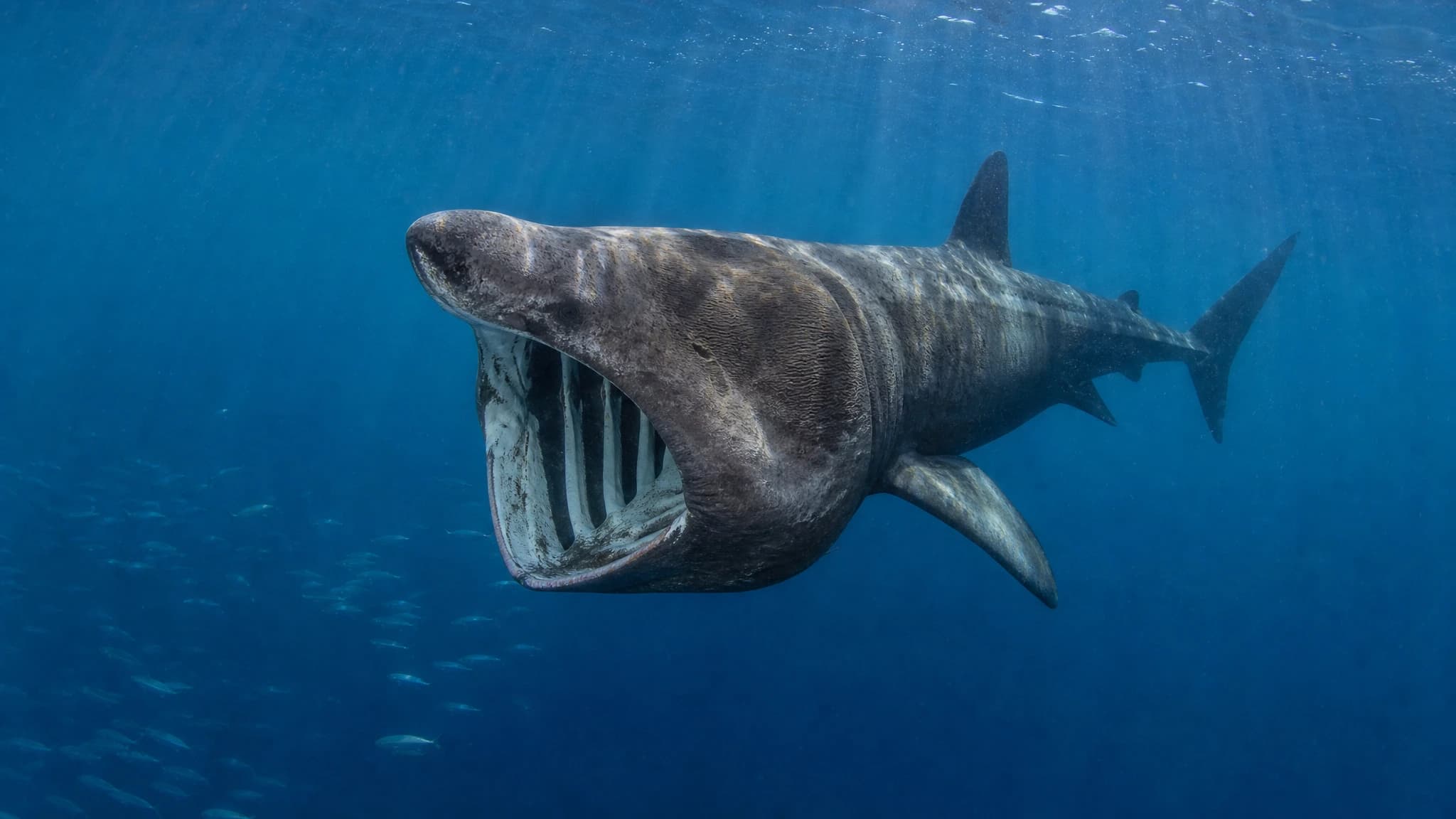
A Basking Shark glides through deep blue waters with its enormous mouth wide open, filtering plankton as sunlight streams down from the surface. Its massive body and distinctive gill structures are beautifully revealed in this underwater encounter. 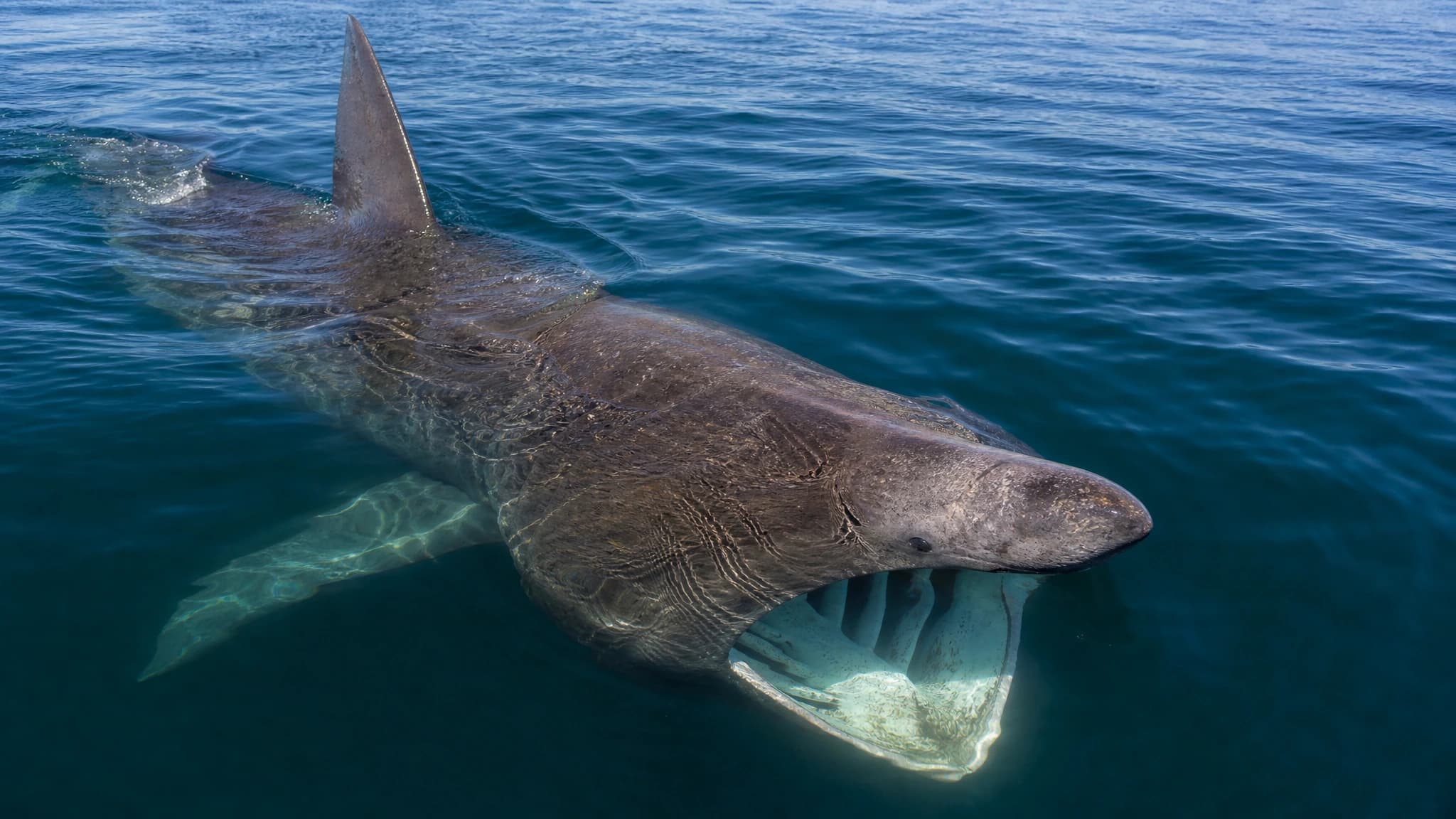
A Basking Shark swims just beneath the ocean surface, its enormous body partially visible through the clear water. With its mouth open for filter feeding, the shark creates a striking portrait against the shimmering blue sea.
The basking shark (Cetorhinus maximus) is the second-largest living fish, with adults commonly reaching 7–10 m in length. Despite its size, it is a gentle filter-feeder that cruises slowly with its huge mouth open, straining zooplankton—especially calanoid copepods—through specialized gill rakers. Enormous gill slits nearly encircle the head, and its gray-brown body often breaks the surface in calm seas, giving the species its common name.
Basking sharks occur in temperate and boreal waters across the Atlantic and Pacific, from coastal shelves to the open ocean. They follow seasonal plankton blooms, feeding near the surface in summer and moving to deeper offshore waters in winter; tagging studies show they can travel thousands of kilometres and dive to great depths. They are ovoviviparous, mature late, and reproduce slowly, with long gestation and very low resilience to fishing pressure.
Once heavily targeted for liver oil, fins, and meat, populations have declined across much of the range. The IUCN lists the species as Endangered, with ongoing threats from bycatch, entanglement, and vessel strikes. International protections include CITES Appendix II and CMS listings, and the shark supports ecotourism and research in regions such as Scotland, Ireland, and Cornwall.