Blacksmith Treefrog
Boana faber
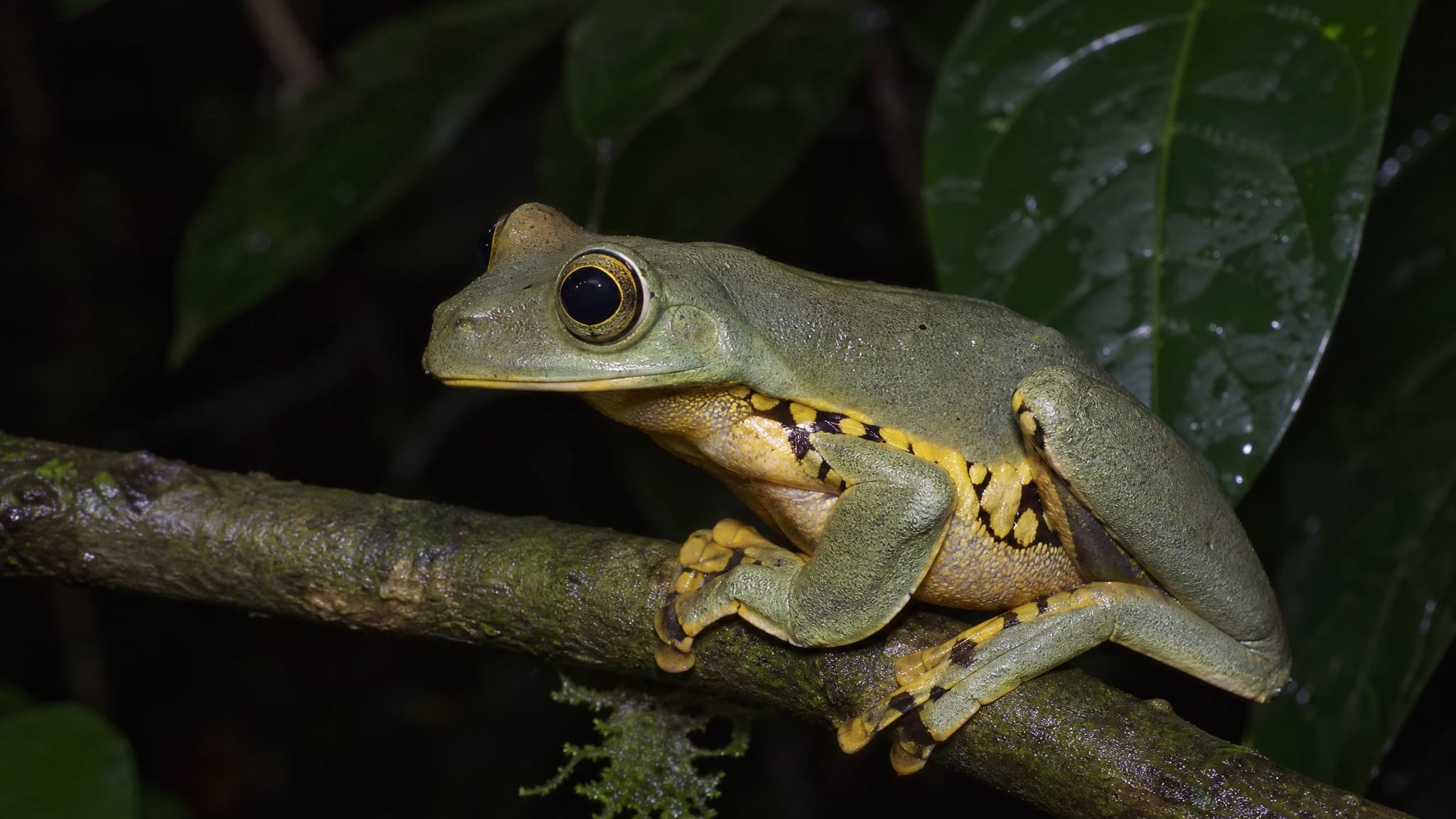 AI-generated
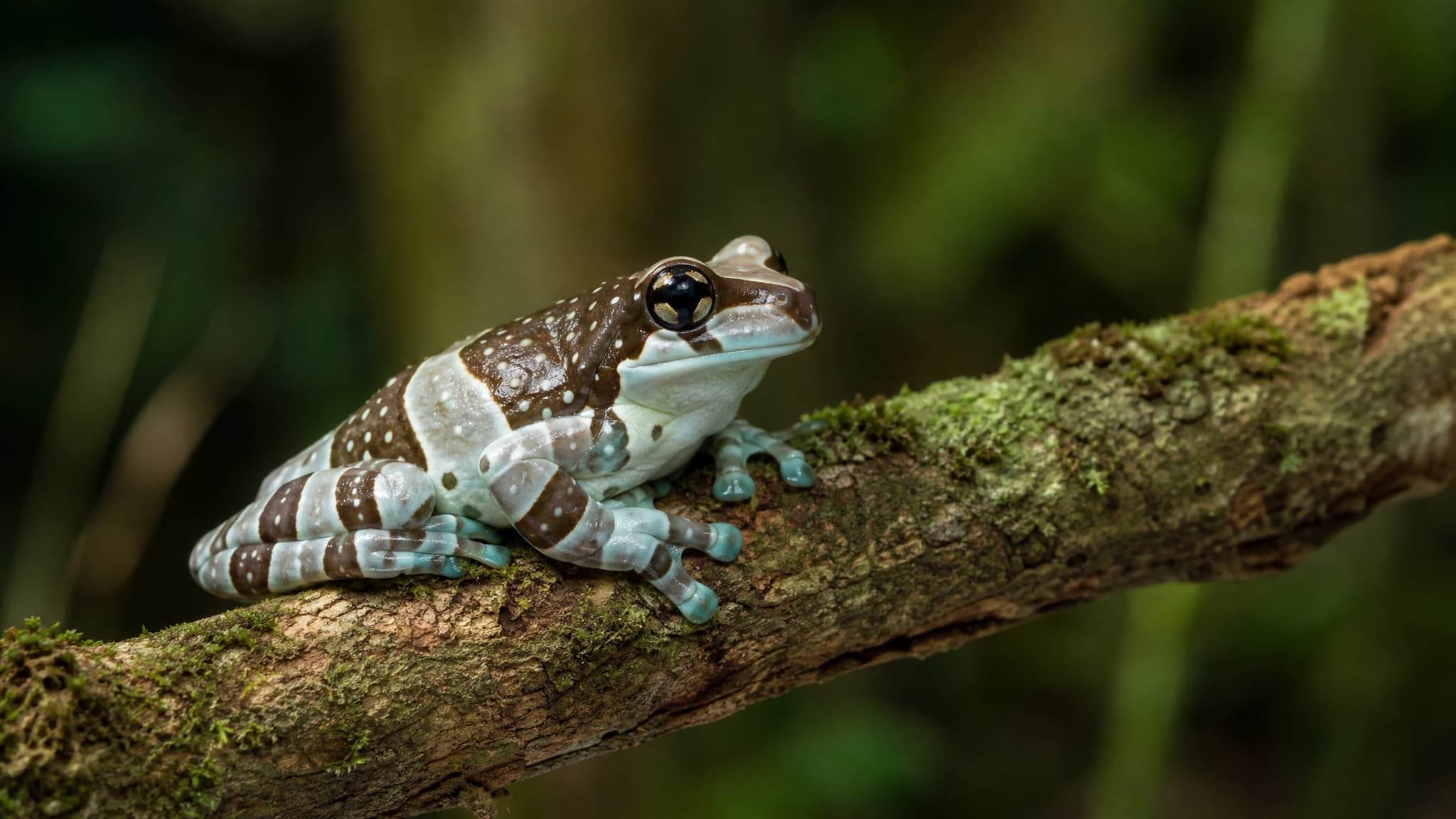
A green treefrog is shown in side profile, crouched and gripping a moss-covered branch amid wet tropical foliage; its large eye, yellow-speckled underside, and bold dark flank markings are visible.
Blacksmith Treefrog
Boana faber is a large South American treefrog in the family Hylidae. It is known as the blacksmith treefrog or smith frog, names associated with its loud, metallic-sounding calls; in Brazil it is widely called sapo-ferreiro or sapo-martelo. Adults are robust for a treefrog, commonly about 8.5–10 cm from snout to vent. Their coloration is usually brown, grayish brown, or olive-brown, helping them blend into bark and muddy wetland margins. A conspicuous tympanum and a dark line extending rearward from the snout are useful field marks.
The species occurs from eastern through southern Brazil and reaches southeastern Paraguay and Misiones Province in northeastern Argentina. It is strongly associated with the Atlantic Forest region, including humid tropical forest, forest edges, and vegetation around ponds, swamps, streams, and other quiet or slow-moving freshwater. Although arboreal in form and able to perch on trunks and vegetation, it depends on water-margin habitat for reproduction.
This frog is chiefly nocturnal. Adults forage on small terrestrial invertebrates, while the diet of the larvae remains comparatively little studied; tadpoles have been observed feeding on aquatic macrophyte material. Its most remarkable behavior occurs in the breeding season: males excavate shallow mud basins, often called “pans,” then call from them and defend the sites against rival males. Enlarged prepollical spines near the thumbs can be used during male contests.
A female inspects a male’s basin before amplexus, and eggs are deposited in the constructed nest. Tadpoles initially remain together within that sheltered basin, dispersing after further development or when water connects it to the surrounding wetland. This nest-building strategy can reduce early exposure to some aquatic hazards, while the frogs’ calls and territorial behavior structure breeding activity along pond margins. A reliable species-specific wild lifespan has not been well documented in the sources consulted.
Boana faber is assessed as Least Concern because of its broad distribution and continuing occurrence in a range of habitats. Nonetheless, drainage or pollution of wetlands, removal of riparian vegetation, and forest conversion may diminish suitable breeding and shelter sites locally. Protecting vegetated pond edges, marshes, and connected forest habitat benefits this distinctive frog and the freshwater communities in which it breeds.