Oriental Fire-Bellied Toad
Bombina orientalis
 AI-generated
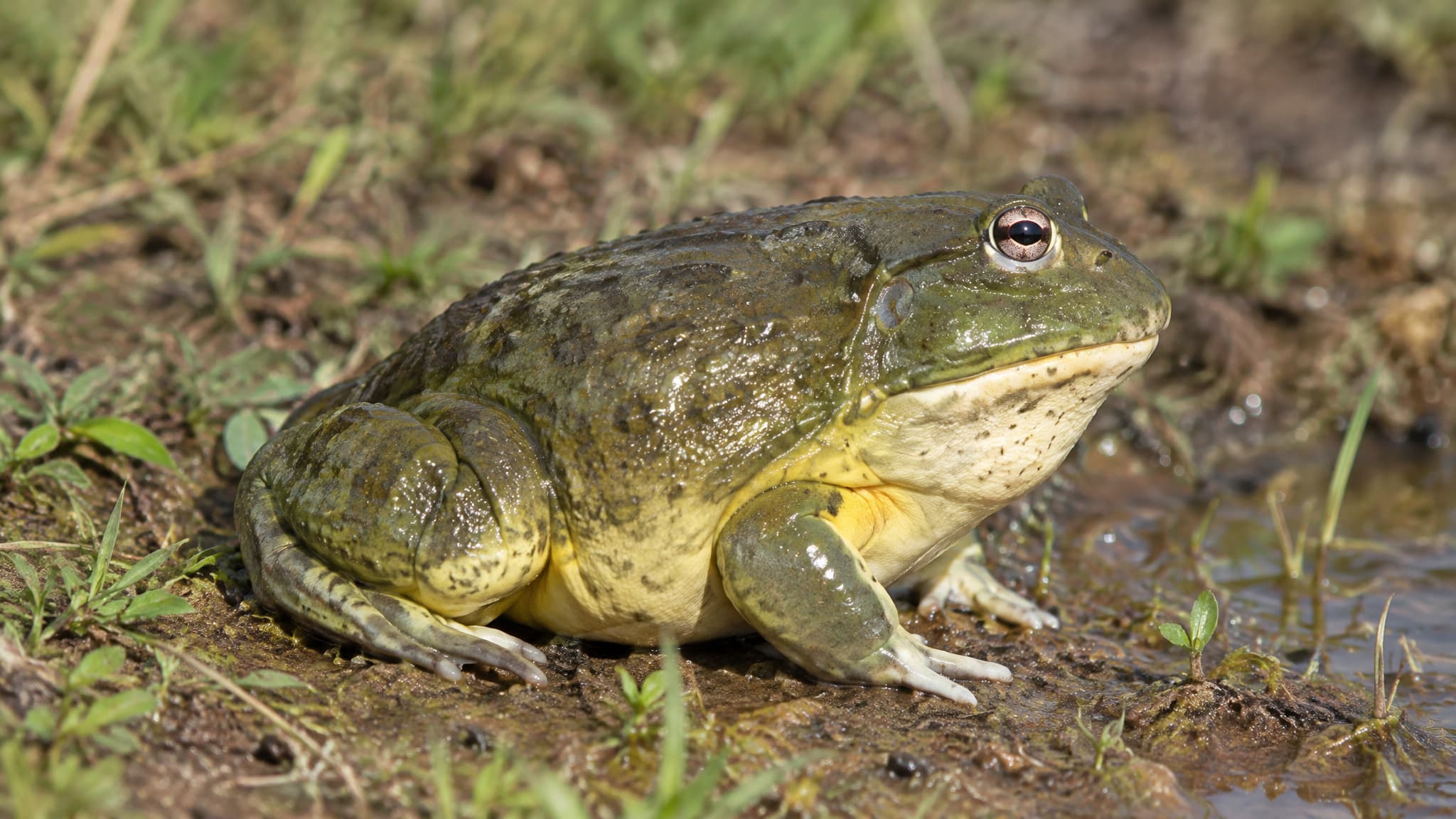
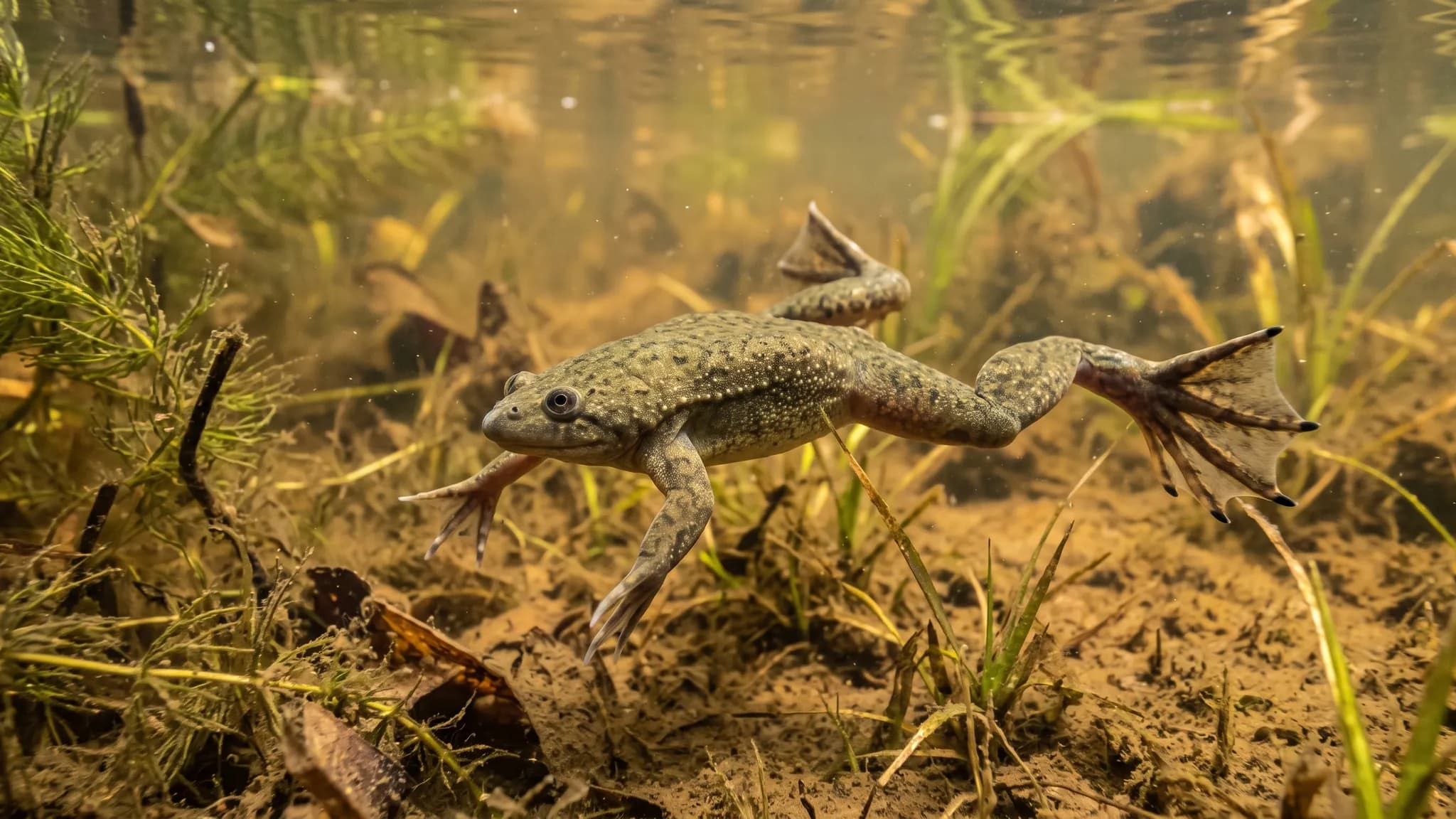
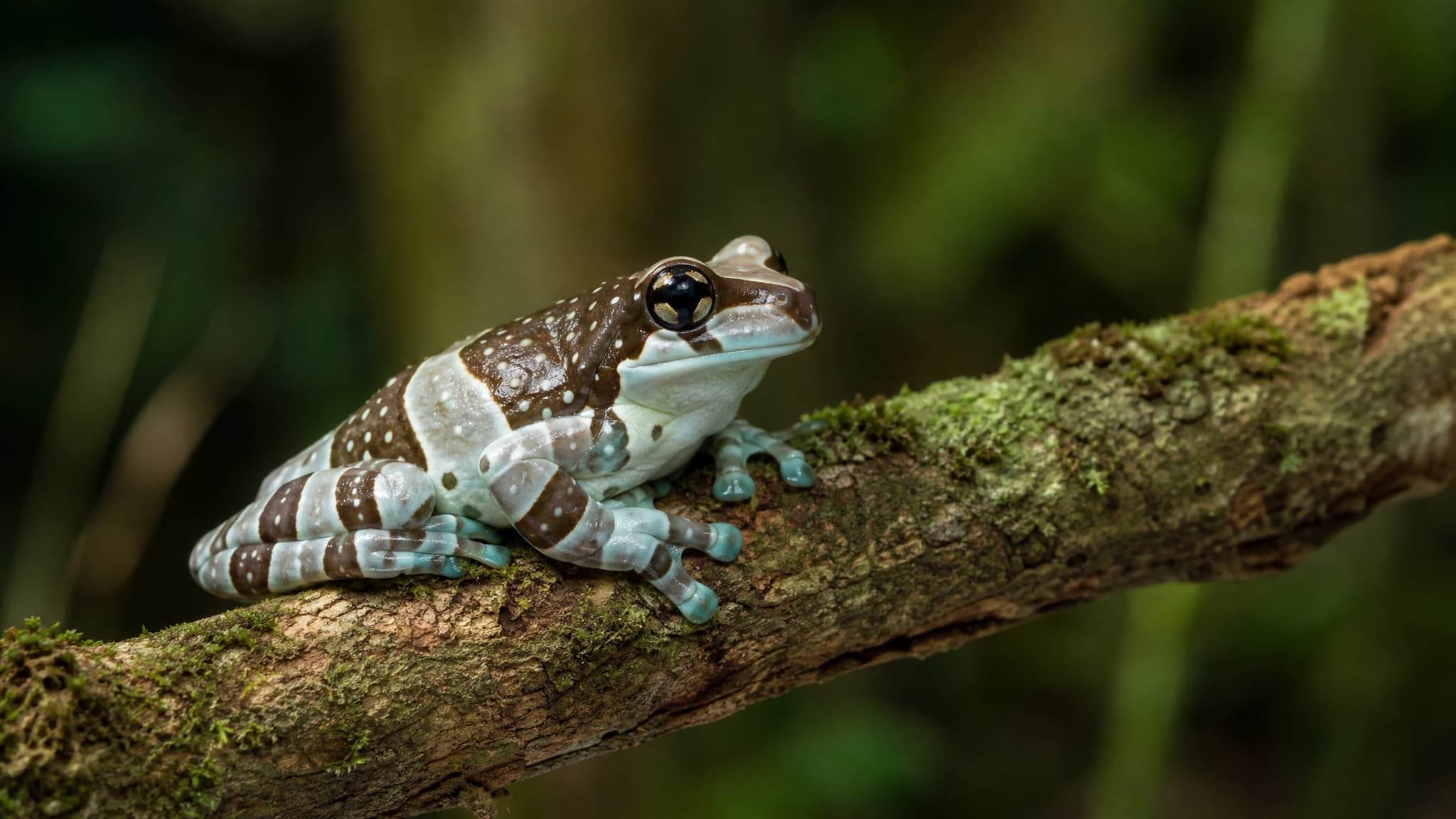
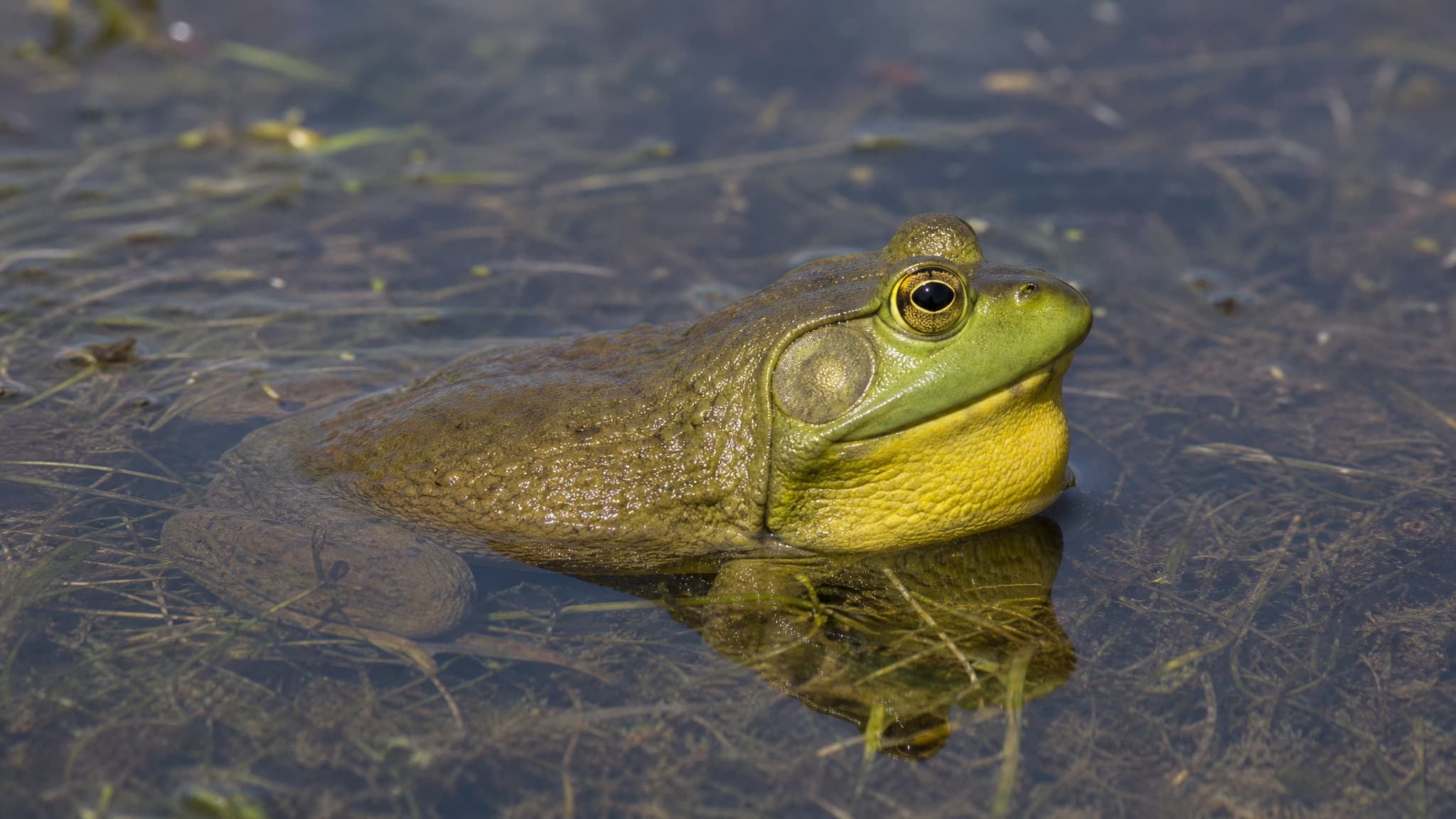
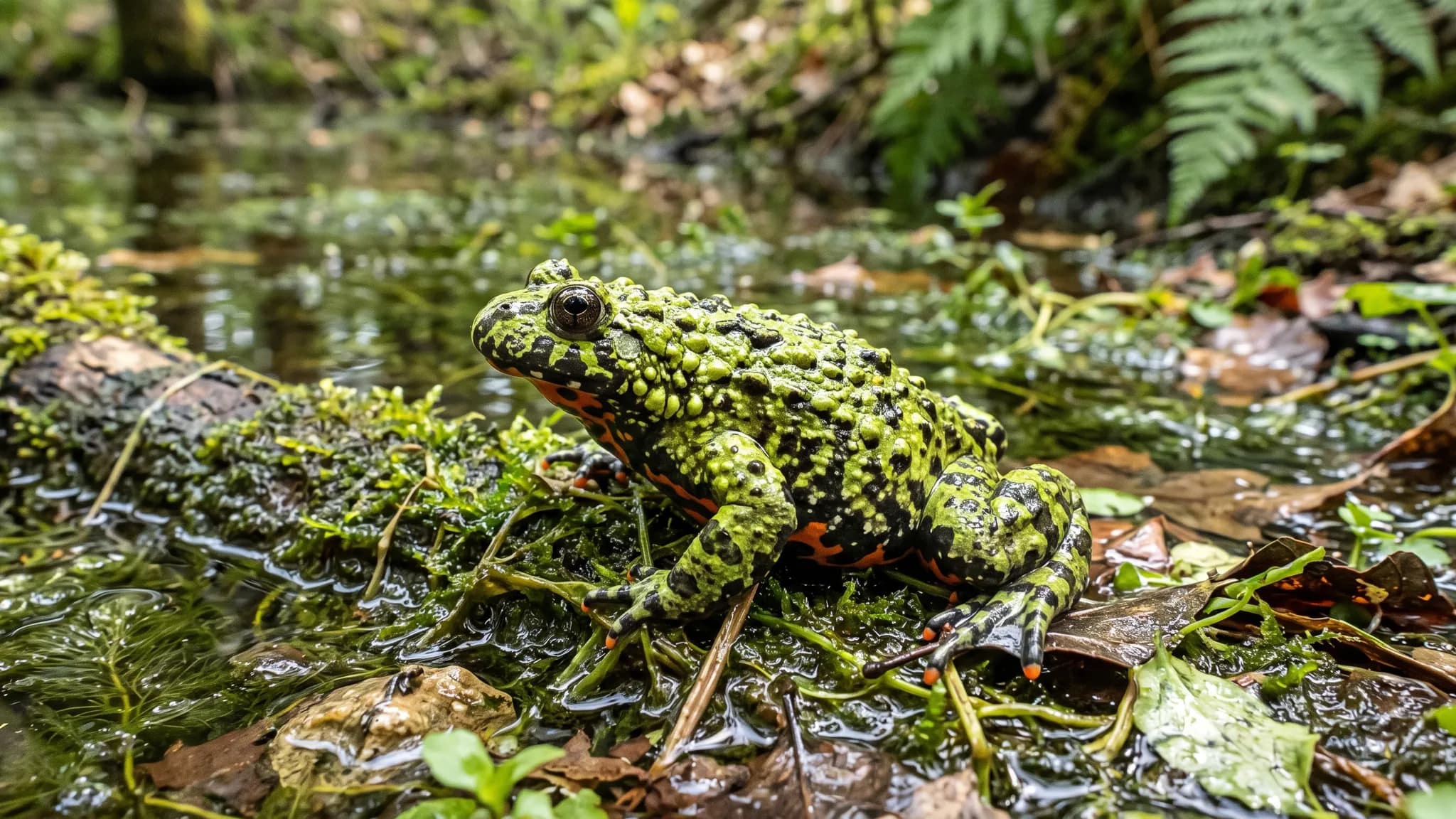
An Oriental fire-bellied toad rests on a mossy log amidst shallow, vegetated wetland waters, displaying its bright green and black tuberculated dorsal skin with vivid reddish-orange coloration peeking from its underside and toe tips.
The Oriental fire-bellied toad (Bombina orientalis) is a small, semi-aquatic anuran native to East Asia. Despite its common name, it is not a true toad of the family Bufonidae, but rather a member of the primitive disc-tongued frog family Bombinatoridae. Adults typically reach a snout-vent length of 4.0 to 5.5 cm. Dorsally, the skin is covered with rough, glandular tubercles and is colored in vibrant shades of bright green or brownish-grey with bold, irregular black spots. The species exhibits striking aposematic coloration on its ventral surface, characterized by intense red or orange patches mottled with deep black. Their eyes sit prominently on top of the head with distinctive triangular or heart-shaped pupils, and they lack visible external eardrums.
This species is widely distributed across Northeast Asia, ranging through northeastern China, the Korean Peninsula, and the southern Russian Far East, with historical introductions noted in Japan and near Beijing. It thrives in temperate, semi-aquatic ecosystems including mixed deciduous and coniferous forests, slow-moving streams, flooded river valleys, roadside ditches, and shallow vegetated ponds. During warmer months, these toads are active both day and night, basking near water margins. When winter approaches, they retreat into terrestrial burrows, leaf litter, or deep underwater crevices beneath stream beds to undergo hibernation.
Bombina orientalis is famous for its specialized antipredator display known as the unkenreflex. When cornered by a terrestrial predator, the toad flattens and arches its spine upwards, elevating its limbs to expose the vivid red-orange coloration on its belly and palms. This serves as a warning sign of the milky, pungent cutaneous toxins secreted by its granular dorsal glands. These secretions contain bioactive regulatory peptides, such as bombesin, as well as antimicrobial compounds that induce severe irritation in mucosal membranes and deter birds and small mammals.
The diet of the Oriental fire-bellied toad is composed of a broad range of invertebrates, including beetles, flies, earthworms, aquatic insects, and small mollusks. Breeding takes place from late spring through mid-summer, often stimulated by warm monsoon rains. Males produce soft, bell-like calls to attract females to shallow water pools, engaging in inguinal amplexus where the male clasps the female around the waist. Females lay several clutches of 40 to 100 eggs on submerged vegetation. Tadpoles develop rapidly, metamorphosing in 6 to 14 weeks. Under captive and optimal wild conditions, these hardy anurans can live for 12 to 16 years.
Ecologically, Bombina orientalis acts as both an efficient insectivore and an important prey resource for specialized wetland predators. It is classified as Least Concern on the IUCN Red List due to its broad geographical distribution and large populations. However, localized populations face threats from agricultural chemical runoff, deforestation, and wetland drainage. Furthermore, its gentle temperament and vivid coloration make it one of the most widely traded amphibians in the global pet trade.