Blue land crab
Cardisoma guanhumi
 AI-generated
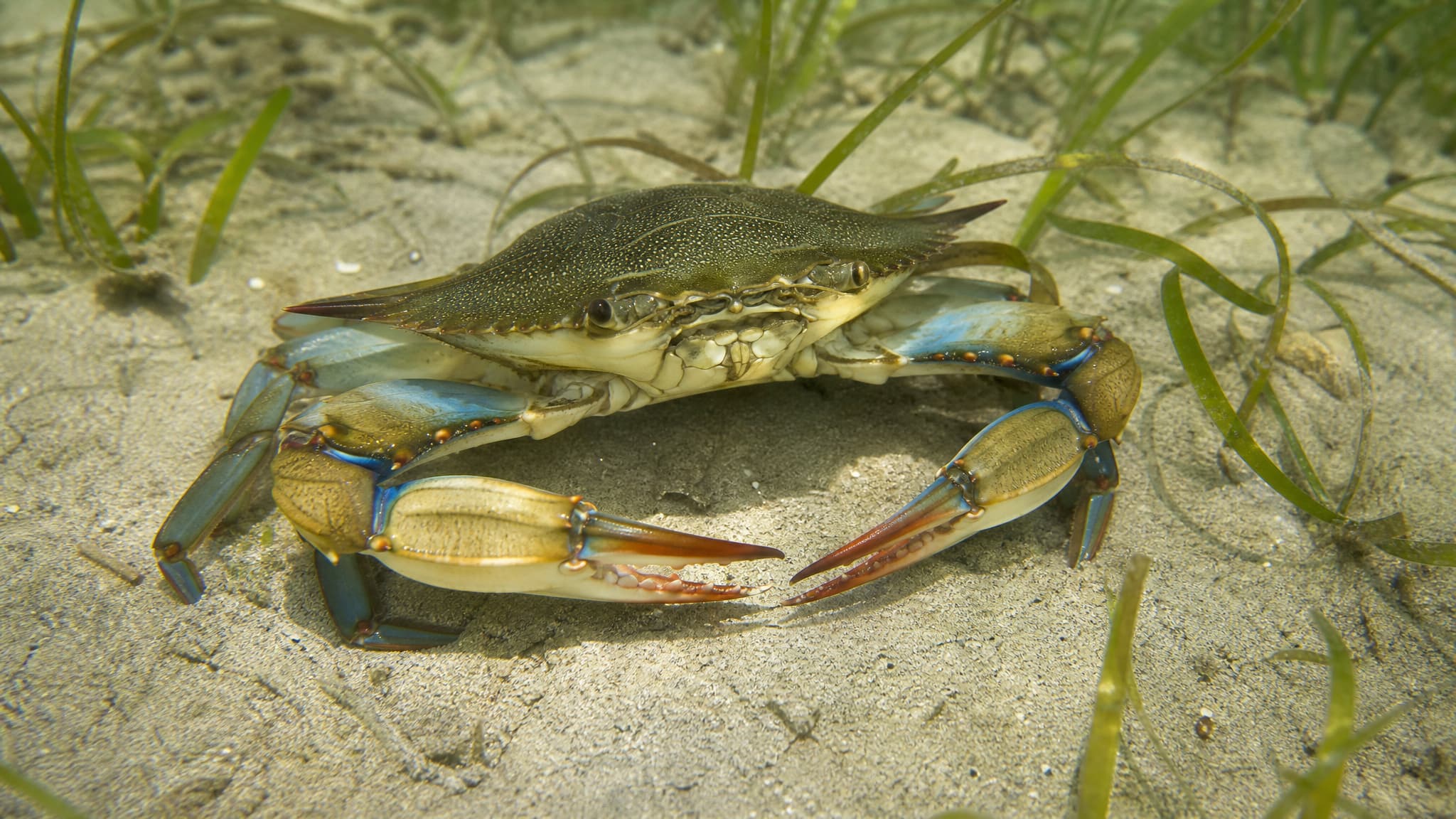
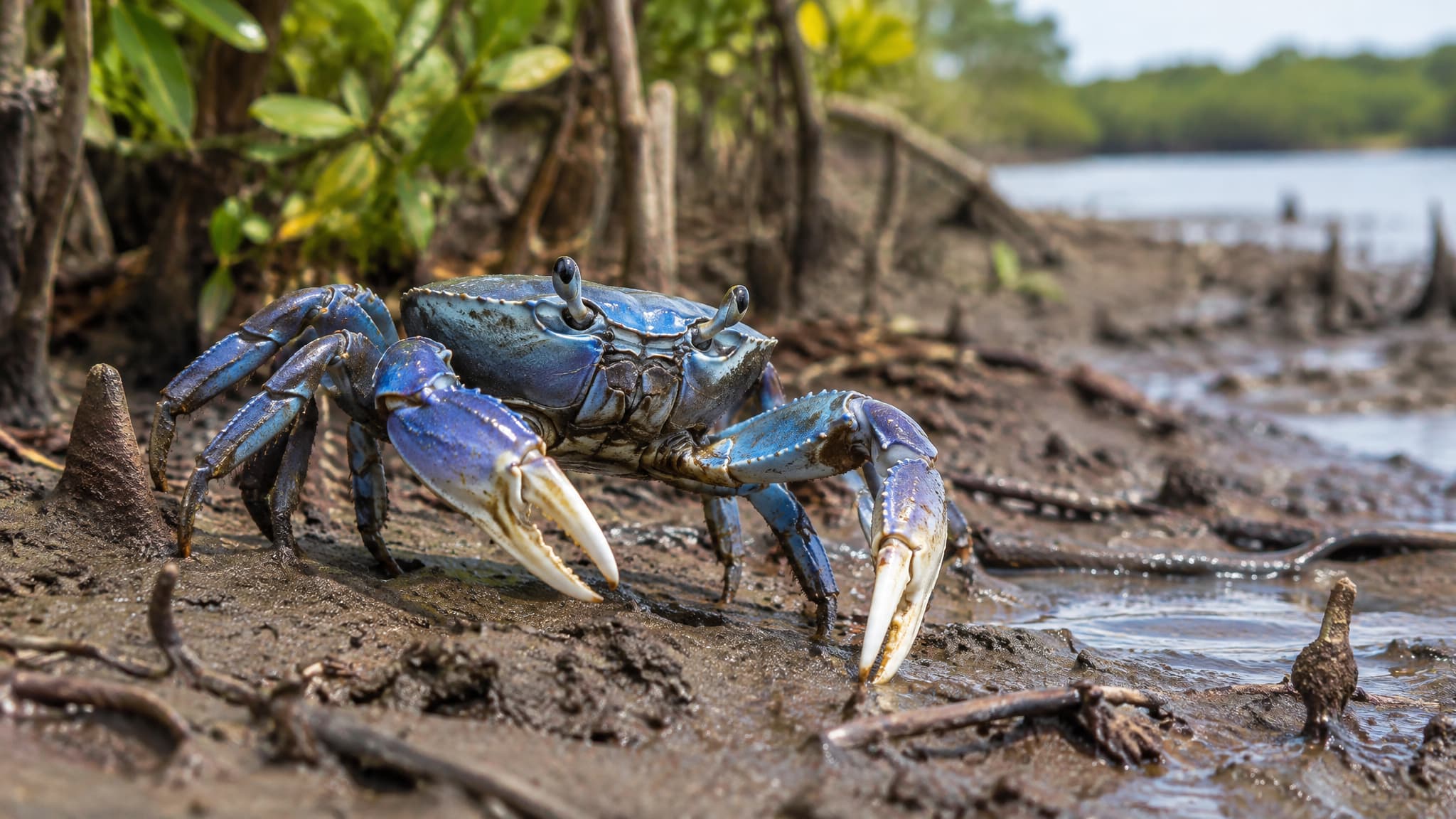
A blue crab stands on wet mangrove mud beside shallow water, showing a broad blue carapace, raised eyestalks, several walking legs, and two large pale-tipped claws.
The blue land crab is a large, mostly terrestrial crab of the western Atlantic coastlands. Adults have a broad, smooth carapace and stout walking legs; their colors range from grayish or pale tones to blue and violet, while younger crabs are commonly brownish with orange legs. Males generally grow larger than females, and large individuals may have a carapace roughly 12–13 cm wide.
It occurs from the southeastern United States and Bermuda through the Gulf of Mexico, Caribbean, Central America, and northern South America, including Brazil. Although it is a land crab, it remains closely tied to coastal waters. It occupies estuaries, mangrove margins, riverbanks, coastal forest, and sandy or muddy ground above the tide line. Each crab excavates and defends a deep burrow, often containing water at its base; the burrow provides shelter from heat, dryness, and predators.
Cardisoma guanhumi is chiefly an omnivorous scavenger and browser. Leaves, fruit, grasses, and other plant material make up much of its food, but it also eats insects, carrion, detritus, and other available animal matter. Usually solitary, it spends much of the day sheltered underground and commonly forages around dawn, dusk, or at night. By moving leaf litter and consuming decaying material, it contributes to nutrient cycling between terrestrial coastal habitats and nearby wetlands.
Reproduction depends on the sea despite the adults' land-based lives. Mating is seasonal, and females carry a mass of fertilized eggs beneath the abdomen for about two weeks before migrating to coastal water to release hatching larvae. Larvae develop in saline water before later returning to land as juvenile crabs. Wild lifespan has been reported at about 11 years. In Brazil, ICMBio assesses the species as Vulnerable, citing habitat loss and deterioration—especially of mangrove-associated coastal environments—as important pressures; harvesting can add further local pressure.