Carpenter Ant
Camponotus pennsylvanicus
 AI-generated
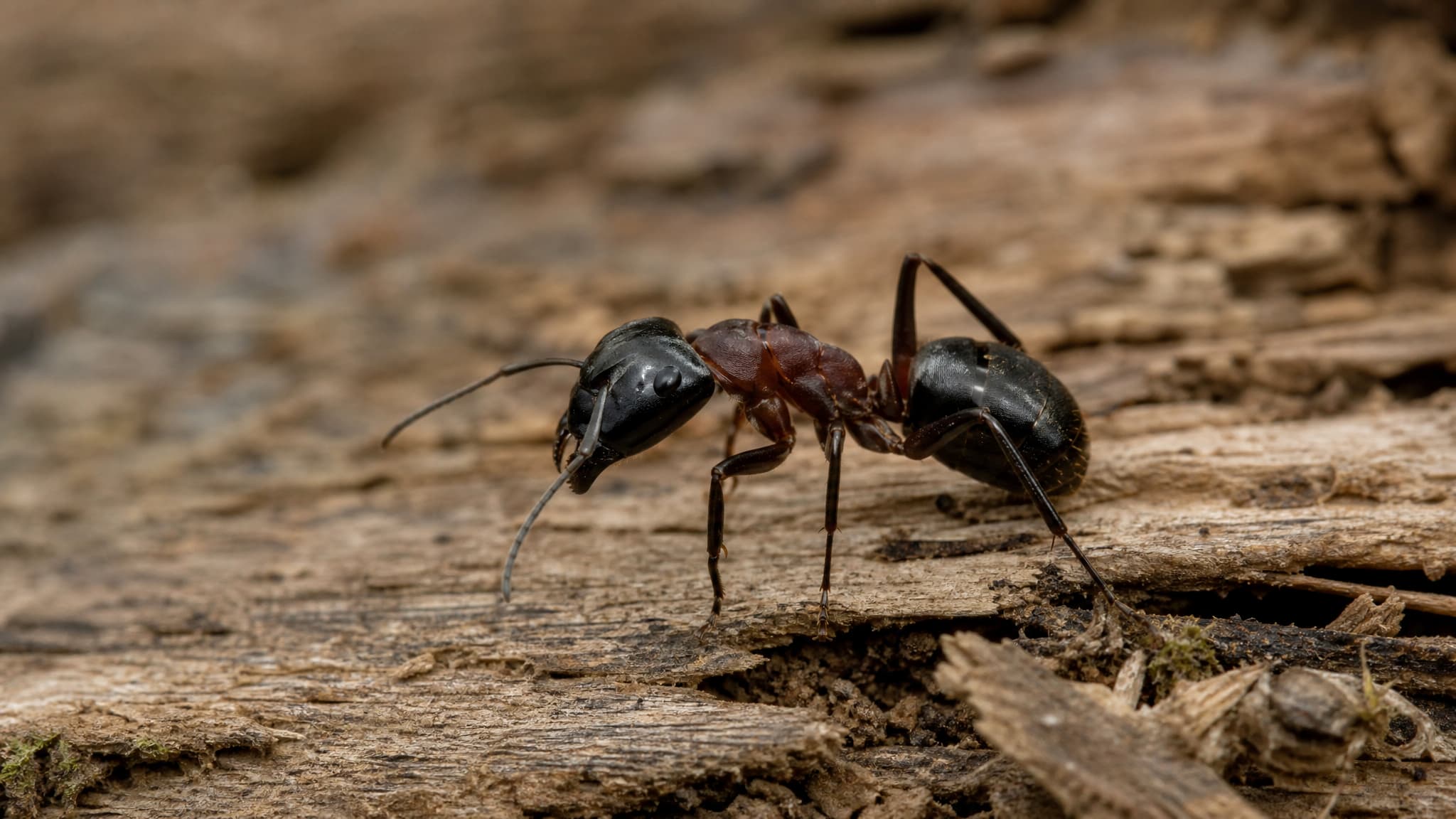
A carpenter ant is shown in side view walking across weathered wood, with a dark head and abdomen, reddish-brown thorax, curved antennae, and long jointed legs visible.
The carpenter ant is a common name for ants in the genus Camponotus, a large and diverse group of more than 1,000 species found on every continent except Antarctica. These are among the largest and most familiar ants in North America, recognized by their sturdy bodies, elbowed antennae, and a single-segmented waist (petiole). Colonies are eusocial, with a long-lived queen, wingless workers that are often polymorphic (minor and major castes), and seasonal winged reproductives that fly in nuptial swarms to found new nests.
Carpenter ants nest by excavating smooth galleries in dead or damp wood, decaying logs, tree cavities, soil, and sometimes human structures — but they do not eat wood. They are omnivorous predators and scavengers that also feed heavily on sugary resources such as nectar, tree sap, and honeydew from aphids and scale insects, which many species actively tend and protect. Foraging is often nocturnal or crepuscular, and large colonies may maintain a parent nest plus several satellite nests connected by trails.
Ecologically, carpenter ants accelerate wood decomposition and help regulate insect populations in forests and other habitats. Some species, including the black carpenter ant (Camponotus pennsylvanicus) — the most common Camponotus in the central and eastern United States — can become structural pests when they colonize moisture-damaged timber. Most Camponotus species have not been individually assessed by the IUCN Red List and are generally considered secure.