Chambered nautilus
Nautilus pompilius
 AI-generated
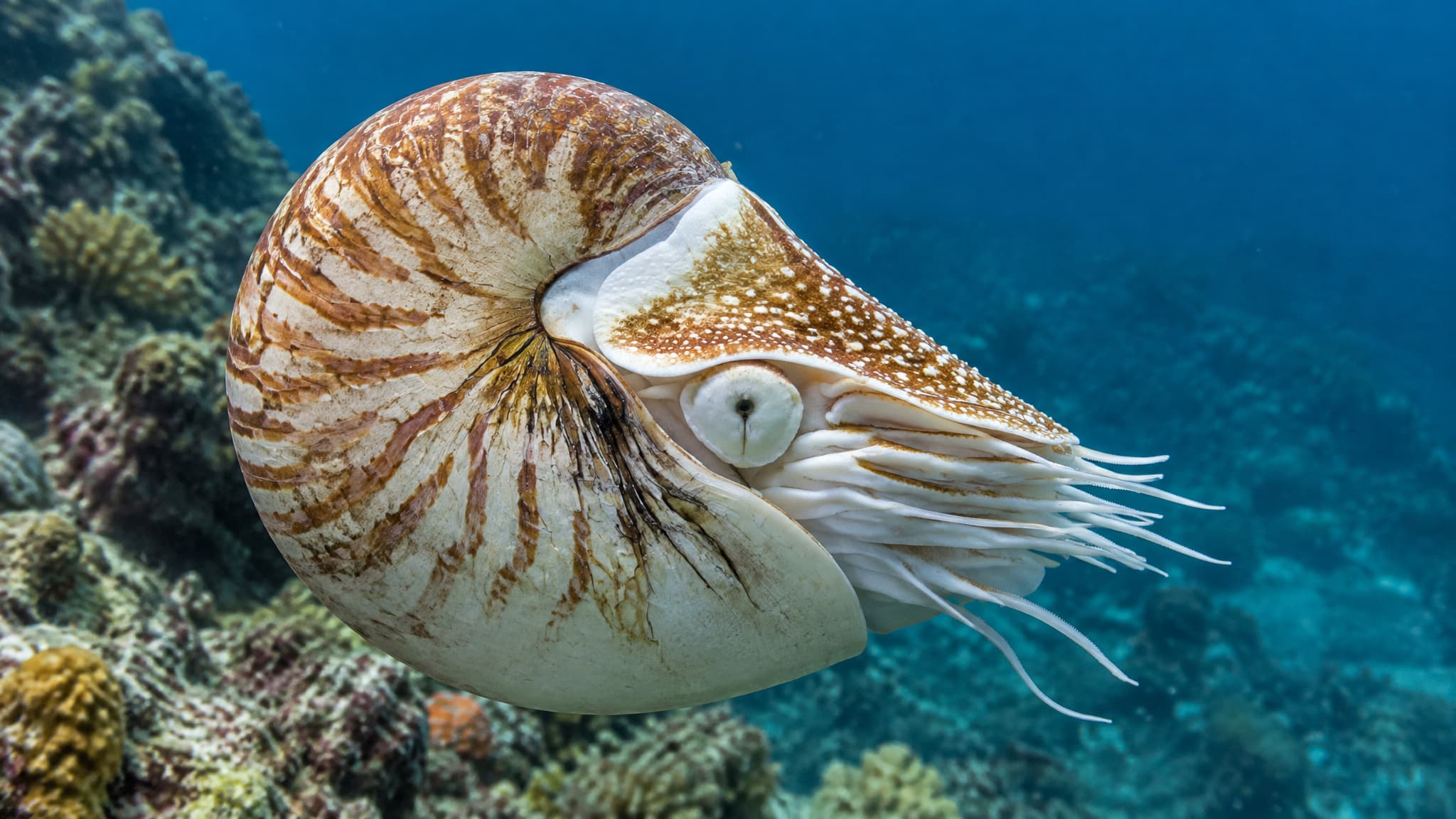
A chambered nautilus swims in profile above a coral reef, with its coiled, striped shell, prominent eye, and numerous slender tentacles visible.
The chambered nautilus (Nautilus pompilius), also called the pearly or emperor nautilus, is a cephalopod mollusc of the family Nautilidae, described by Linnaeus in 1758. It is the best-known and most widespread nautilus and the largest in its genus: exceptional shells from Indonesia and northern Australia reach 25.4 cm across. Its coiled outer shell follows a logarithmic spiral and, in adults, is divided into about 30 chambers.
The species lives in the tropical Indo-Pacific, from the Andaman Sea east to Fiji and from southern Japan south to the Great Barrier Reef. Populations tend to be small and isolated. It lives on shores and coral reefs, staying near the bottom in waters up to 500 m deep, and rises toward shallower water at night, when it is most active.
Instead of the suckered arms of octopuses and squids, the nautilus has about 90 small, suckerless tentacles. Its simple eyes lack a cornea and lens, so it finds food mostly by smell, using chemical sensors on the tentacles. It is a carnivore and largely a scavenger, taking carrion, fishes, crabs, lobsters and other shellfish, which it tears with a sharp, beak-like mouth. A tube called the siphuncle runs through the chambers and adjusts the gas and liquid inside them to control buoyancy, while the animal swims by jet propulsion, pushing water out through its funnel.
Fertilization is internal: in males, four tentacles form a spadix that passes a sperm packet to the female. Females lay a few oblong eggs about 3.8 cm long, attached in crevices or among corals, and eggs have never been seen in the wild. Development takes 9 to 15 months depending on water temperature, and there is no larval stage, so the young hatch as miniature adults with shells about 2.5 cm across. Growth is slow: maturity comes at around 10 to 15 years, and individuals can live 15 to 20 years or more.
Sharks, bony fishes and octopuses prey on nautiluses. The IUCN Red List classifies the species as Vulnerable. The main threat is overfishing for the international shell trade, which supplies jewelry, souvenirs and home décor, and its slow growth, late maturity and few eggs make populations slow to recover. All nautiluses have been listed in CITES Appendix II since 2016, and the United States listed the chambered nautilus as threatened under the Endangered Species Act in 2018.