Coconut Crab
Birgus latro
 AI-generated
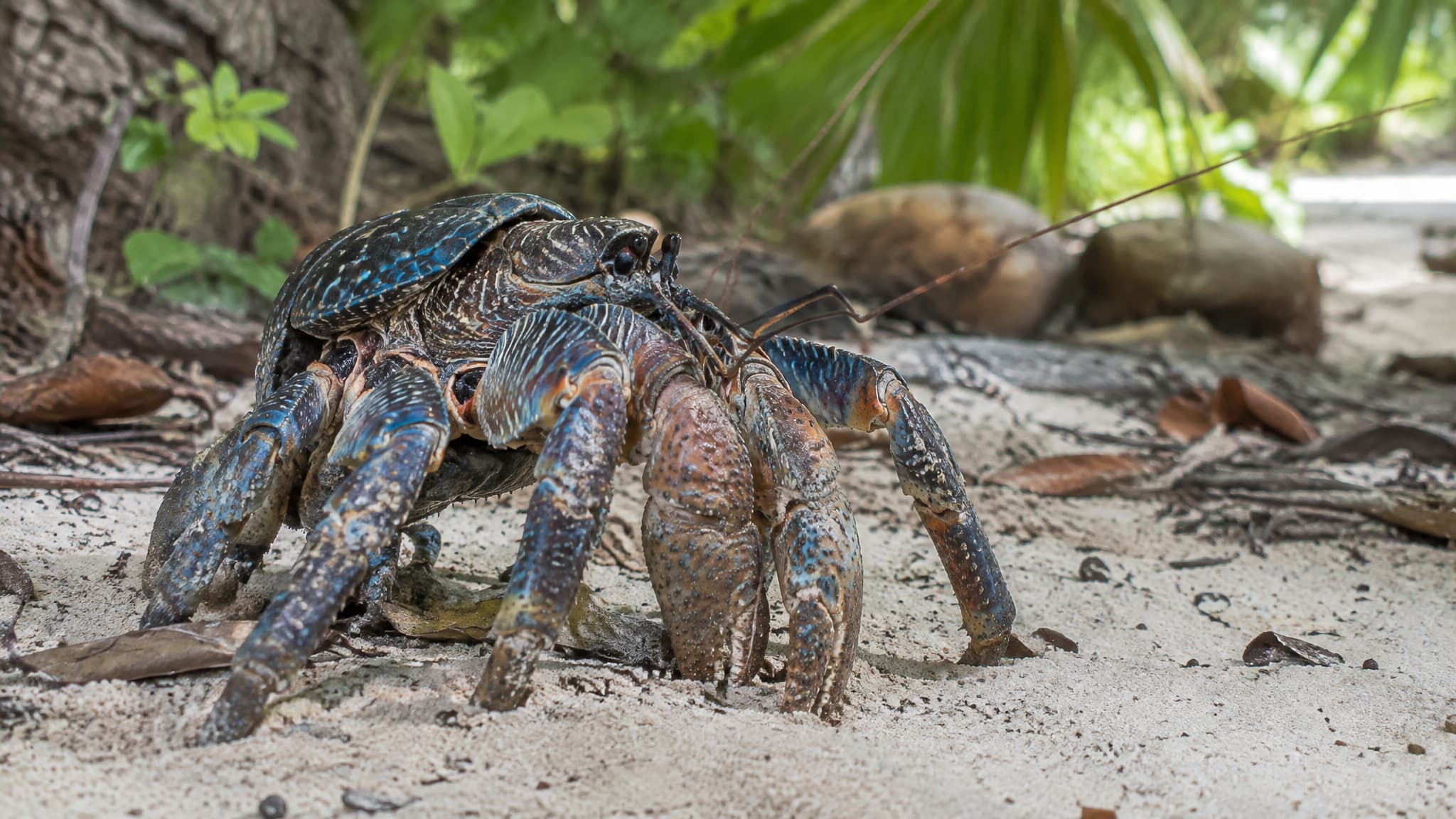
A large blue-and-brown coconut crab faces the camera on sandy ground amid leaf litter, with its broad shell, stalked eyes, antennae, and thick, spiny walking legs visible.
Coconut Crab
The coconut crab, Birgus latro, is an exceptionally large land hermit crab and the largest terrestrial arthropod known. Adults can weigh up to about 4 kilograms and span roughly 80 centimeters from leg tip to leg tip. Their coloration varies among islands and individuals, from blue-violet and purple to brown, orange-red, or red. The oversized left claw is especially formidable, while pointed walking legs help the crab grip rough ground and climb.
This species occurs on tropical islands across the Indian and western Pacific oceans, from the east African region to islands of Japan and French Polynesia. Adults live on land in coastal forest, scrub, coconut groves, and shore habitats, sometimes several kilometers inland where humidity and shelter are sufficient. They retreat to burrows, crevices, logs, or other protected spaces, particularly while resting or molting. Although adults are terrestrial and breathe with specialized air-breathing organs, reproduction still depends on the sea.
Coconut crabs are mostly solitary and often nocturnal, particularly where people are common. Their acute sense of smell helps them locate fruit, seeds, carrion, mollusks, and other available foods. They are omnivorous scavengers, not animals that live exclusively on coconuts; nevertheless, their powerful claws can pierce or split coconut husks. By carrying, consuming, and sometimes abandoning fruits, they can contribute to seed dispersal and nutrient recycling on island ecosystems.
Mating occurs on land. Females carry a large mass of fertilized eggs beneath the abdomen, then travel to the shore and release the hatchlings into seawater. The young pass through planktonic larval stages, later use gastropod shells as juvenile hermit crabs, and eventually develop the hardened abdomen of a shell-free adult. Growth is very slow, and wild individuals may live around 40–60 years. The species is listed as Vulnerable: heavy harvesting, habitat loss and degradation, and introduced animals threaten many island populations, although protected and lightly inhabited islands may retain strong populations.