Common Rough Woodlouse
Porcellio scaber
 AI-generated
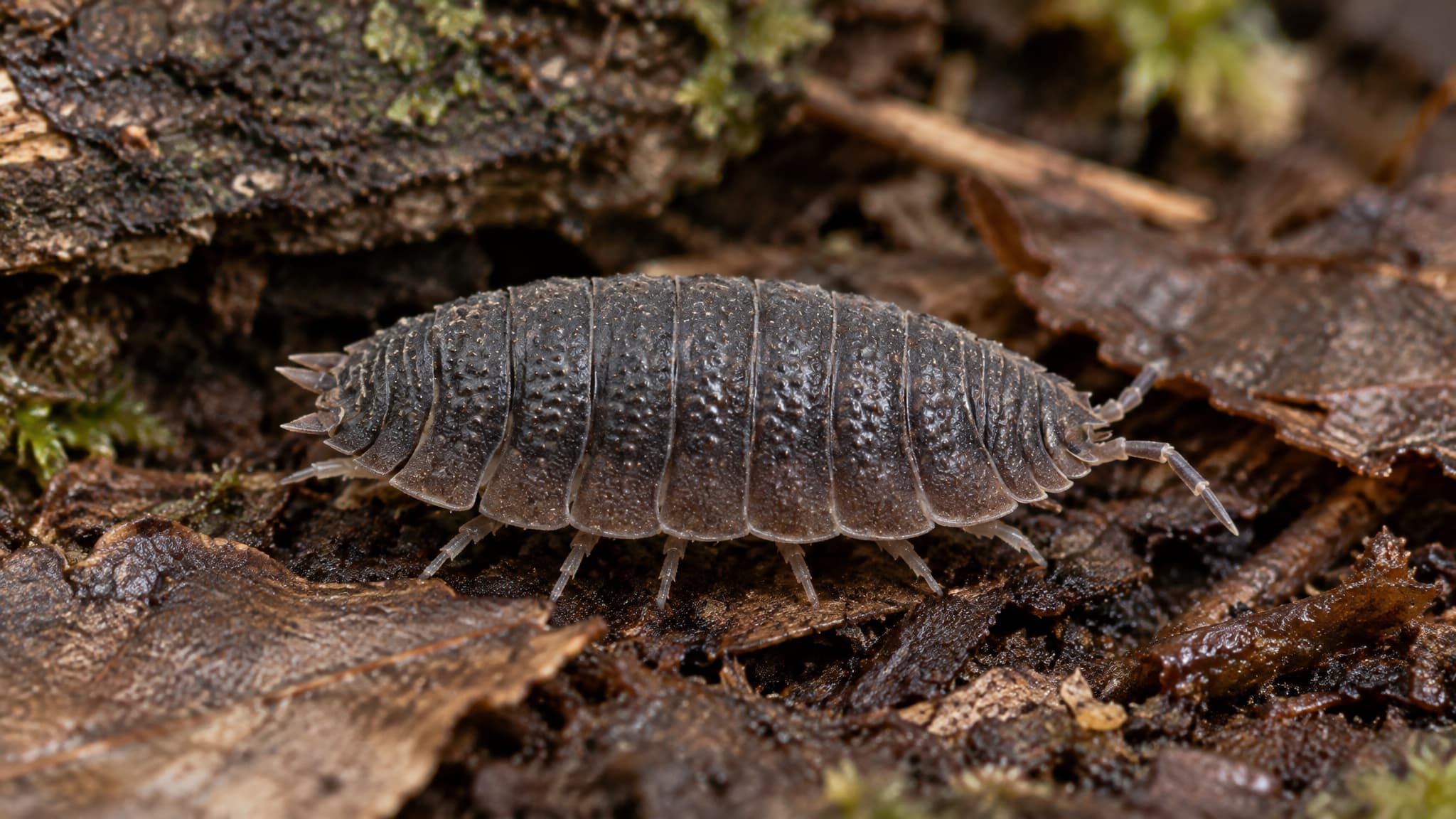
A dark, rough-textured woodlouse moves across damp leaf litter, with a broad segmented body, visible antennae, paired rear projections, and several walking legs. The side view clearly shows the granular surface of its armored plates.
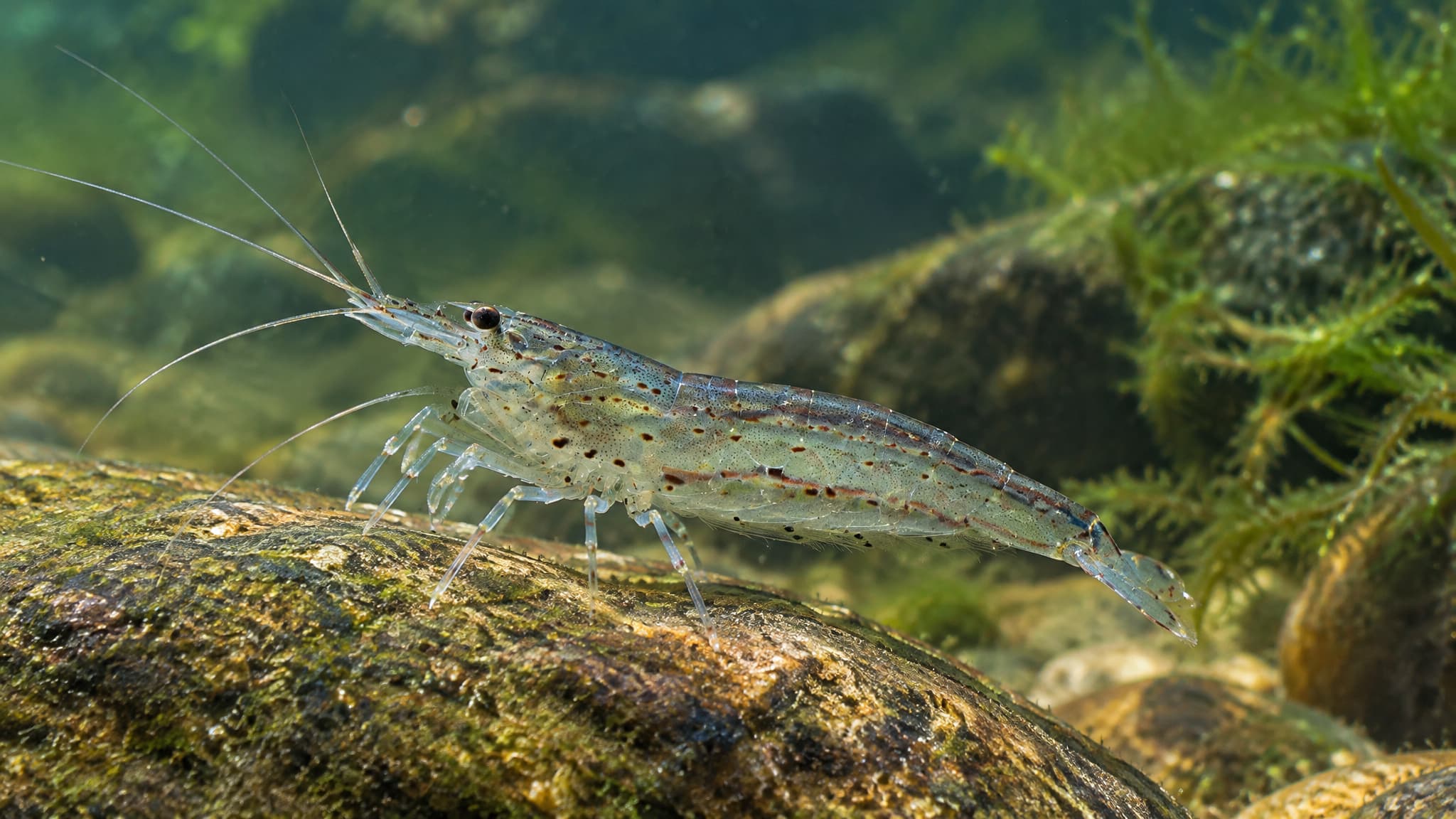
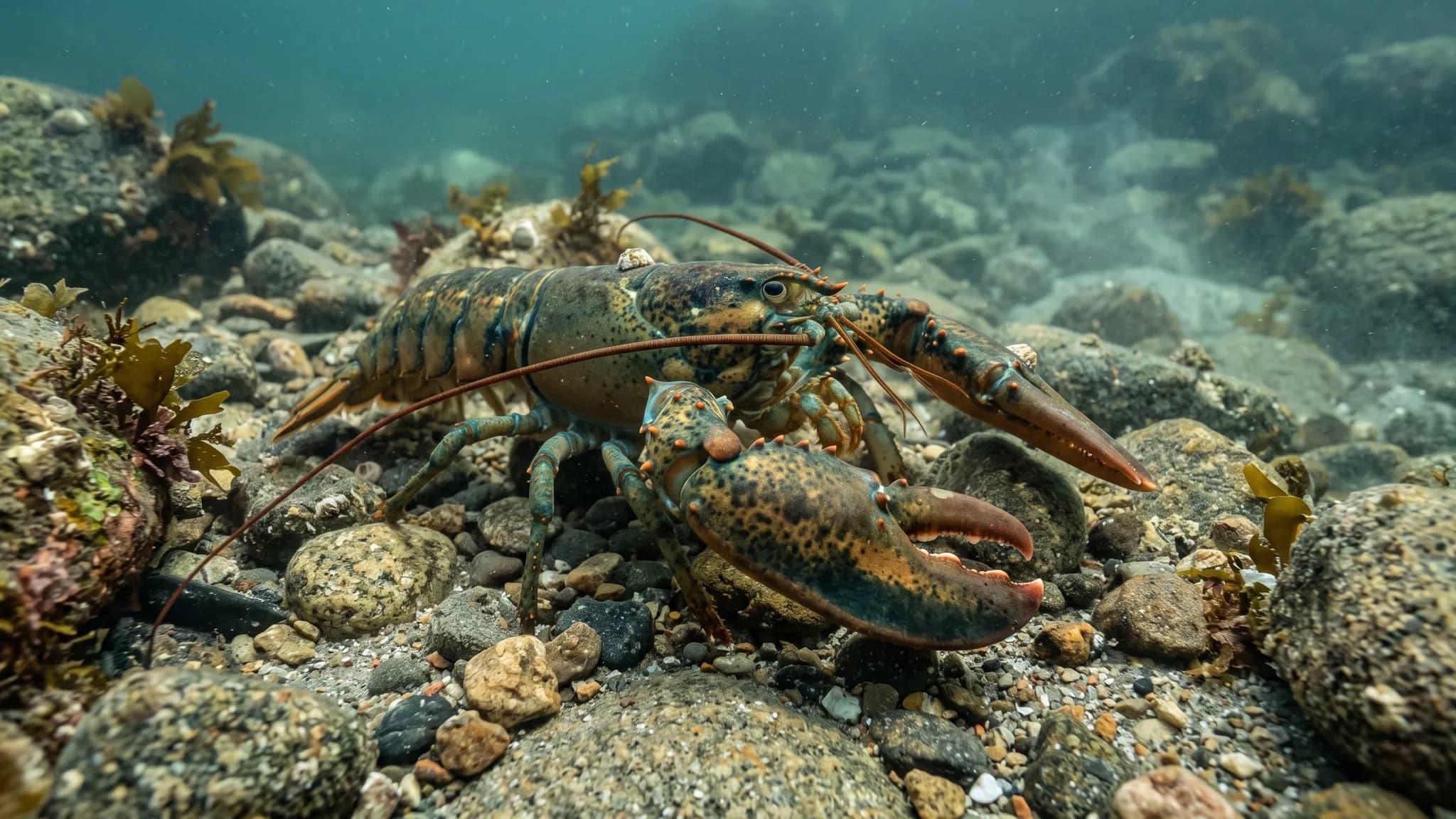
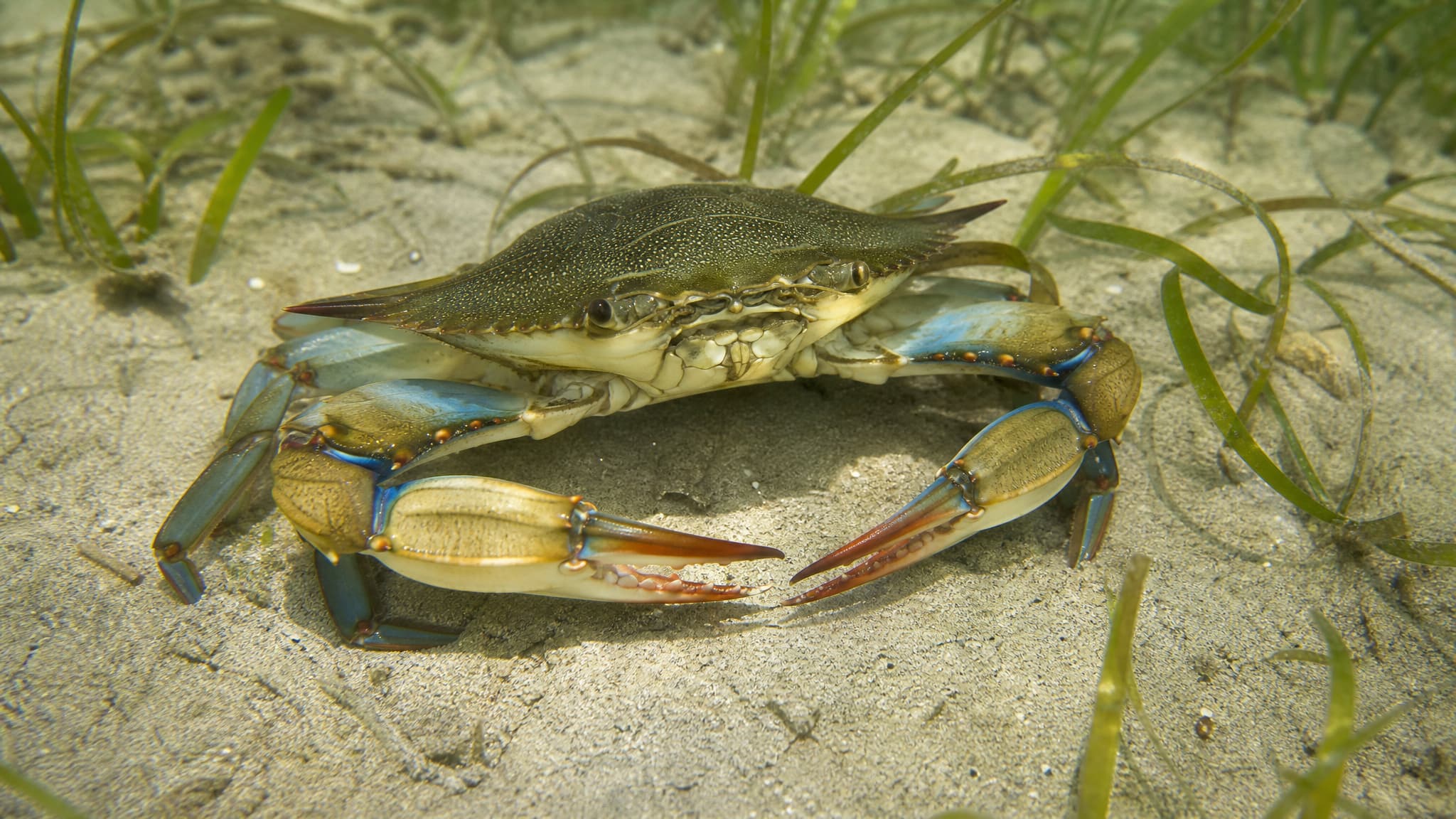
The common rough woodlouse (Porcellio scaber) is a land-dwelling crustacean of the order Isopoda, related to shrimp, crabs and lobsters. Its flattened, oval body is built from overlapping hard plates covered in tiny tubercles, which give it a dull, rough look rather than a shiny one. Adults reach up to about 17 mm. Most are grey or slate-blue, but females and juveniles tend to be lighter and mottled, and genetically determined colour forms with yellow, red or orange mottling occur. It has seven pairs of walking legs, compound eyes, antennae whose flagella have two segments, and two pointed tail-like uropods at the rear. Unlike pill bugs, it cannot roll into a ball.
Native to mainland Europe, the species has been carried around the world and now lives on every continent except Antarctica, including Australia, Hawaii and sub-Antarctic Marion Island. It favours temperate climates and is probably the most common woodlouse in Britain. It shelters in moist, dark places such as leaf litter, under stones, logs, bark and mulch, and in wall crevices, and is very frequent in gardens. It also turns up on dunes, salt marshes and coastal splash zones, and copes with somewhat drier spots than many other woodlice.
This woodlouse is a detritivore that feeds mainly on decaying plant matter such as dead leaves and rotting wood, along with fungi, carrion and even its own faeces. Bacteria living in its digestive gland help it break down cellulose. It is mostly nocturnal, avoids light and gathers in groups, behaviour that reduces water loss through its permeable exoskeleton and lowers the risk of predation. In large numbers it may nibble soft young plants. Instead of urinating, it releases nitrogen waste as ammonia gas.
Breeding takes place in spring and summer, and females mate with several males. A female carries her eggs in a fluid-filled brood pouch, the marsupium, for about 35 days, producing one to three broods a year of roughly 12 to 36 young each. The newly hatched young, called mancae, are soft and white with only six pairs of legs, gaining the seventh pair after their first moult. They grow by moulting, without metamorphosis, and reach maturity after 14 to 22 months. Mortality is high soon after release, but survivors typically live around two to three years.
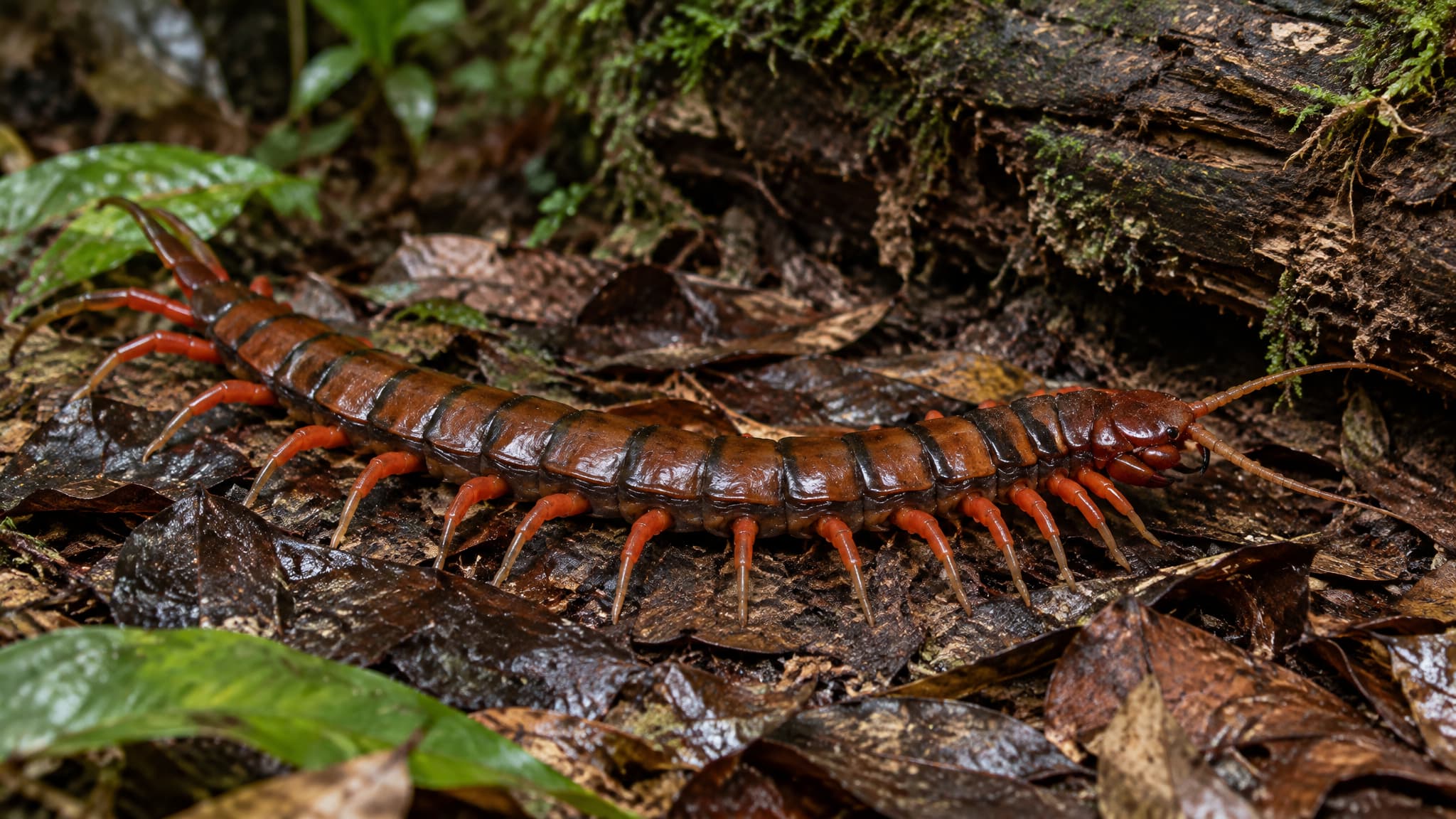
As a decomposer, P. scaber returns nutrients from dead plant material to the soil and is a common subject of research and a bioindicator of heavy-metal pollution. It is eaten by spiders, including the woodlouse hunter, as well as centipedes, harvestmen, ground beetles, shrews, frogs, lizards and birds. The species has not been assessed by the IUCN and is not considered threatened; where it has been introduced, it can compete with native detritivores.