Dwarf Treefrog
Dendropsophus nanus
 AI-generated
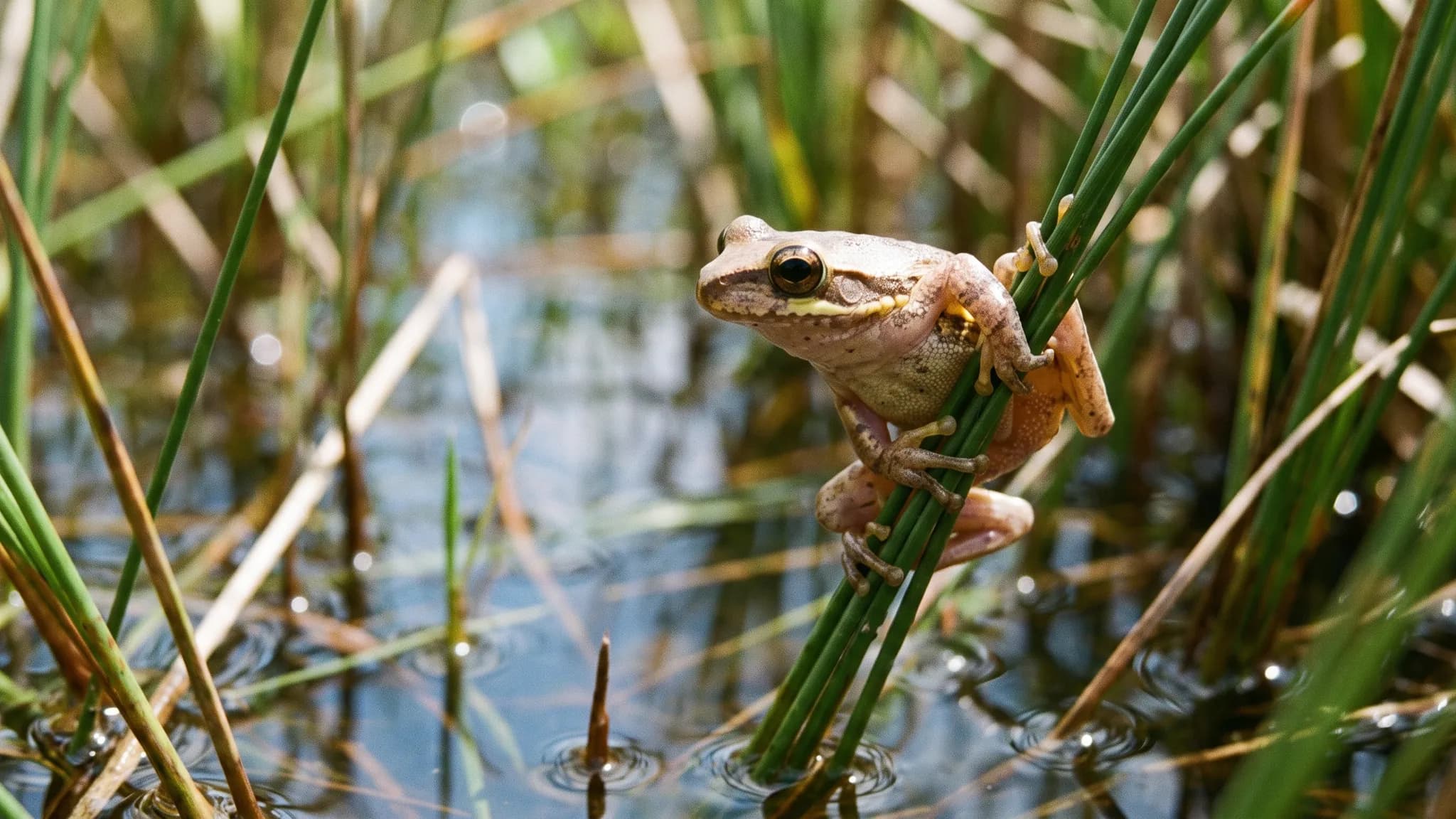
A small tan frog clings to green grass stems above water.
Dendropsophus nanus, commonly known as the dwarf treefrog, is a diminutive amphibian species belonging to the treefrog family, Hylidae. First described by George Albert Boulenger in 1889, this species is noted for its incredibly small size, with adults measuring approximately 22 millimeters in length—barely larger than a human thumbnail. Physically, the dwarf treefrog is characterized by a triangular snout, prominent eyes with non-translucent eyelids, and a poorly visible tympanum. Males are particularly distinctive due to their conspicuous yellow throats, which aid in field identification.
This highly adaptable amphibian boasts a broad geographic distribution across South America, primarily east of the Andes Mountains. Its extensive range encompasses northern Argentina, eastern Bolivia, Brazil, Paraguay, and Uruguay, with documented populations reaching as far north as French Guiana and Suriname. The dwarf treefrog is an abundant and resilient species capable of thriving in a diverse array of habitats, including those facing significant anthropogenic disturbance and urbanization. It is most frequently encountered in open environments, perching low in herbaceous and bushy vegetation situated directly at the edge of standing water.
As an insectivore, the diet of Dendropsophus nanus predominantly consists of dipterans—such as flies and mosquitoes—as well as spiders. Ecological studies of their feeding habits in wetlands indicate that this frog employs a "mixed" foraging mode. This strategy places it intermediately between active prey hunting and a stationary "sit-and-wait" ambush approach. During colder winter periods, the species exhibits a distinct survival strategy; instead of maintaining high feeding rates like some sympatric frog species (such as Boana pulchella), it relies significantly on accumulated fat reserves for energy.
Breeding typically occurs in temporary waterbodies, where males remain highly active and vocal throughout the year. To attract mates, males broadcast advertisement and courtship calls consisting of rapid, pulsed notes from perches overhanging the water. Experimental acoustic playbacks have revealed that these tiny frogs possess notable acoustic awareness; exposure to conspecific dominant frequencies triggers increased behavioral complexity and territorial aggressiveness among males.
Benefiting from its extensive geographic range, stable population dynamics, and remarkable tolerance to human-modified environments, Dendropsophus nanus is assessed as a species of "Least Concern" on the IUCN Red List of Threatened Species. Currently, there are no widespread threats causing significant population declines, ensuring that the dwarf treefrog remains highly secure across its natural South American habitat.