Emperor Angelfish
Pomacanthus imperator
 AI-generated
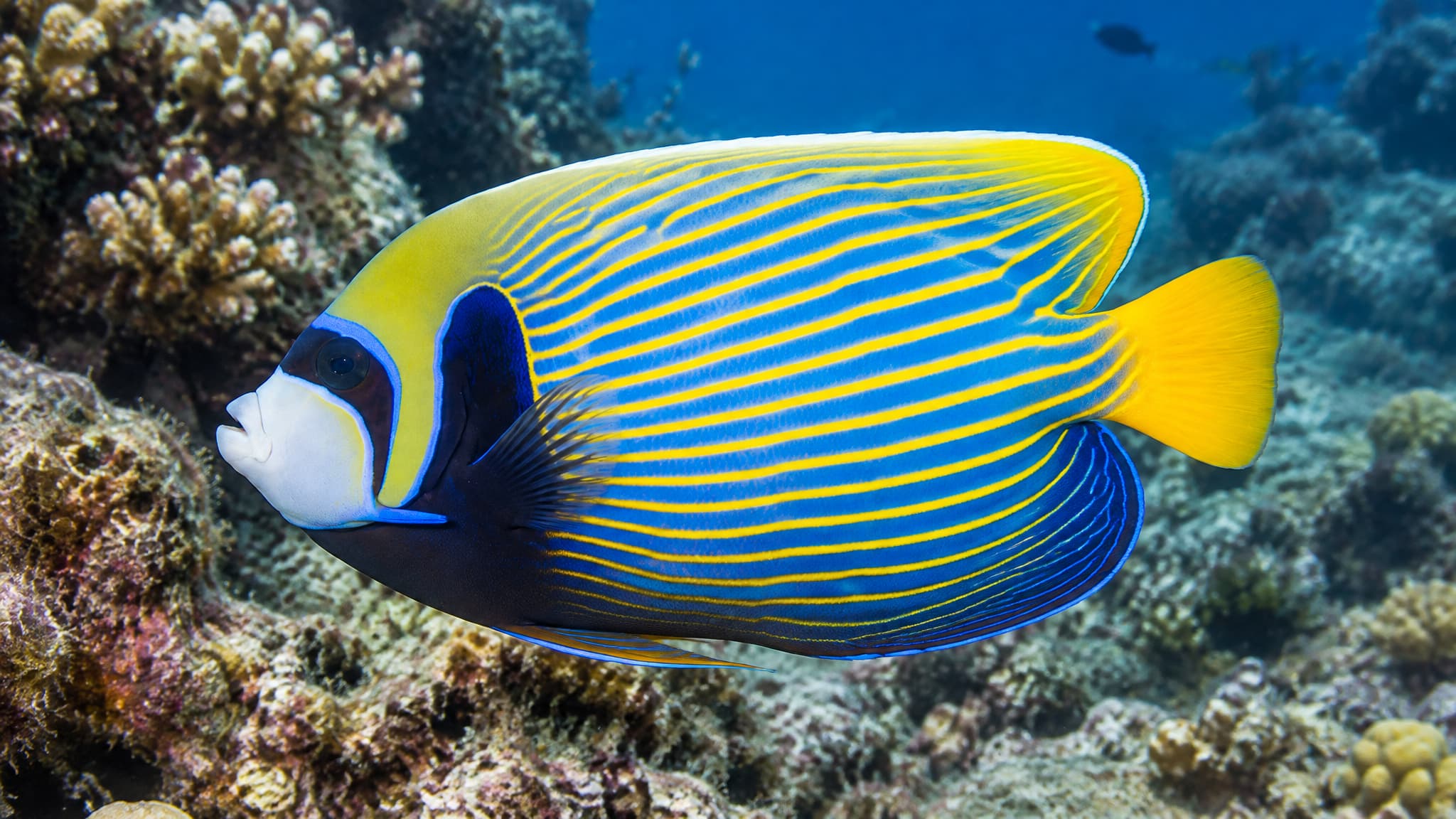
An adult Emperor Angelfish is shown in left-facing side profile above a coral reef, with vivid blue-and-yellow horizontal striping, a dark facial mask, elongated fins, and a bright yellow tail. The fish is captured swimming in clear blue water.
The emperor angelfish (Pomacanthus imperator) is one of the largest and most recognizable marine angelfishes, reaching about 40 cm in standard length. Adults have a deep, laterally compressed body covered in alternating blue and yellow horizontal stripes, a dark mask across the eyes edged in pale blue, a dark patch behind the head, and a bright yellow-orange tail. Like other angelfishes, it carries a strong spine on each gill cover.
Juveniles look so different that they were once mistaken for a separate species: they are dark navy blue with concentric white and electric-blue rings. The change to adult colours takes roughly two to two and a half years. This distinct juvenile pattern is thought to reduce aggression from territorial adults, allowing young fish to live within adult territories.
The species is widespread across the tropical Indo-Pacific, from the Red Sea and East Africa east into the central Pacific. It is reef-associated and recorded from about 1 to 100 m deep. Juveniles shelter under ledges and in holes on outer reef flats, while adults favour coral-rich lagoons, channels and seaward reefs with caves and overhangs.
Emperor angelfish are omnivores that feed heavily on sponges and tunicates, along with other small invertebrates, coral polyps and algae; juveniles have also been reported picking parasites off larger fishes. Adults are territorial and live alone or in pairs. Like other angelfishes, they spawn in open water, releasing pelagic eggs. FishBase records a maximum age of 14 years in the wild, and aquarium specimens may live longer.
As grazers of sponges and invertebrates, emperor angelfish help shape reef communities. The IUCN lists the species as Least Concern, but it is heavily collected for the aquarium trade, and FishBase rates its resilience as low and its vulnerability to fishing as high. Coral reef degradation from climate change and pollution also threatens its habitat.
Ideal water
The water this fish does best in, as kept in aquariums.
- Water type
- Marine
- pH
- 8.1–8.4
- alkaline
- Carbonate hardness
- 8–12 dKH
- Specific gravity
- 1.020–1.025