European Common Frog
Rana temporaria
 AI-generated
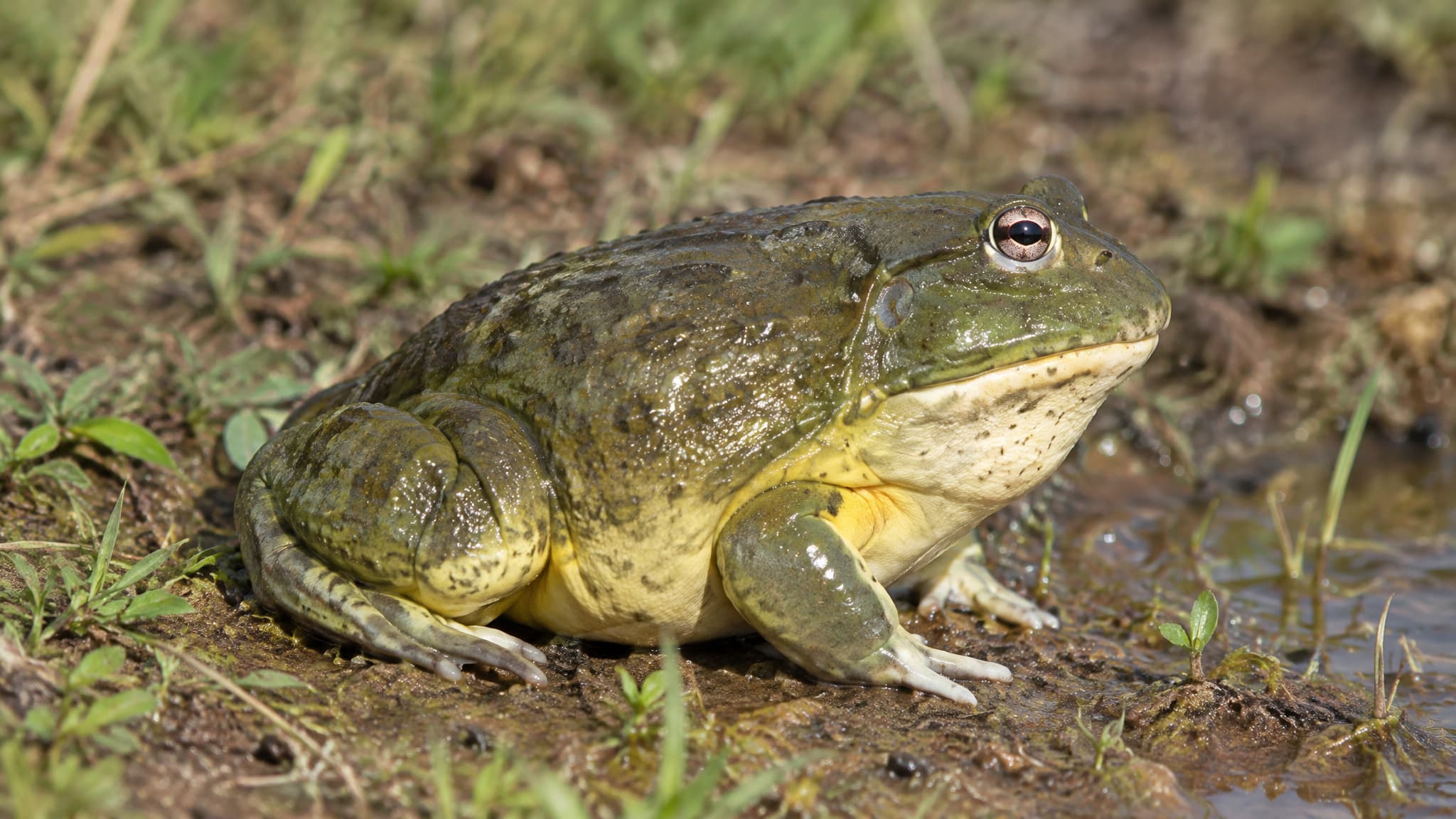
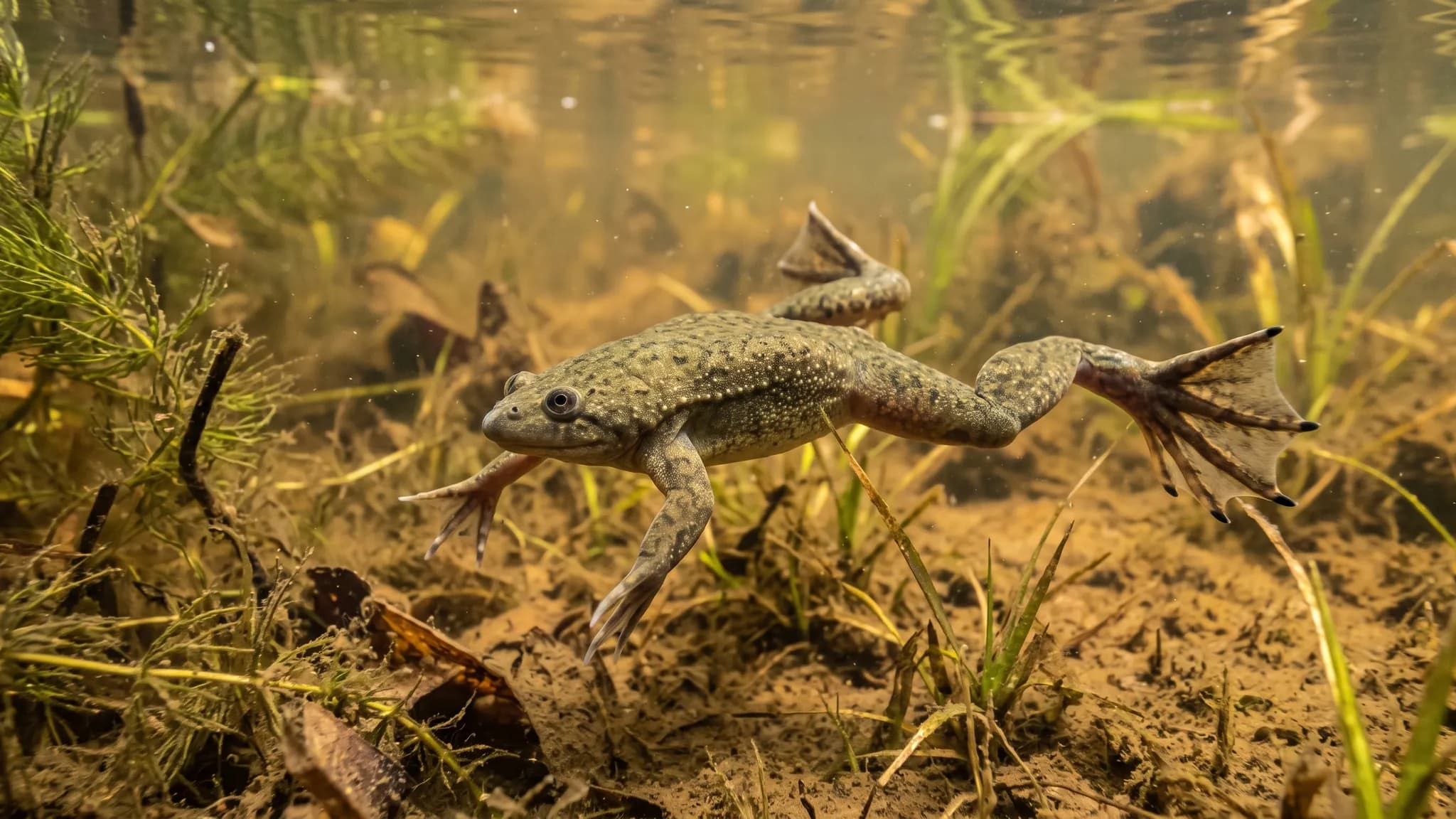
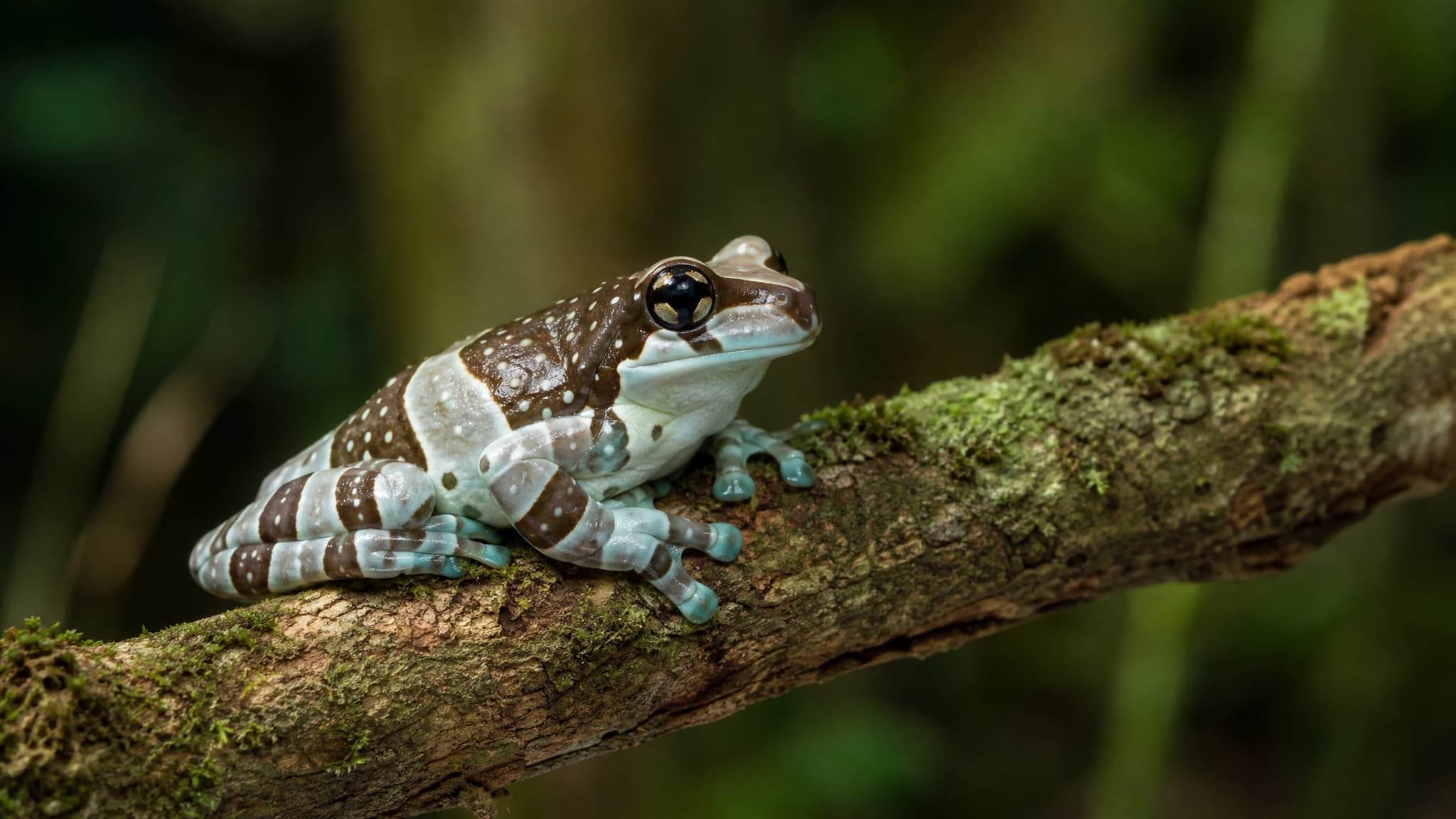
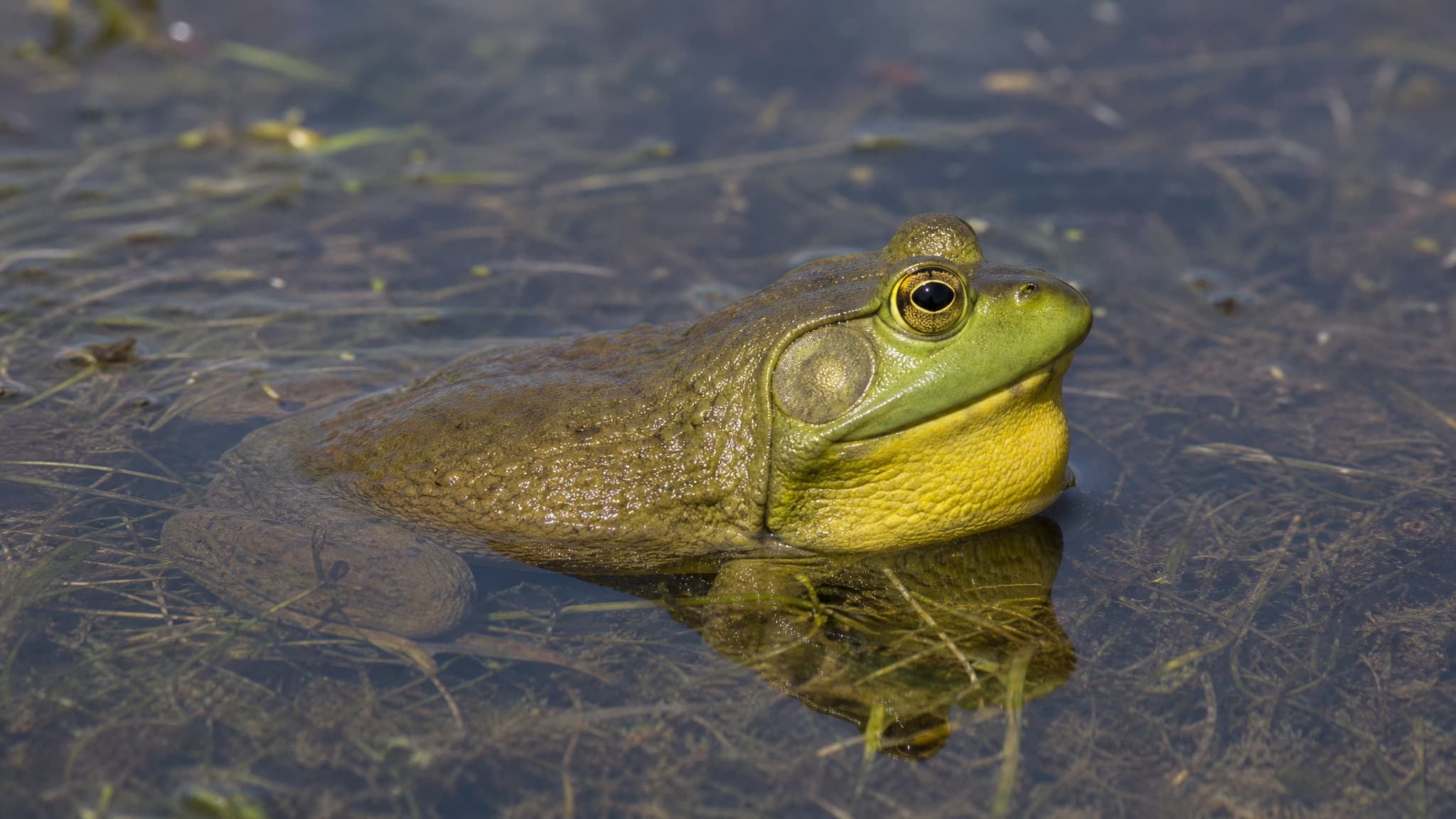
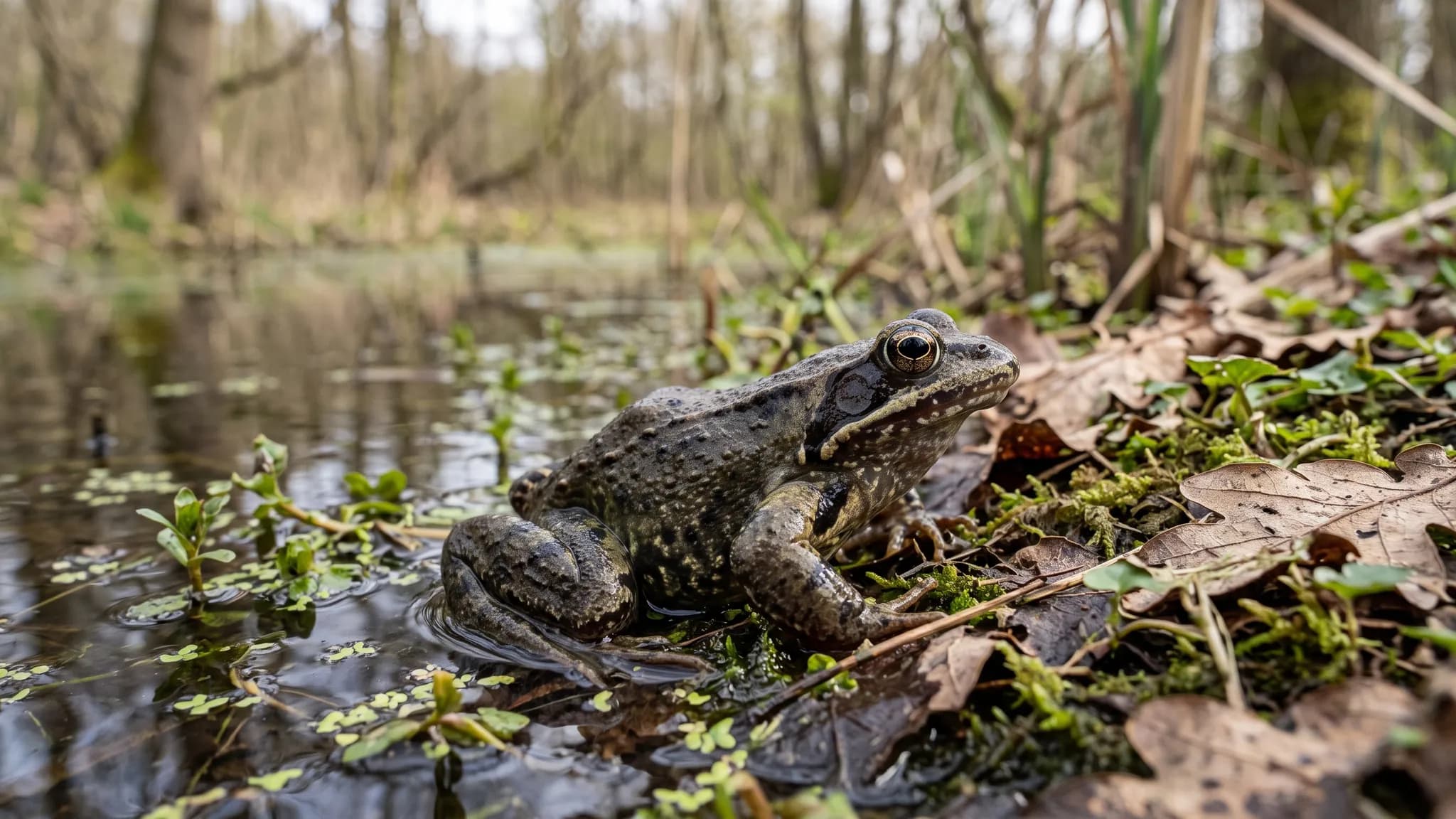
A European Common Frog sits partially submerged at the edge of a shallow pool, displaying its mottled brown and olive skin and distinctive dark mask behind the eye.
Rana temporaria, commonly known as the European common frog or grass frog, is a resilient, semi-aquatic amphibian belonging to the true frog family, Ranidae. Adults typically range between 6 and 13 cm in length, with females generally growing larger than males. Their skin coloration is highly variable, featuring shades of olive green, grey, brown, yellow, and occasionally pink or red. They are easily identified by a distinct dark patch or mask situated just behind their eyes, oval horizontal pupils, and long, powerful hind legs with webbed toes designed for jumping and swimming.
The species boasts an extensive geographic range across the Palearctic region. Native to Great Britain, Ireland, and continental Europe, their range extends eastward into Asia as far as Japan. Remarkably tolerant of cold climates, they range further north in Scandinavia than any other amphibian, successfully surviving above the Arctic Circle. They inhabit woodlands, grasslands, hedgerows, and acid bogs. Though they rely on shallow, still water bodies like ponds and puddles for breeding, they spend much of the year as terrestrial foragers. Man-made habitats like suburban garden ponds have become critical for sustaining local populations.
As carnivorous amphibians, Rana temporaria are primarily active at night. Their diet largely consists of a variety of invertebrates, including flies, earthworms, slugs, and snails. Lacking prominent physical defenses, they form a vital link in the ecosystem's food web and are hunted by herons, birds of prey, foxes, otters, snakes, and domestic cats. To survive freezing winter temperatures, they hibernate by sheltering under logs, inside compost heaps, or overwinter entirely submerged in the mud at the bottom of ponds, relying on cutaneous respiration to breathe directly through their moist skin.
Rana temporaria are recognized as explosive breeders. In early spring, hundreds of individuals may migrate simultaneously to ancestral breeding ponds to mate during a brief, intense window. Females lay large rafts of spawn that can contain up to 2,000 black eggs, each protected by a clear jelly capsule. These eggs hatch into tadpoles within two to four weeks. The tadpoles undergo a metamorphic life cycle, slowly transitioning from aquatic, gill-breathing larvae into juvenile terrestrial frogs, eventually reaching reproductive maturity at around two to three years of age.
Globally, the International Union for Conservation of Nature (IUCN) lists Rana temporaria as a species of Least Concern due to its vast distribution and large global population. However, local populations are experiencing declines. Primary environmental pressures include rampant habitat degradation, the filling of natural breeding ponds, pollution, and amphibian diseases. Their innate drive to migrate to historical breeding sites makes them highly vulnerable to traffic fatalities. Conservationists urge the public to create wildlife-friendly garden ponds to offset habitat loss.