European plaice
Pleuronectes platessa
 AI-generated
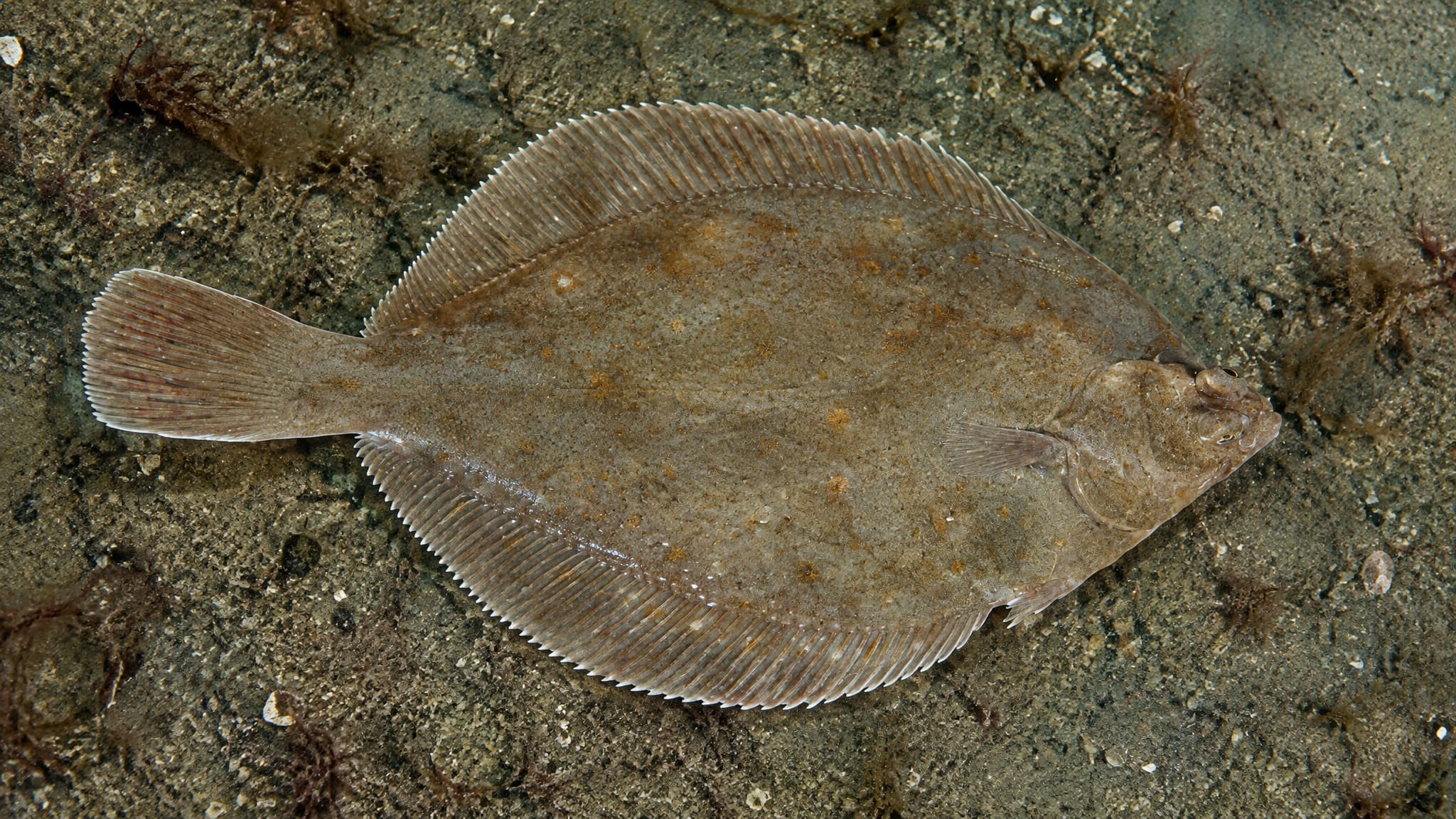
A European plaice rests on a sandy, shell-strewn seabed, showing its flattened body, orange-brown spotting, and long continuous dorsal and anal fins.
The European plaice (Pleuronectes platessa) is a right-eyed flatfish of the family Pleuronectidae, the righteye flounders. Its upper (eyed) side is smooth and dark green to brown, scattered with conspicuous orange spots that make it easy to tell apart from similar flatfishes, while the blind side is pale. Most adults measure about 25–45 cm, but the species can reach roughly 1 m and about 7 kg.
It lives in the temperate northeastern Atlantic, from Arctic waters such as the Barents and White Seas south to the Mediterranean. A demersal fish of sandy and muddy bottoms, it occurs from the shoreline to about 200 m deep, usually at 10–50 m, and tolerates brackish water and temperatures of roughly 2–15 °C.
Larvae feed mainly on plankton. Very small juveniles nip off the siphons of buried clams, which can regrow, and as the fish grow, bivalve molluscs and polychaete worms become the core of the diet. Adults make seasonal movements between feeding grounds and well-defined spawning areas.
In the southern North Sea and Irish Sea, spawning takes place mainly from January to March, when large numbers gather. The eggs and larvae drift in open water before the young settle in shallow coastal nurseries. Maturity is reached at around 33 cm on average, and the maximum reported age is about 50 years.
As a bottom-feeding predator, the plaice links benthic invertebrate communities with higher levels of the food web, and its eggs, larvae and young are eaten by many predators. It is also one of Europe's most important commercial flatfishes.
The IUCN lists the species as Least Concern. Fishing pressure and the discarding of undersized fish are the main issues, and some major North Sea nursery areas were closed to large trawlers in 1995 to reduce bycatch of young plaice.