Leafcutter Ant
Atta sexdens
 AI-generated
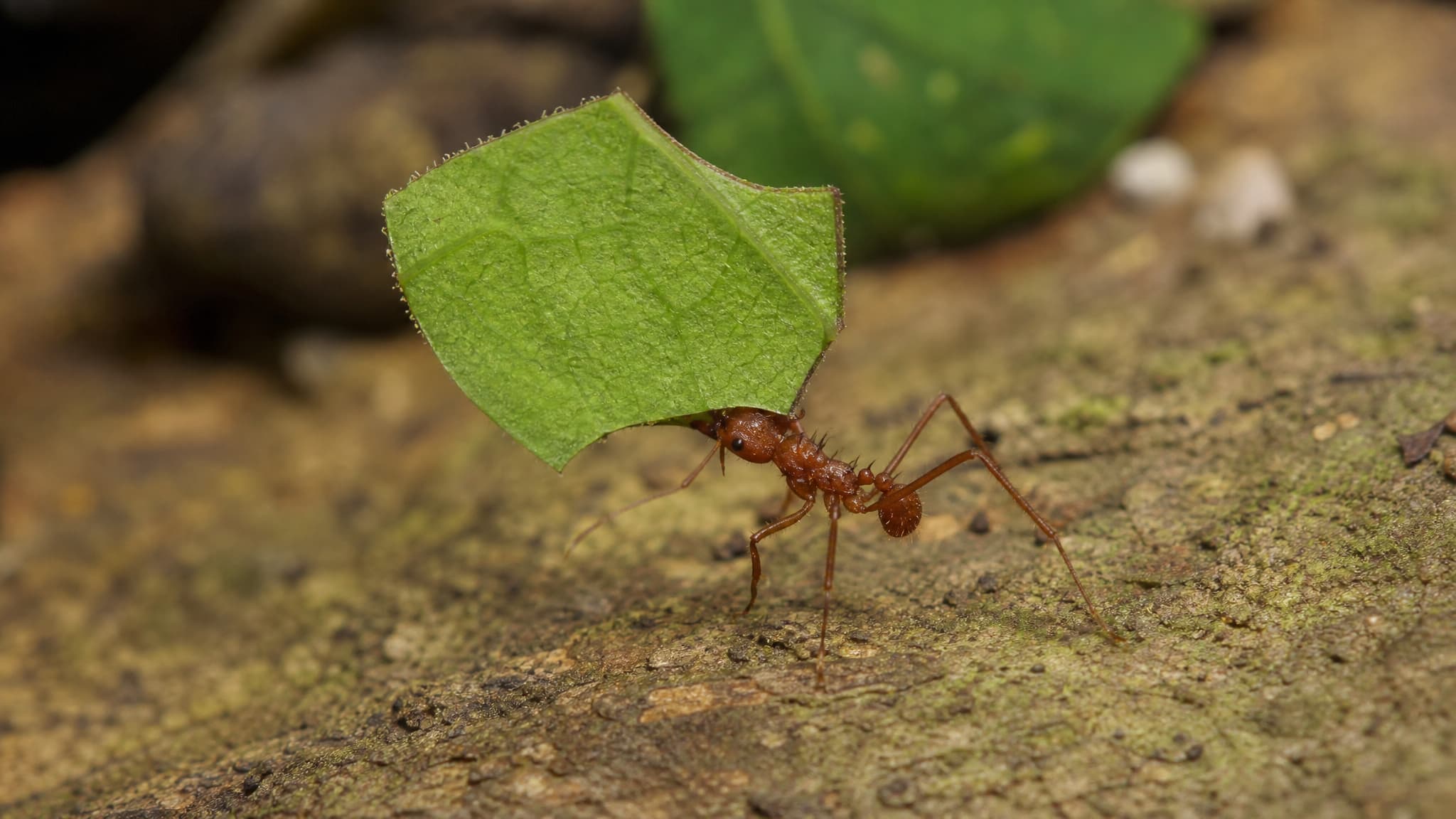
A reddish-brown leafcutter ant walks across a mossy, bark-like surface while carrying a large cut green leaf above its body; its segmented body, long legs, and antennae are visible.
The leafcutter ant (Atta sexdens) is one of the most remarkable fungus-farming insects in the Americas. Workers use powerful, serrated mandibles to slice leaves and flower petals, then carry the fragments in long columns along pheromone-marked trails back to underground nests that can reach several meters deep. Despite their name, the ants do not eat the vegetation directly — they use it as compost to cultivate a symbiotic fungus that provides their primary nutrition.
Colonies are eusocial superorganisms divided into specialized castes, from tiny gardener-nurses that tend fungal gardens and brood to large defender soldiers that guard nest entrances and foraging routes. A founding queen stores sperm from multiple males, sheds her wings, burrows underground, and starts a new fungus garden from a fragment carried from her birth colony. Mature colonies may contain millions of individuals organized across thousands of chambers, aerating and turning over tens of thousands of kilograms of soil over their lifetime.
Leafcutter ants are dominant herbivores and ecosystem engineers across Neotropical forests, but they are also major agricultural pests capable of defoliating crops rapidly. In parts of Latin America, winged queens are collected seasonally as food. Atta sexdens has not been assessed on the IUCN Red List, though related species such as Atta cephalotes are listed as Least Concern due to broad distribution and large populations.