Frilled Shark
Chlamydoselachus anguineus
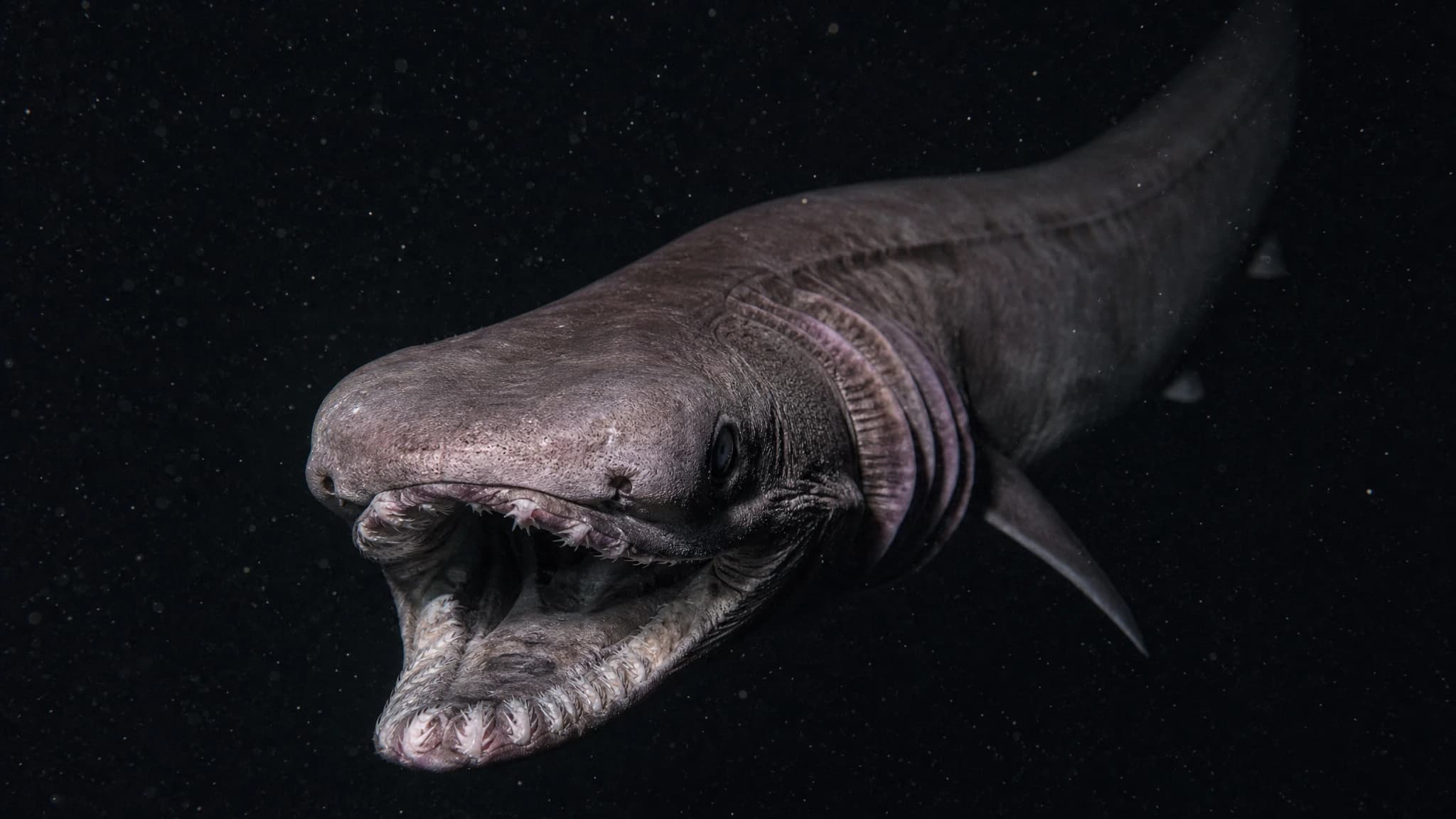
A Frilled Shark (Chlamydoselachus anguineus) emerges from the darkness of the deep ocean, revealing its eel-like body, frilled gill slits, and rows of sharp teeth. 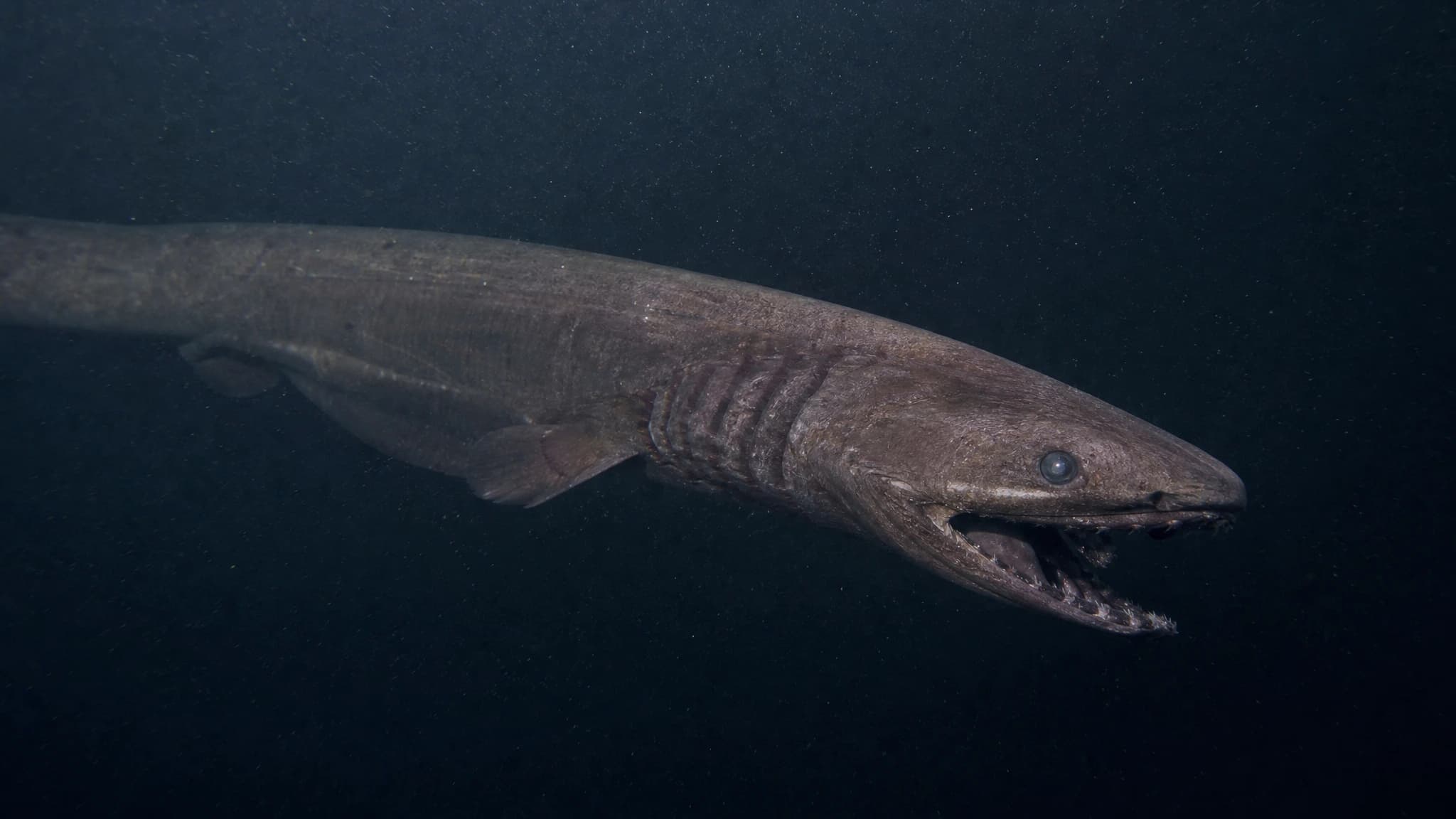
A Frilled Shark (Chlamydoselachus anguineus) glides through the deep, dark ocean, displaying its slender body, distinctive gill slits, and rows of sharp teeth.
The frilled shark (Chlamydoselachus anguineus) is a rare deep-sea shark with an eel-like body, six gill slits whose frilled margins give the species its name, and a mouth armed with roughly 300 slender, tricuspid teeth. It belongs to the ancient hexanchiform lineage and is often called a "living fossil" because its serpentine shape and extra gill slits resemble early sharks. Adults typically reach about 2 meters in length, with females growing larger than males.
Frilled sharks inhabit outer continental shelves and upper slopes in temperate and tropical seas worldwide, usually between about 120 and 1,570 meters deep, though they are occasionally reported nearer the surface. Slow-moving and solitary, they ambush prey such as squid, other cephalopods, and deep-water bony fishes, and may also feed on carrion drifting down to the seafloor. Reproduction is ovoviviparous, with litters of about two to fifteen pups and an exceptionally long gestation that may last several years.
Although rarely encountered by humans, the species is taken incidentally in deepwater trawls and longlines. The IUCN lists it as Least Concern because it remains wide-ranging and is not a major fishery target, though expanding deep-sea fishing and its slow life history could increase future pressure on populations.