Giant Antarctic Isopod
Glyptonotus antarcticus
 AI-generated
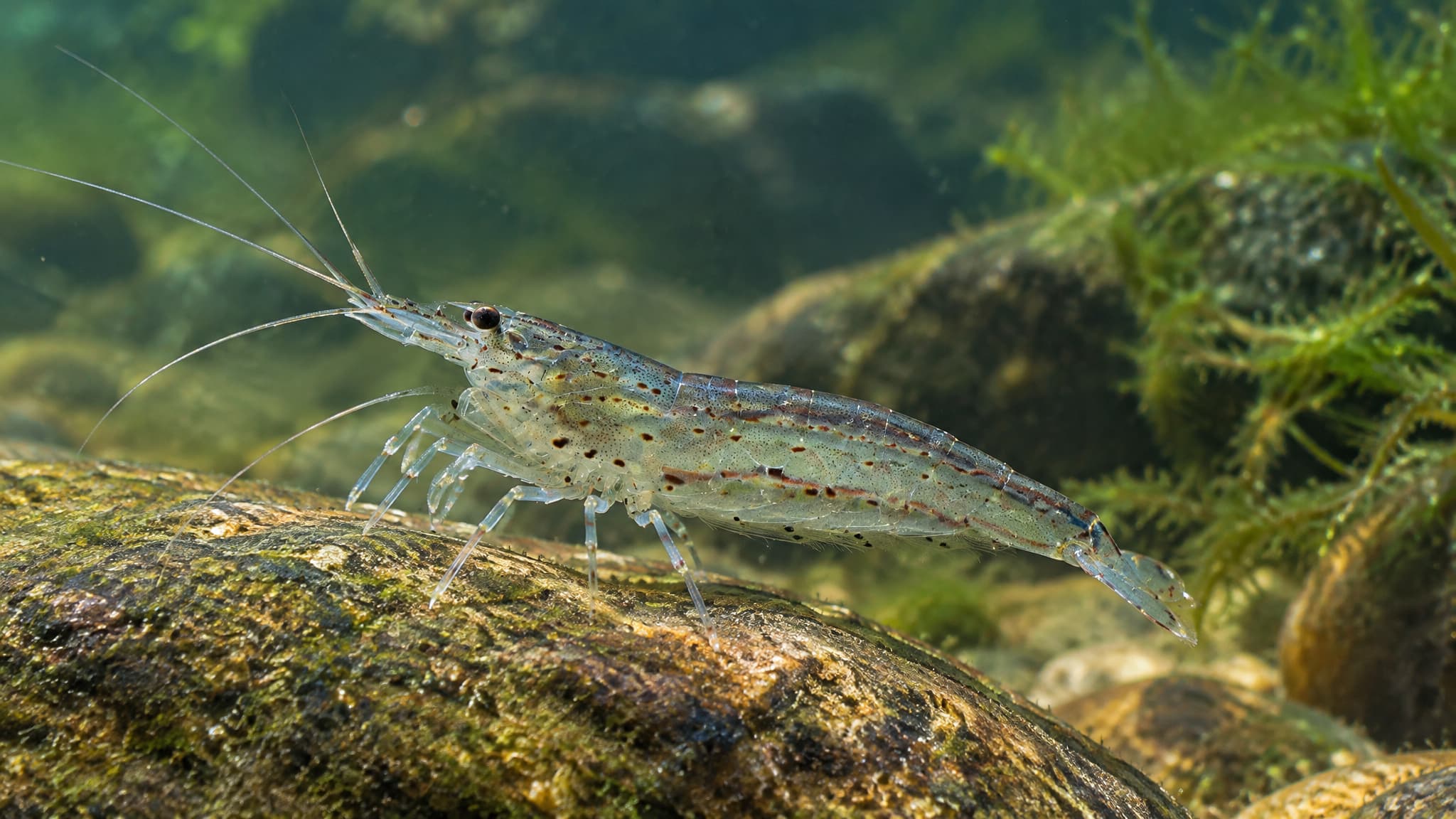
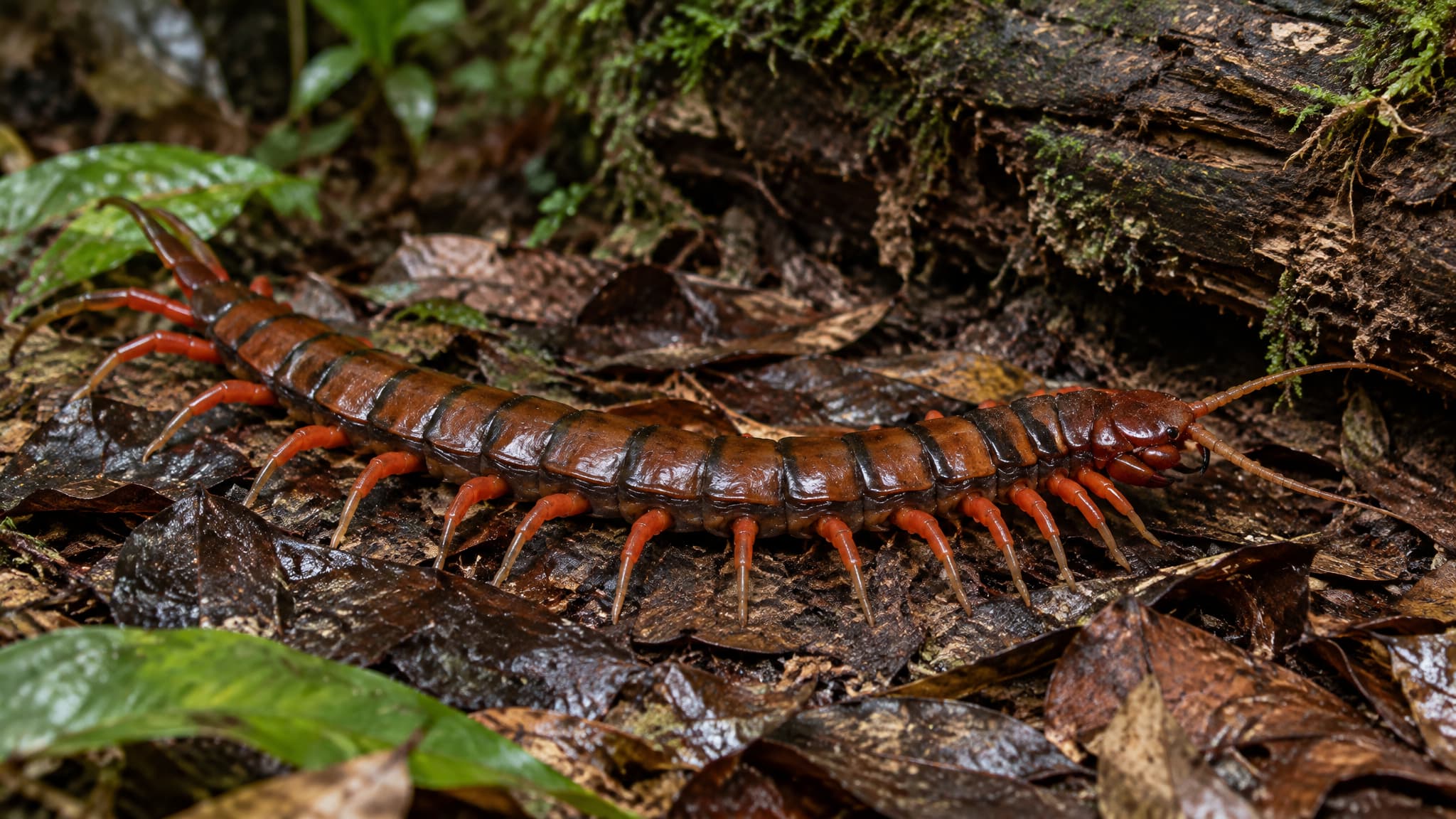
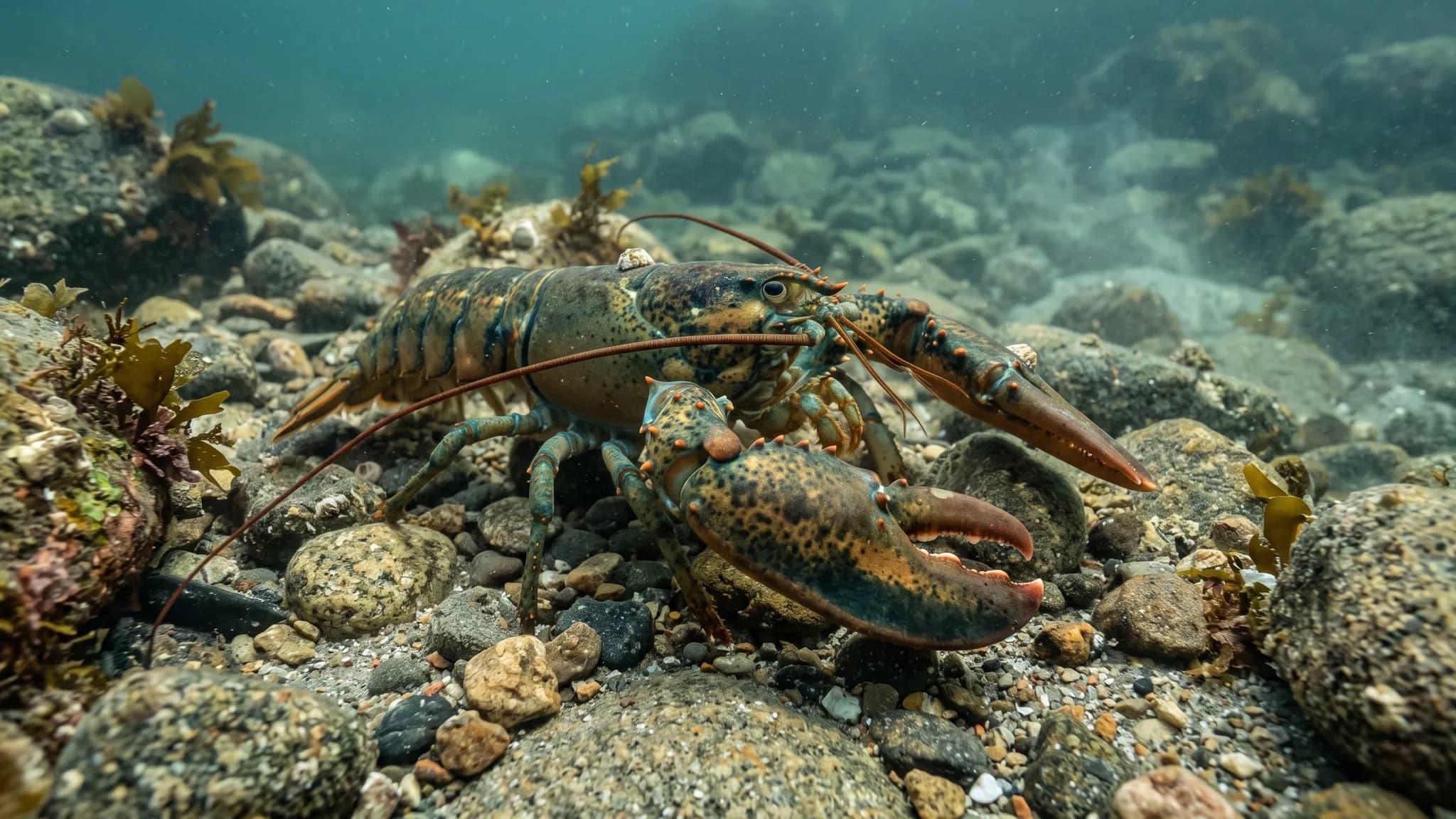
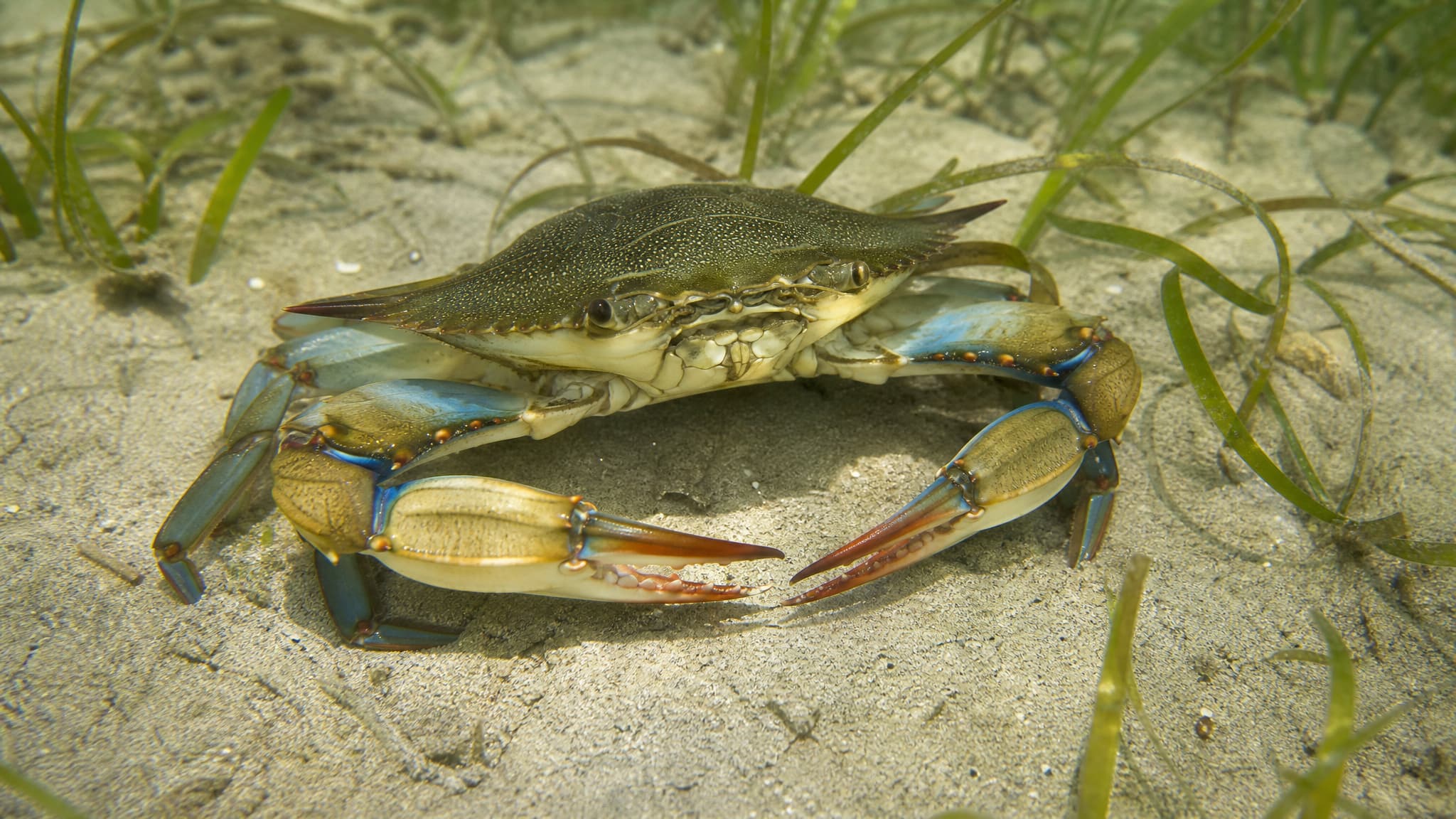
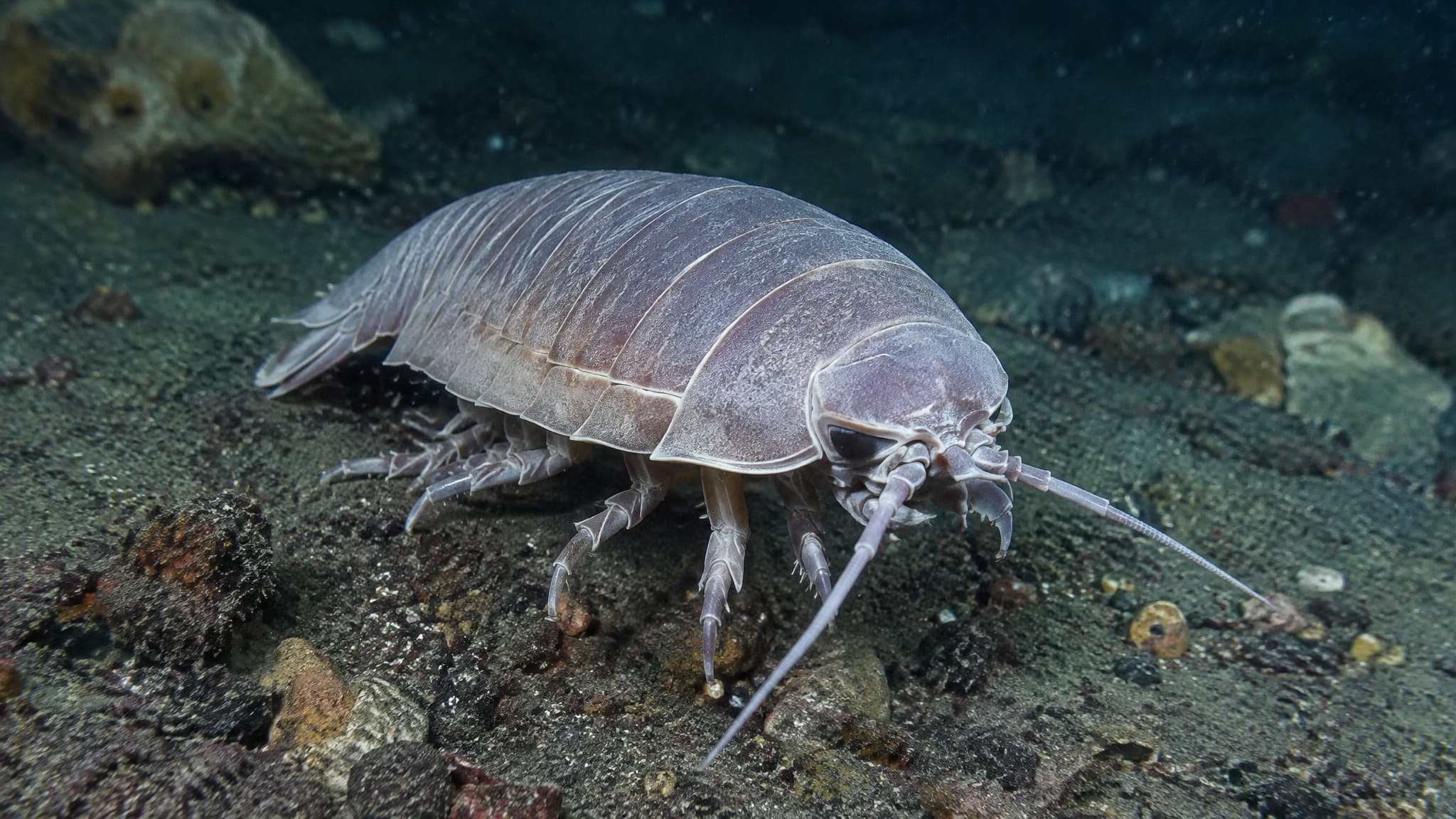
A giant Antarctic isopod rests on a rocky seafloor in side view, showing a broad, strongly segmented armored body, multiple walking legs, and long antennae.
The giant Antarctic isopod (Glyptonotus antarcticus) is a large bottom-dwelling crustacean of the suborder Valvifera, family Chaetiliidae. Adults usually reach about 9 cm, and rare individuals approach 20 cm, which is very big for an isopod: most species measure only 0.5 to 1.5 cm. Its body surface is covered in feathery hairs and knobbly scales, except on the eyes, some mouthparts and the feet, a texture thought to help keep foraminifera, larvae and other settlers from attaching.
An unusual feature is its eyes. It has two pairs of compound eyes, a larger pair on the upper surface and a smaller pair underneath. The lower pair is thought to help when the animal swims upside down.
The species lives on the seabed of the Southern Ocean around Antarctica, where it can be very abundant. It occurs from the intertidal zone down to roughly 600 m and is common in shallow intertidal and subtidal waters. It was described by James Eights from the South Shetland Islands. Bryozoan colonies often grow on its shell, and larger individuals carry more and more varied colonies.
It is a carnivore and scavenger that is often caught in baited traps. Studies describe it as an opportunistic predator with a mixed diet rich in echinoderms, and it also eats members of its own species. It is in turn eaten by predators such as the sea star Diplasterias brucei. At Admiralty Bay, King George Island, its resting metabolism was lowest in September and fell sharply during weeks without food.
Breeding goes on all year. Females carry eggs once they are about 7.5 cm long, and the eggs and young stay in the mother's brood pouch for more than a year and a half, nourished by a maternal secretion. The young hatch as mancas, juveniles that already resemble small adults, since there is no free-swimming larval stage. Its lifespan in the wild has not been reliably measured.
Because it is abundant and easy to keep in aquaria, it is an important model organism in ecological, biochemical and physiological research. A 2005 genetic study suggested that the name may cover several distinct, similar-looking species. The species has not been assessed by the IUCN.