Giant clam
Tridacna gigas
 AI-generated
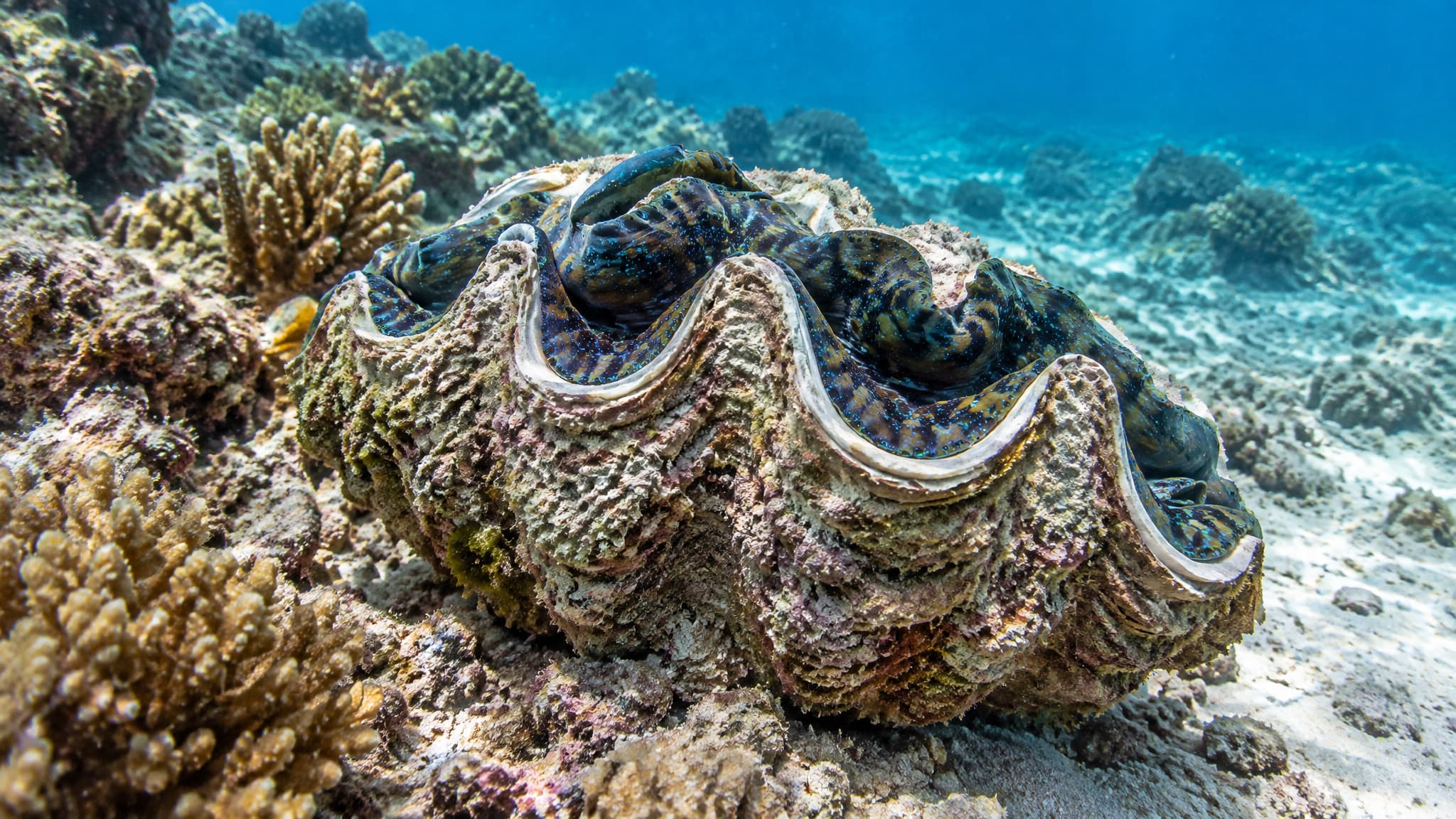
An open giant clam rests among reef corals, with its blue-speckled mantle exposed between the heavily ridged shell valves.
The giant clam (Tridacna gigas) is the largest living bivalve. Its heavy, deeply ribbed shell commonly reaches up to 120 cm across and more than 200 kg, and the longest specimen on record, found off Sumatra around 1817, measured 137 cm. The upper edges of the shell carry 4 to 5 large triangular projections, and a fully grown clam can no longer close its valves completely. Between them the fleshy mantle spreads out in the sun, dotted with light-sensitive eyespots that make the clam pull in its mantle and partly shut when a shadow passes.
The species lives on shallow coral reefs of the Indo-Pacific, from the Nicobar Islands in the west across the South China Sea, the Philippines and northern Australia to Fiji in the east. It is usually found within 20 m of the surface, where sunlight is strong. Adults are permanently sessile and rest on the reef or the sand between corals.
Much of its food is made inside its own body. Symbiotic single-celled algae called zooxanthellae live in the mantle and photosynthesize, providing about 65 to 70% of the clam's nutritional needs; translucent "windows" in the mantle may let more light reach them. The clam also filters phytoplankton and zooplankton from the water, and the smallest clams get a larger share of their carbon from this filter feeding than bigger ones.
Each giant clam is a hermaphrodite that releases both sperm and eggs but cannot fertilize itself. Spawning tends to follow incoming tides in certain moon phases, and a single adult can release more than 500 million eggs, each about 100 micrometres wide. The larva hatches after about 12 hours, drifts in the plankton and settles on the reef at about one week old. Giant clams can live for more than 100 years in the wild.
Heavy harvesting of large adults for meat, shells and the aquarium trade has emptied many reefs, and warming seas threaten the clams by making them expel their algae. In 2024 the IUCN moved T. gigas from Vulnerable, its 1996 status, to Critically Endangered after a decline of about 84% over the past century; it has vanished from places such as the waters near Taiwan and peninsular Malaysia. The species is listed in CITES Appendix II, and clams restocked in the Philippines now spread their larvae across the surrounding reef.