Giant Oceanic Manta Ray
Mobula birostris
 AI-generated
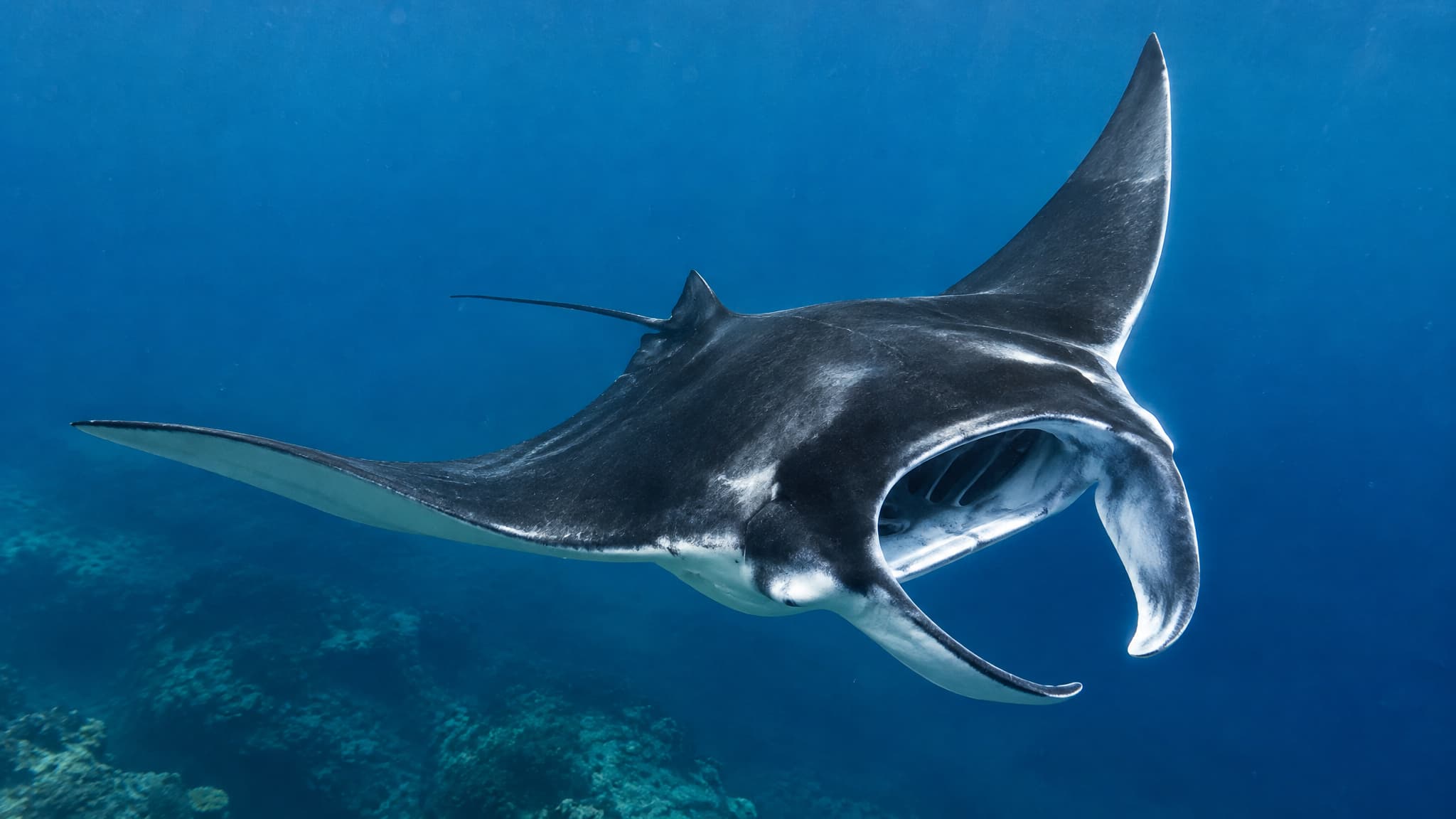
A giant oceanic manta ray glides through clear blue seawater above a reef, viewed from below with its broad pectoral fins extended, curled cephalic fins, pale underside, and visible gill slits.
The giant oceanic manta ray is the world’s largest ray, a highly mobile cartilaginous fish distinguished by its enormous diamond-shaped pectoral disc, broad terminal mouth, short whiplike tail, and paired, hornlike cephalic fins. These fins help direct water and prey into its mouth while feeding. Its upper surface is usually dark, often blackish, while the underside is pale with individually variable dark markings. Adults can reach about 7 metres (23 feet) in disc width, with exceptional records larger than this.
This species occurs circumglobally in tropical, subtropical, and warm-temperate seas of the Atlantic, Indian, and Pacific oceans. It uses both coastal and open-ocean environments, including productive upwelling zones, reef and rocky coasts, oceanic islands, seamounts, offshore pinnacles, bays, and waters near river mouths. Although it may be seen at the surface, it has been recorded to depths of around 1,000 metres. Individuals can travel long distances, but regional groups may show fidelity to particular aggregation and feeding sites.
Rather than hunting large prey, the manta ray is a filter feeder. It eats planktonic animals—especially small crustaceans such as copepods—as well as fish eggs and occasionally small fishes. It swims with its mouth open and cephalic fins extended, filtering concentrated prey from the water with specialised gill-filter structures. Mantas occur alone, in loose groups, or in seasonal aggregations where food is abundant. Their great size and fluid, winglike swimming make them important open-water consumers and visible members of marine food webs.
Reproduction is exceptionally slow. Internal fertilisation is followed by aplacental live-bearing development: the embryo first uses yolk and later receives nourishment in the uterus. A female generally produces one pup, with births thought to occur only every several years; newborns are already more than a metre wide across the disc. A maximum reported age of 20 years exists, but the species’ slow growth and low reproductive output make recovery from population losses difficult.
The giant oceanic manta ray is listed as Endangered on the IUCN Red List, and its population trend is decreasing. Fishing pressure, including targeted capture and bycatch in nets and other fisheries, is a principal threat; demand for gill-filter plates has also contributed to exploitation. Its sparse, locally vulnerable aggregations and very low reproductive rate increase the risk of local depletion. International trade and migratory-species protections support conservation, but effective fisheries management and protection of feeding and aggregation habitats remain essential.