Greater blue-ringed octopus
Hapalochlaena lunulata
 AI-generated
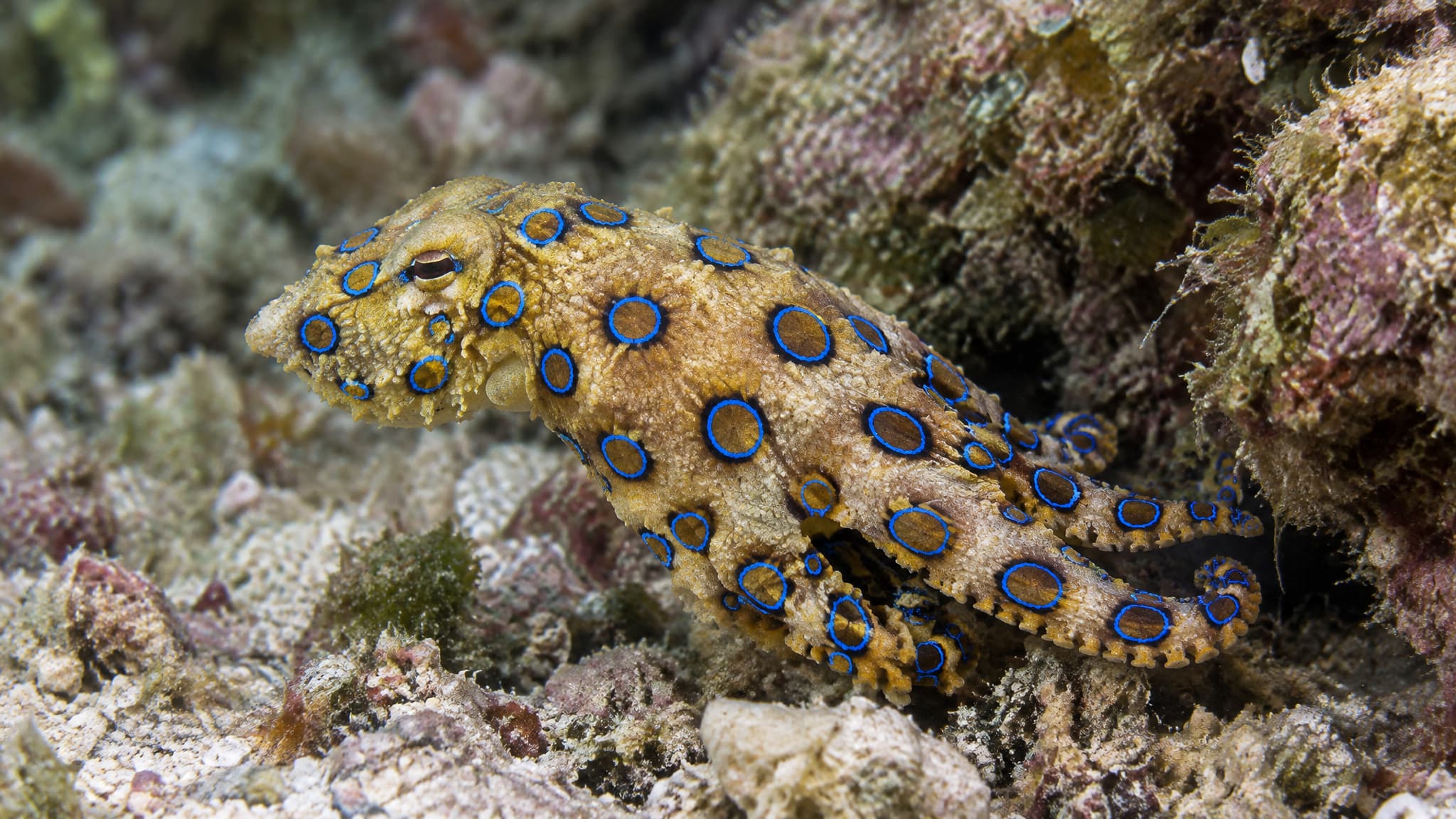
A blue-ringed octopus rests among coral rubble and encrusted reef, with its arms extended and vivid blue rings visible across the mantle and arms.
The greater blue-ringed octopus (Hapalochlaena lunulata) is a small, soft-bodied octopus famous for its vivid warning colours and its potent venom. Its skin ranges from yellow ochre to light or dark brown and carries around 60 iridescent blue rings, each 7–8 mm across and outlined in black; these rings are larger than those of its relatives, which is the easiest way to tell it apart. It weighs about 10 to 100 g depending on age, and its arms reach a maximum spread of about 20 cm, although it usually looks much smaller.
The species is widespread in the tropical and subtropical Indo-West Pacific, from Sri Lanka to the Philippines and from northern Australia to Papua New Guinea, the Solomon Islands and Vanuatu. It is a bottom dweller of shallow coastal water, favouring reefs, rubble, sand and rock pools. It shelters in crevices, empty shells and even discarded bottles and cans, and the entrance of its den is often littered with crab shells and legs from earlier meals.
This octopus is a carnivore that feeds mainly on small crabs and shrimp, along with molluscs and the occasional small fish. It ambushes prey, sometimes luring it by wiggling an arm tip, then bites with its beak and injects saliva containing tetrodotoxin, a nerve toxin made by bacteria in its salivary glands. When disturbed it flashes its rings, each flash lasting about a third of a second, as a warning. It is solitary, territorial and shy, and bites people mainly when handled; the bite can be painless, can paralyse breathing, and has no antivenom.
In mating, the male passes sperm packets to the female with a modified arm called the hectocotylus. The female lays 60 to 100 eggs and carries them under her arms for about 50 days, eating nothing, and dies soon after they hatch. The young drift as plankton for their first weeks before settling on the seabed, and they can breed about four months after hatching. Average lifespan is about 2 years.
Its tetrodotoxin is of interest to medical and neuroscience research, and live animals have even been sold as luxury items. The IUCN Red List assesses it as Least Concern.