Grey triggerfish
Balistes capriscus
 AI-generated
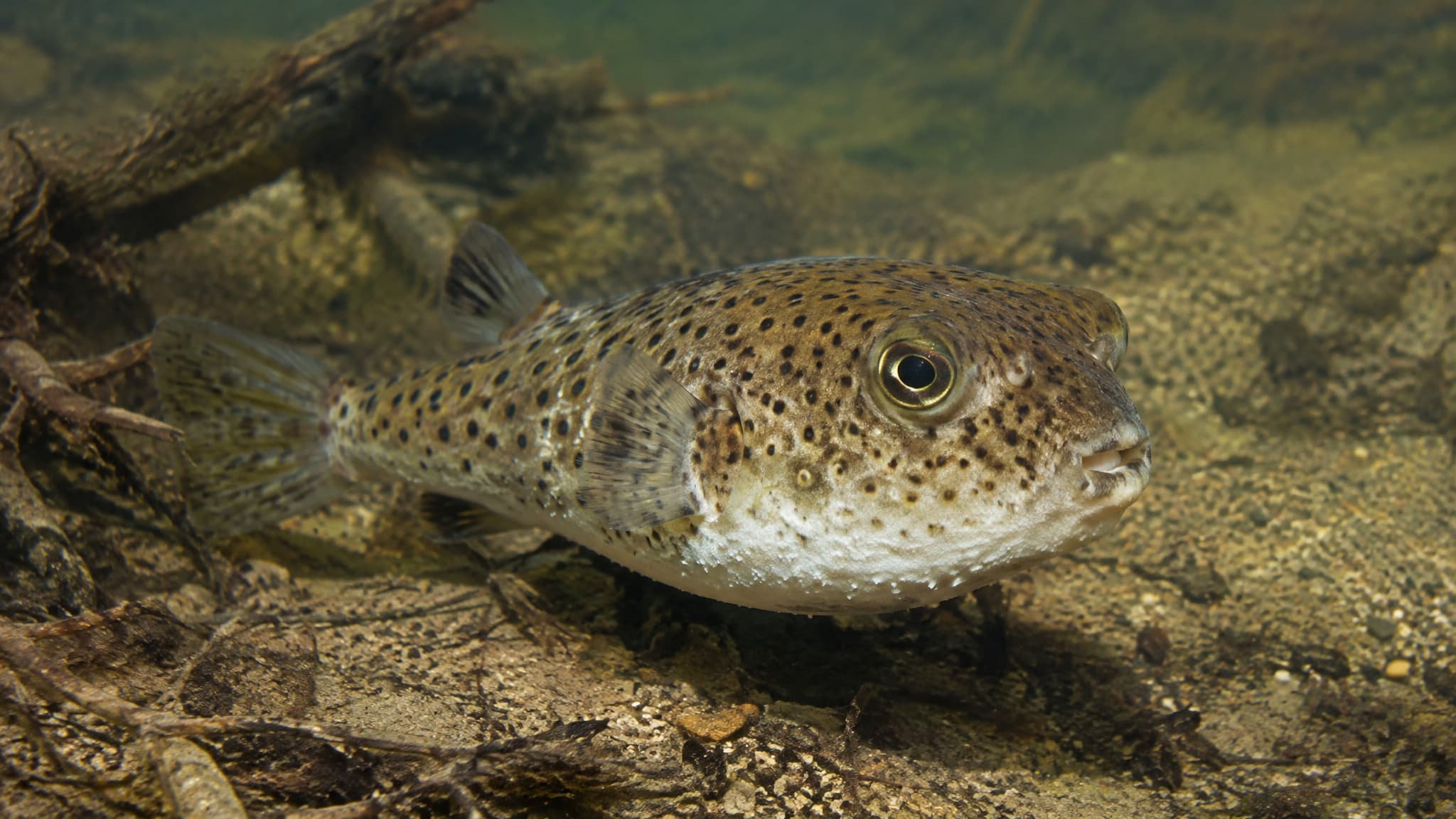
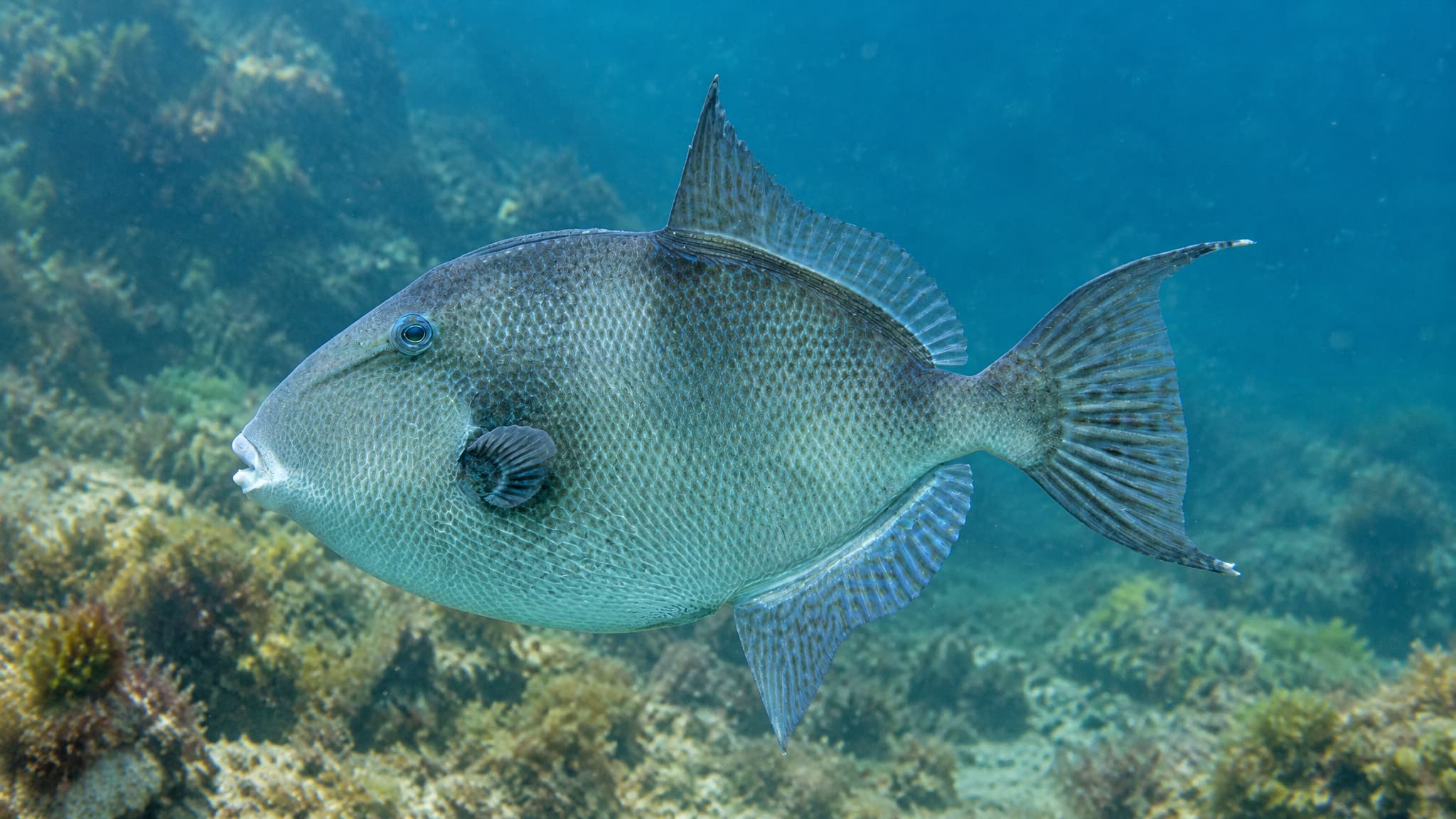
A Grey triggerfish swims in profile above a rocky coral-reef bottom, with its raised first dorsal spine, patterned body, rounded pectoral fin, and deeply forked tail clearly visible.
The grey triggerfish (Balistes capriscus), also spelled gray triggerfish, is a large ray-finned fish in the family Balistidae. Its body is tall, oval and flattened from side to side. It has a small mouth with strong jaws and thick, plate-like scales that make the skin very tough. The colour is mostly grey, greenish-grey or brownish. Faint, irregular dark bars run across the body, a narrow pale band crosses the chin, and small light-blue spots dot the upper body and fins. Like other triggerfishes, it can lock its first dorsal spine upright using a shorter second spine, the "trigger". It can reach 66 cm in total length and 6.2 kg, though about 44 cm is more typical.
Distribution and habitat
The species lives on both sides of the Atlantic. In the west it ranges from Nova Scotia and Bermuda to Argentina, including the Gulf of Mexico and the Caribbean. In the east it occurs along European and African coasts and in the Mediterranean. It lives in bays, harbours, lagoons and seaward reefs, as well as around rocky bottoms and wrecks, from the surface down to about 100 m. It is most common shallower than 55 m.
Diet and behaviour
Adults are mainly bottom feeders. They crush molluscs, crustaceans and other hard-shelled invertebrates with their strong teeth. Juveniles eat hydroids, barnacles and polychaete worms. Young fish often drift near the surface among floating Sargassum seaweed. Adults are usually solitary or live in small groups and can be territorial. When caught, the fish makes a grunting sound, which explains its Portuguese name peixe-porco ("pig fish").
Reproduction and lifespan
Fertilisation is external. Pairs make nests in sand, and both parents guard the eggs, which hatch in about two days. Guarding adults can be aggressive toward intruders. Sexual maturity usually comes at around 17 cm in length. The maximum recorded age is 15 years.
Ecology and conservation
The grey triggerfish eats many benthic invertebrates. In turn, sharks, groupers and amberjacks prey on adults, and tunas, dolphinfish and billfishes eat juveniles. It is highly valued in commercial and recreational fisheries for its good flesh. The IUCN lists it as Vulnerable. In US waters, NOAA Fisheries and regional councils manage it with catch limits and seasonal closures to rebuild stocks that were overfished.
Ideal water
The water this fish does best in, as kept in aquariums.
- Water type
- Marine
- Temperature
- 22–27 °C
- pH
- 7.9–8.5
- alkaline
- Specific gravity
- 1.020–1.026