Harlequin Shrimp
Hymenocera picta
 AI-generated
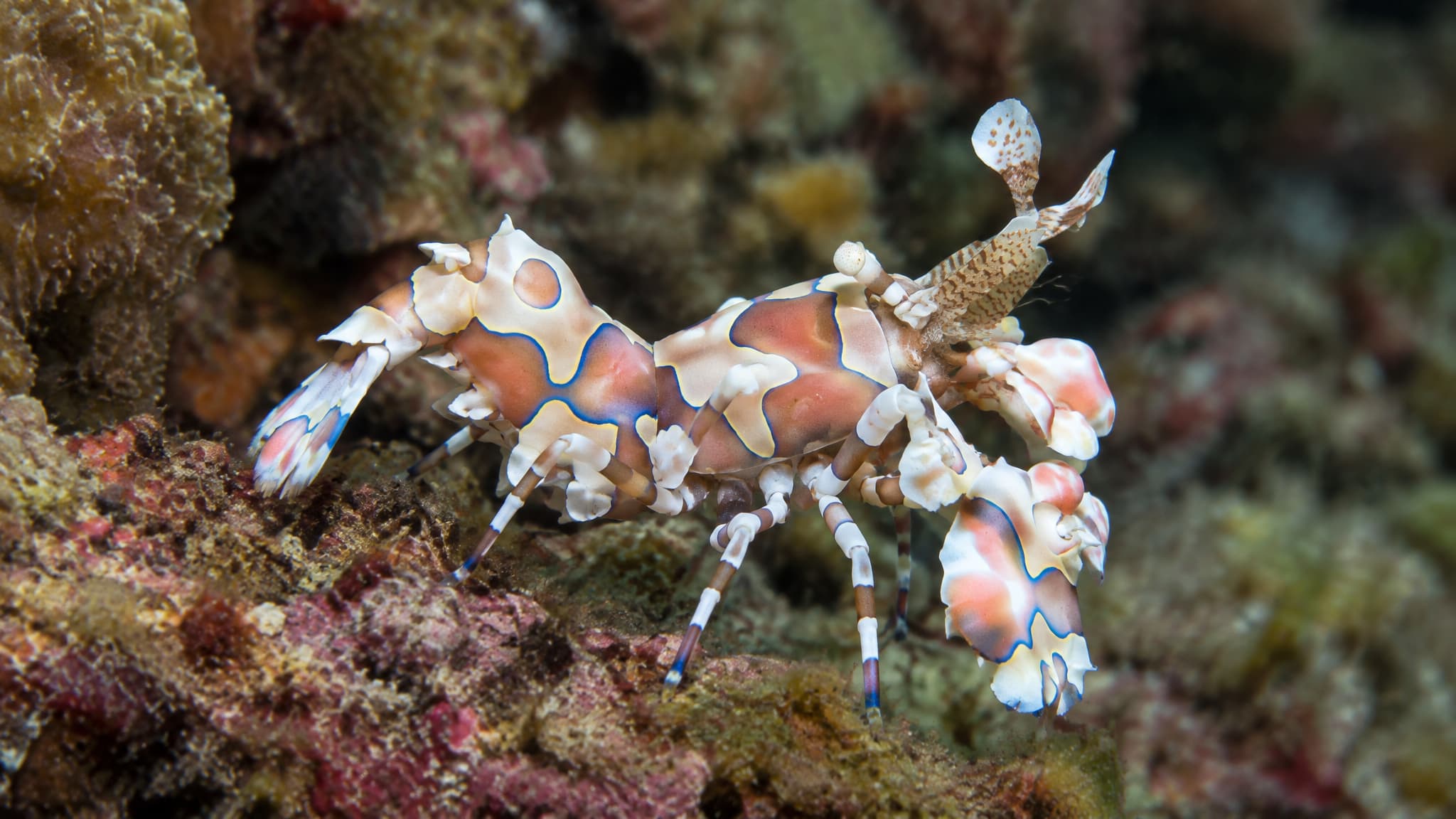
A harlequin shrimp is shown side-on walking across a coral-encrusted reef surface, with banded legs, broad flattened appendages, and prominent white, pink, and blue-edged body markings visible.
The harlequin shrimp (Hymenocera picta) is a small, strikingly patterned reef shrimp that reaches only about 5 cm in length. Its body is white or cream and covered with large spots, usually reddish or pinkish-purple in Pacific animals and brownish or bluish in Indian Ocean animals. The claws are expanded into broad, flattened plates held out in front of the head, and petal-like antennules help it detect prey by smell. Females are normally larger than males.
The species lives in tropical waters of the Indian and Pacific Oceans, from the Red Sea and eastern Africa through Indonesia and northern Australia to Hawaii and the central and eastern Pacific. It occurs on coral reefs and nearby seabeds just below the intertidal zone, down to about 20 m, where it shelters in crevices and among coral. It does best in warm water of roughly 22 to 28 °C.
Few crustaceans have such a narrow diet: the harlequin shrimp feeds almost entirely on live sea stars, including species of Linckia, Fromia, Nardoa and even the coral-eating crown-of-thorns starfish (Acanthaster). It usually hunts with its mate. The pair finds a star by chemical cues, works together to flip it upside down, a task that can take 30 to 60 minutes, and then pierces the skin to eat the tube feet and soft tissues, often starting at the tip of one arm.
Harlequin shrimp are monogamous and territorial, living in stable pairs that forage and breed together, while males can fight one another for dominance. After courtship the female carries the fertilized eggs under her abdomen; reported clutches range from 100 to 5,000 eggs, with spawning tied to her molts. The eggs start orange-red and turn gray as the embryos develop. In captive rearing, the planktonic larvae took about 6 weeks to metamorphose into juveniles, which soon began eating small sea stars. Its natural lifespan has not been well documented.
By preying on sea stars, the harlequin shrimp helps keep their numbers in check, and its taste for crown-of-thorns starfish has led to proposals to use it in biological control on reefs. It has not been evaluated by the IUCN. It is popular in the marine aquarium trade, but captive breeding remains difficult because the shrimp needs a steady supply of live sea stars.