Smooth Puffer
Lagocephalus laevigatus
 AI-generated
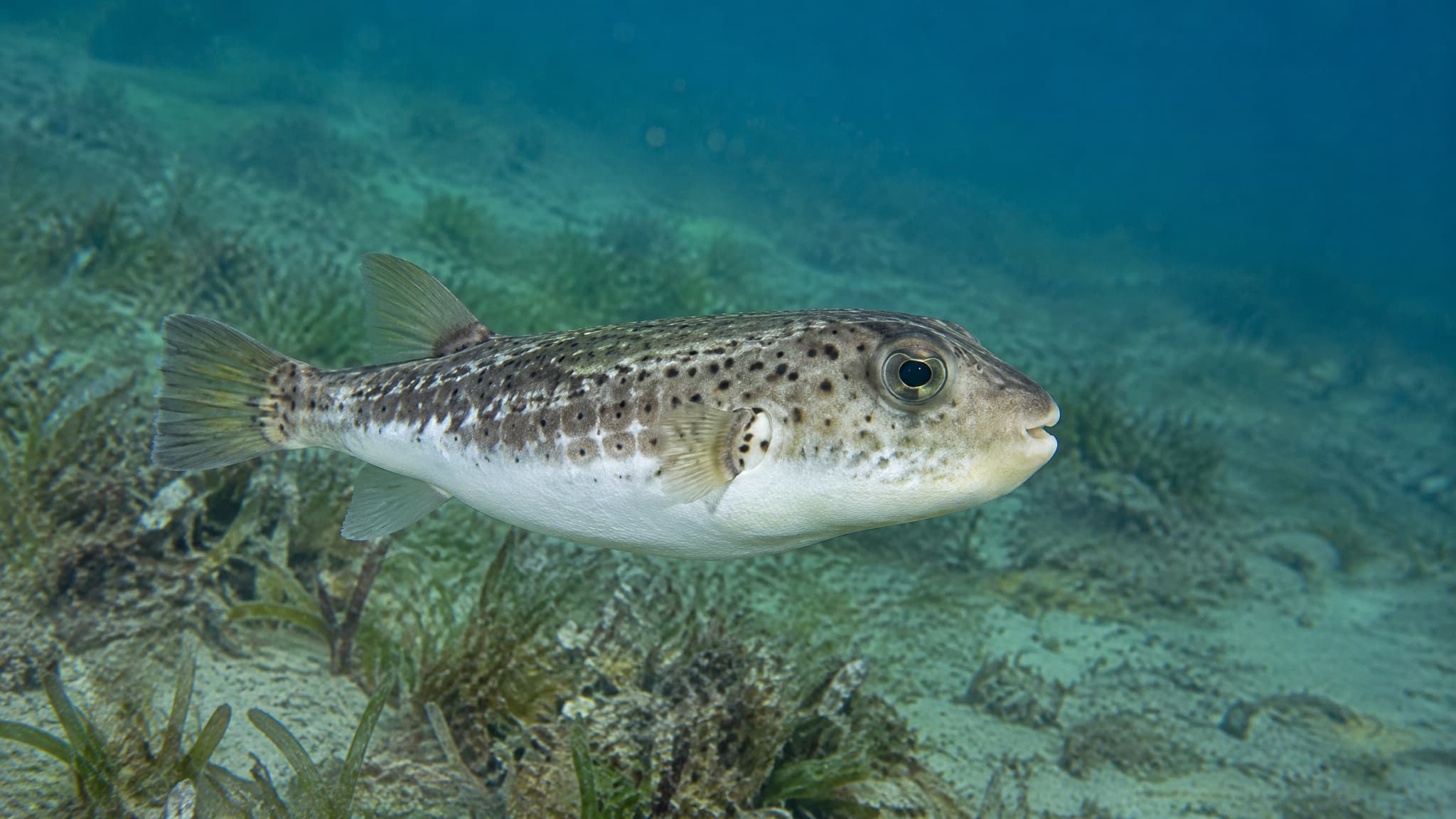
A smooth, spotted puffer swims horizontally to the right over a shallow seagrass-and-reef seabed. Its rounded body, pale underside, large eye, small beak-like mouth, and translucent dorsal, anal, pectoral, and tail fins are clearly visible.
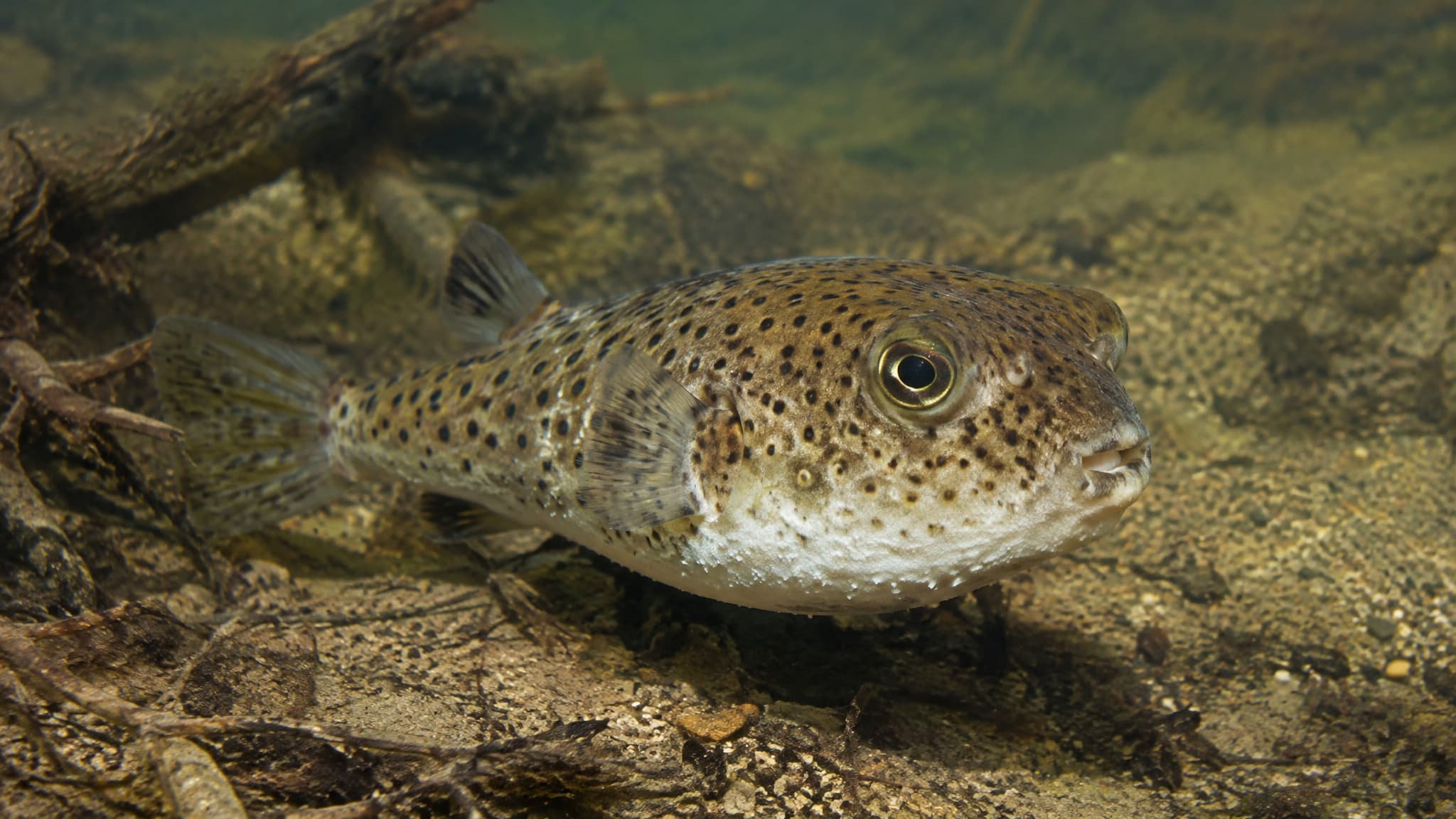
The smooth puffer is a large, blunt-headed pufferfish of Atlantic coastal waters. Its elongated, deep-bodied form, small fins set far back on the body, strong beak-like teeth, and ability to inflate are typical of the family Tetraodontidae. Much of the skin is smooth, while small prickles occur mainly on the belly. It can reach about 100 cm in total length, although individuals around 60 cm are more usual.
This species occurs on both sides of the Atlantic. In the western Atlantic it is reported from New England and Bermuda south to Argentina; in the eastern Atlantic it ranges from Mauritania to Namibia. It lives in marine and sometimes brackish water, especially in inshore and nearshore settings over sandy or muddy bottoms. Adults may travel in pelagic waters close to continental margins, while young fish are often found on coastal and offshore banks.
Usually encountered alone or in small, loose groups, the smooth puffer feeds chiefly on fishes and shrimps. Its fused teeth form a robust biting beak suited to capturing and processing animal prey. As a mobile predator in coastal food webs, it transfers energy from smaller nekton and crustaceans to larger consumers; its eggs are benthic and its larvae have a pelagic stage.
The species is oviparous, but its courtship, spawning season, age at maturity, and lifespan remain poorly documented in readily available sources. It is globally assessed as Least Concern, although this assessment dates to 2011. It is taken in minor commercial and recreational fisheries. Pufferfish toxins have been detected in specimens from southeastern Brazil, and consumption is unsafe without expert species-specific food-safety assessment.