Labyrinth Frog
Leptodactylus labyrinthicus
 AI-generated
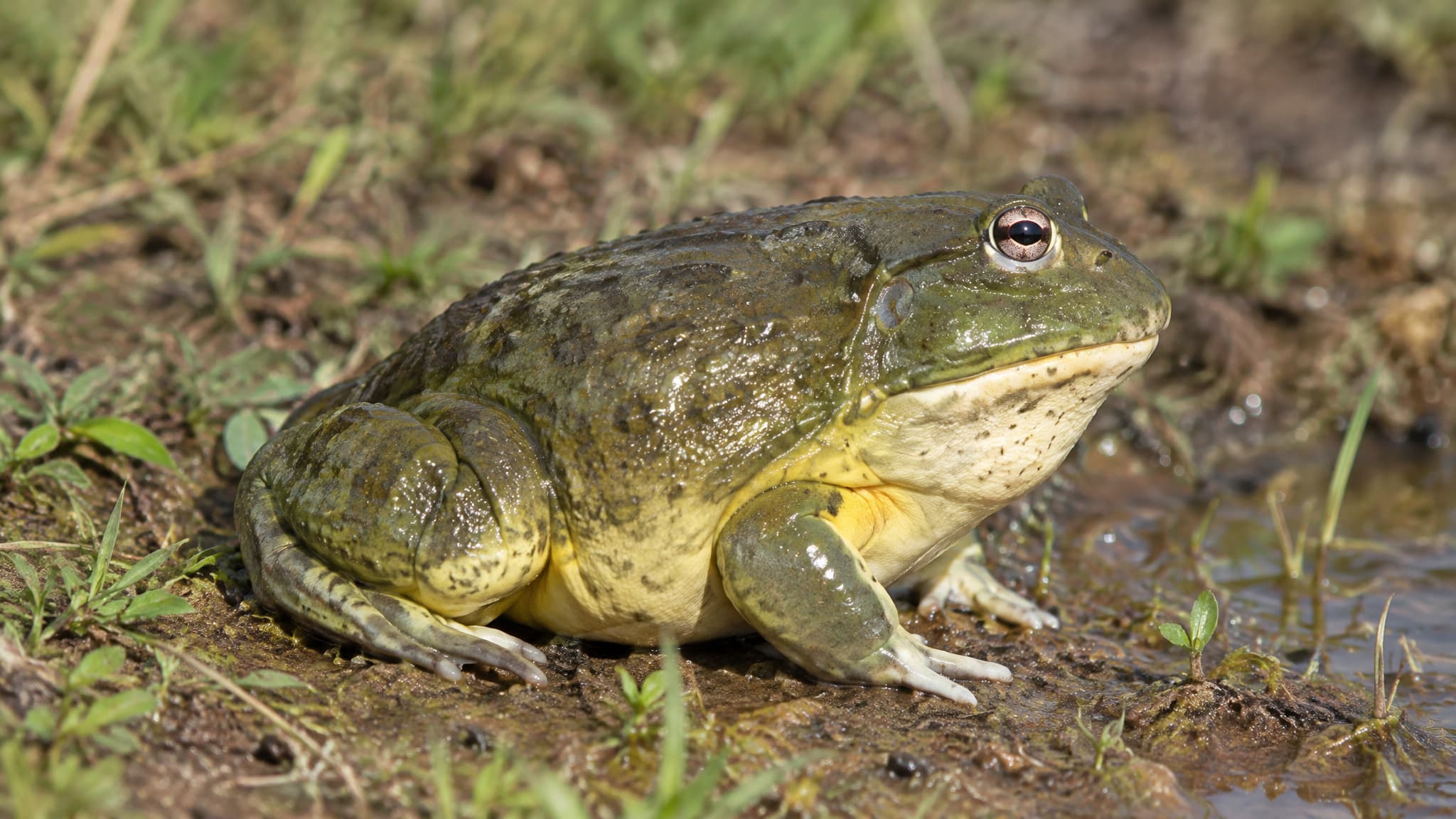
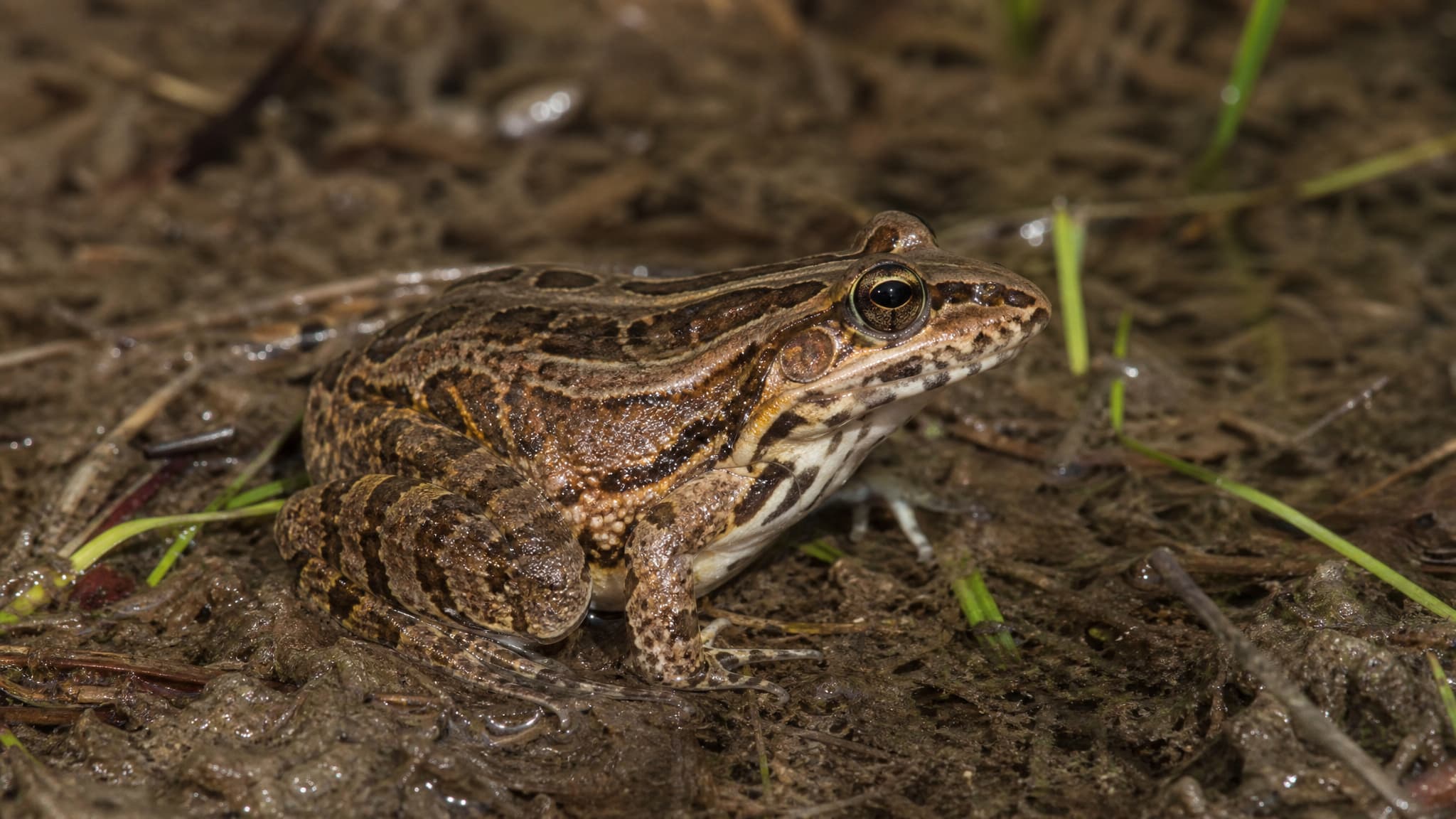
A brown, boldly striped frog crouches on wet mud beside sparse grass, with its head raised and large eye, folded hind limbs, and pale dark-marked throat clearly visible.
The labyrinth frog is a very large, heavy-bodied South American frog. It is also known as the pepper frog, South American pepper frog, or pepper foam frog. Adults are generally brown to reddish brown with darker markings, while the pale underside bears dark, maze-like vermiculations that inspired the English common name. It has a broad head, strong limbs, and, in males, robust forelimbs and thumb spines used in contests.
Its natural range includes the open formations of central and southeastern Brazil, eastern Paraguay, and the Argentine provinces of Misiones and Corrientes. It is especially associated with the Cerrado and Caatinga, but can occupy a varied mosaic of grassland, marsh edges, pastures, forest margins, streams, and ponds. Populations reported from parts of Amazonian Brazil are introduced rather than part of its original distribution.
This is chiefly a nocturnal, opportunistic predator. Large adults consume invertebrates and may take other vertebrates, including frogs and reptiles. Its tadpoles have an unusually predatory diet: after leaving the nest they can feed on carrion as well as the eggs and larvae of other frogs. In this way, the species functions both as a substantial predator and as prey within wetland and seasonal-pond food webs.
Breeding is linked to rains. Males call near temporary or permanent water and defend breeding areas. A pair makes a foam nest in an excavated basin on land close to water; most eggs in the nest are unfertilized trophic eggs, which nourish the developing larvae. Flooding rains carry the tadpoles into water, where metamorphosis is completed. Lifespan has not been reliably documented. The species is assessed as Least Concern, but drainage of wetlands, habitat conversion, pollution, collection, and introduced populations can still affect local populations.