Giant river prawn
Macrobrachium rosenbergii
 AI-generated
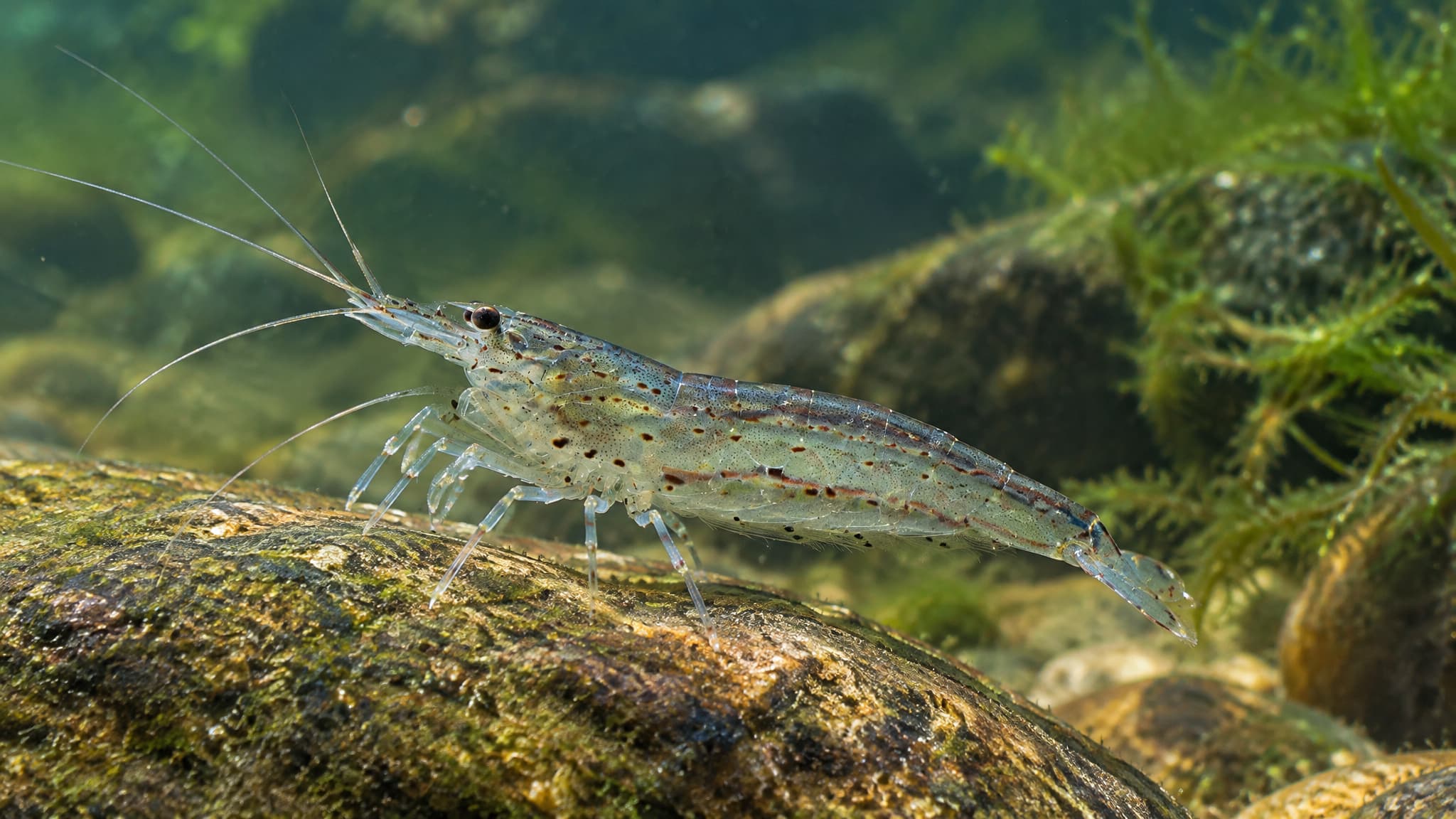
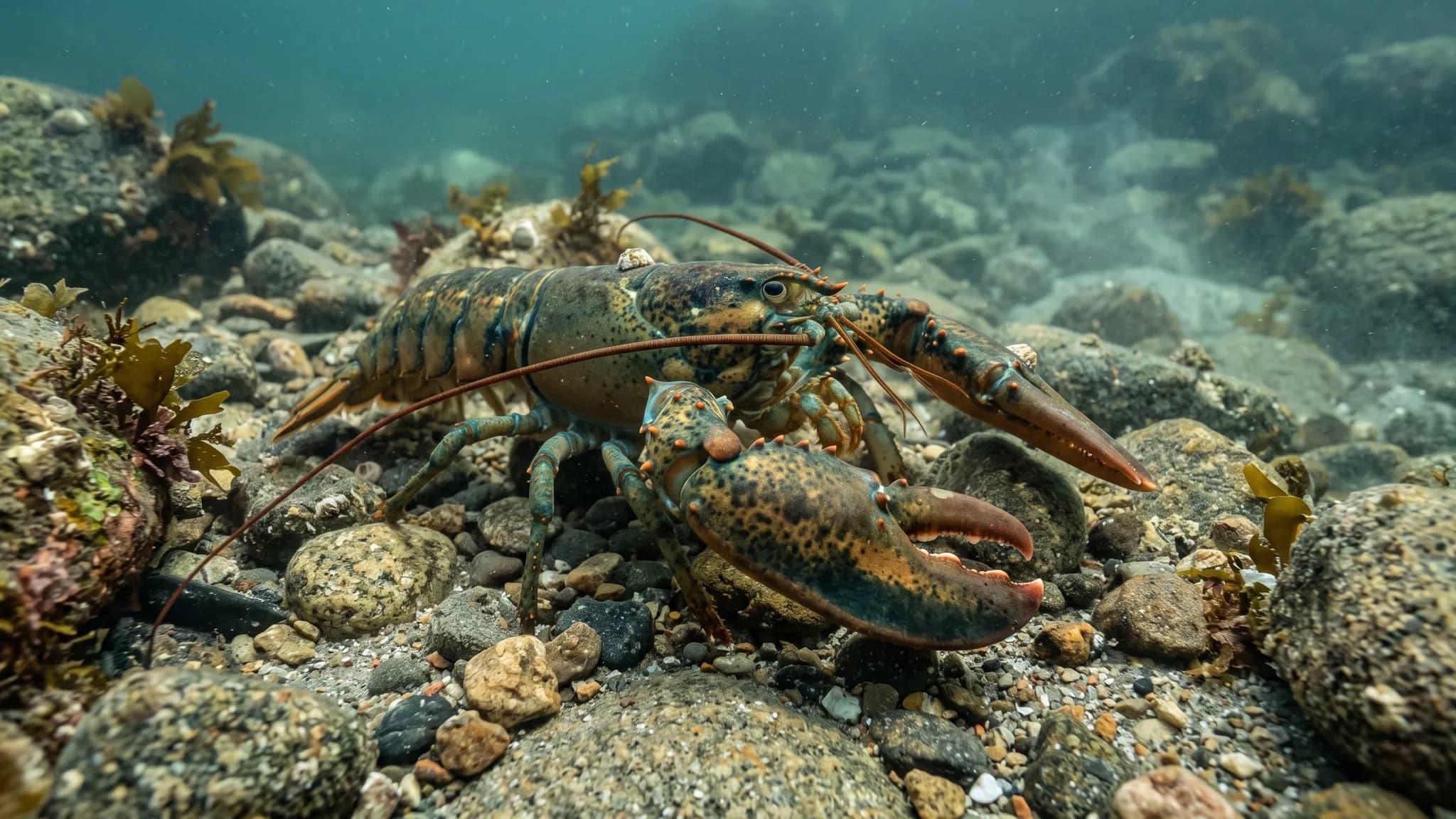
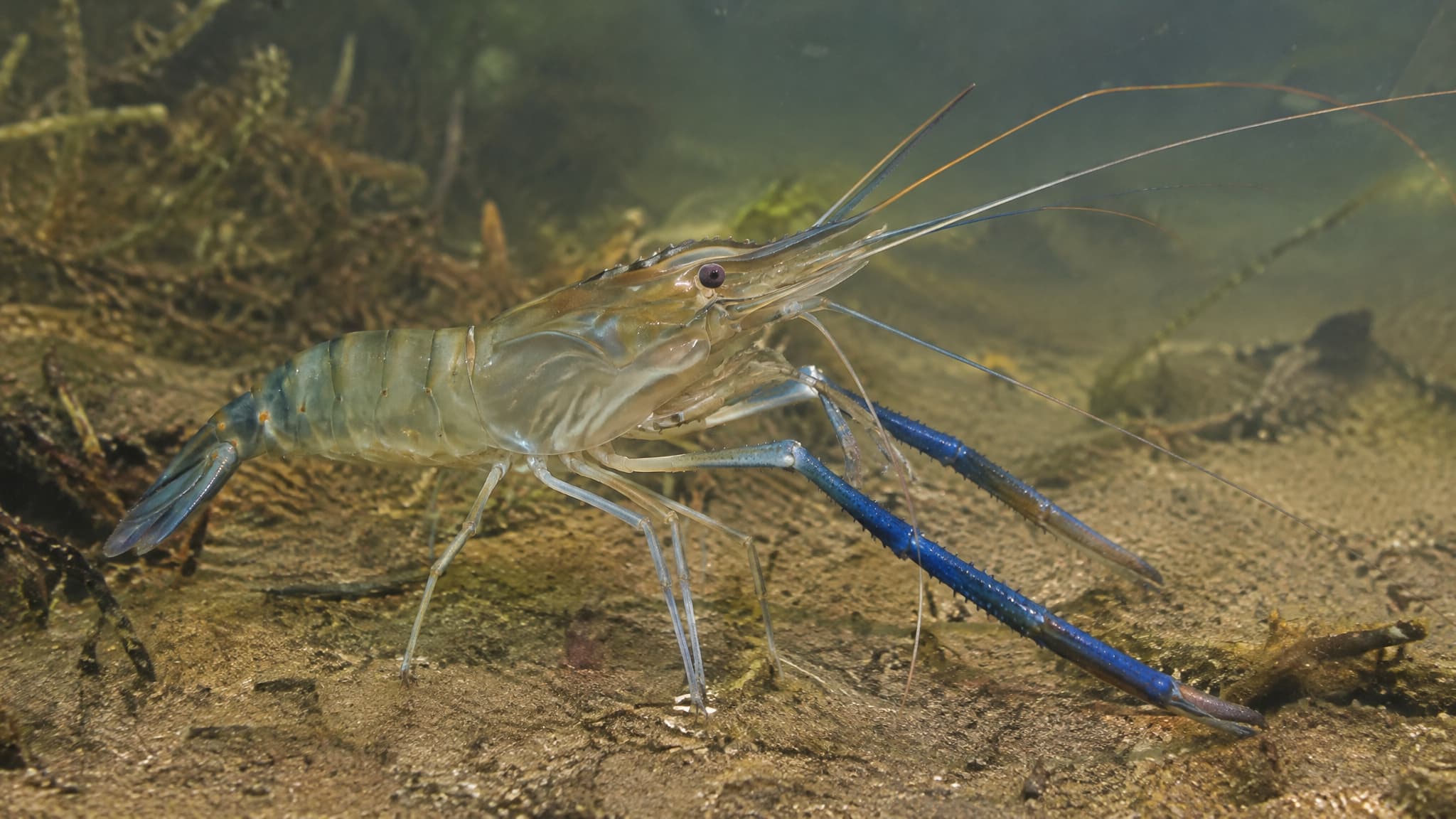
A giant river prawn rests on the silty streambed in side view, showing a segmented translucent body, long antennae, a toothed rostrum, and conspicuously elongated blue claws.
Macrobrachium rosenbergii, the giant river prawn or giant freshwater prawn, is a large decapod crustacean in the family Palaemonidae. It has a smooth, greenish- to brownish-gray carapace that may appear bluish in larger animals, stalked eyes, long antennae, and an elongated, slightly upcurved rostrum. The rostrum usually bears 11–14 teeth above and 8–10 below. Adult males are especially conspicuous for their extremely long, often blue or orange second claws; males can reach about 32 cm in total length and are generally larger than females.
Adults chiefly occupy tropical fresh waters—rivers, lakes, canals, swamps, and associated lowland waters—particularly systems connected to estuaries. Despite its common name, its life cycle is not wholly freshwater: egg-bearing females move downstream to brackish estuaries, where the free-swimming larvae develop. After metamorphosis, postlarvae become bottom-oriented and migrate or disperse back into fresh water. The species is native to South and Southeast Asia and has been widely translocated and farmed in tropical and subtropical regions.
Larvae feed largely on zooplankton, tiny worms, and other small aquatic invertebrates. Postlarvae and adults are omnivores, consuming algae, aquatic plants, detrital material, mollusks, insects, worms, and crustaceans. Usually more active at night, they forage on or near the bottom and may shelter among vegetation or sediment during the day. Their broad diet makes them both consumers of small animals and recyclers of organic material in freshwater food webs.
Mating occurs when a female has recently molted and has a soft shell. Fertilized eggs are carried beneath her abdomen until hatching; larvae pass through a series of molts in brackish water before becoming postlarvae. Reported longevity is about three years, though survival varies strongly with habitat, predation, disease, and farming conditions. The species is not globally evaluated on the IUCN Red List in this record; key concerns include habitat alteration, water pollution, disease in aquaculture, and ecological effects where introduced populations establish.