Mandarinfish
Synchiropus splendidus
 AI-generated
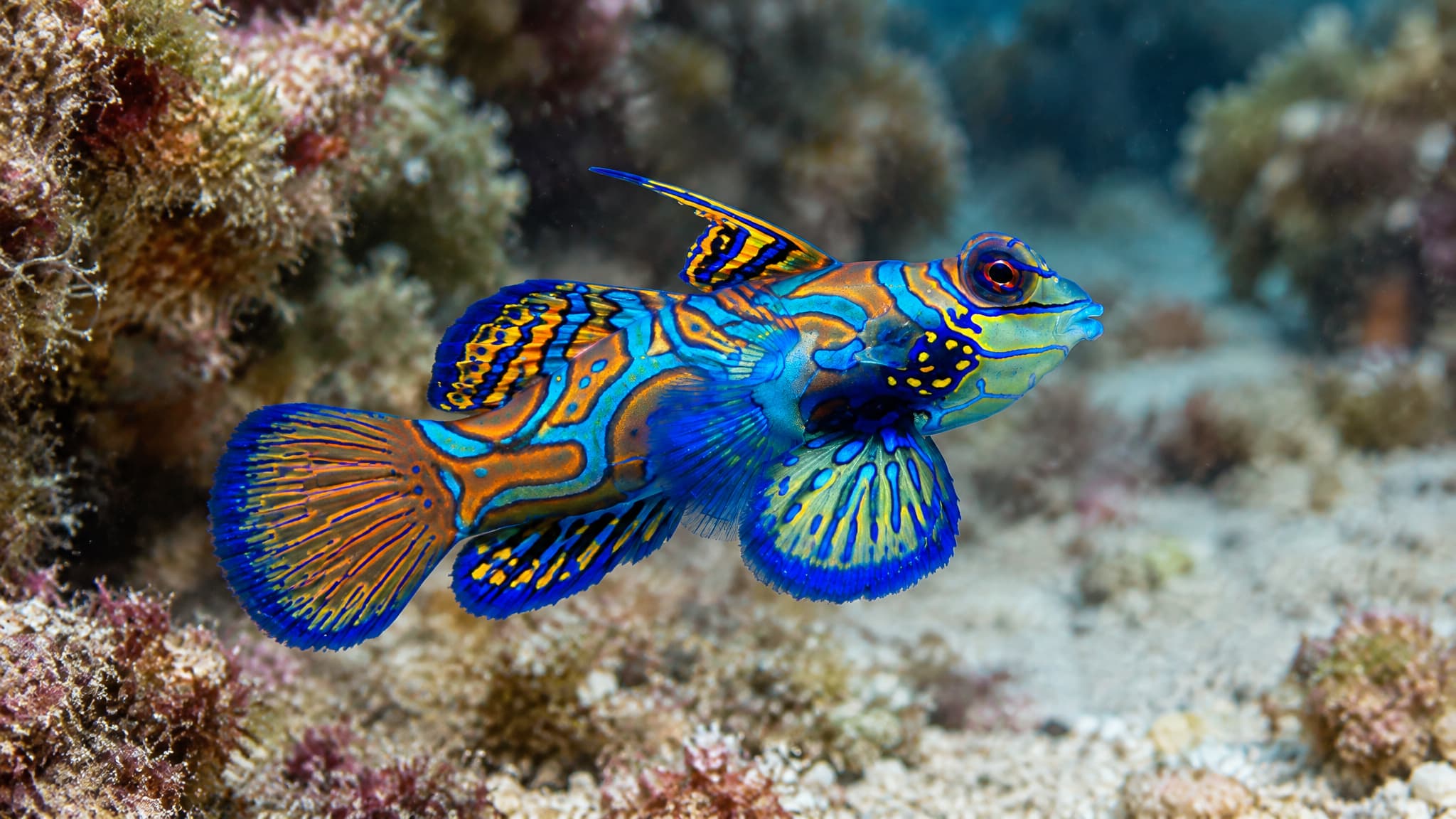
A vividly patterned mandarinfish is shown in right-facing side profile, swimming just above a coral- and algae-covered reef. Its blue, orange, and yellow markings and raised dorsal fin are clearly visible.
Mandarinfish
The mandarinfish, also called the mandarin dragonet, is a small, exceptionally colorful reef fish. Its body is decorated with winding blue, orange, red, and yellow-green markings; it has a broad, flattened head, large outward-facing eyes, and fanlike pelvic fins that help it perch and move across the seabed. Males are generally larger and can be recognized by an especially elongated first dorsal-fin spine. Adults reach about 7 cm in total length.
It occurs in the tropical western Pacific, from the Ryukyu Islands southward to Australia, including parts of the Philippines, Indonesia, New Guinea, and nearby reef systems. Mandarinfish inhabit sheltered shallow lagoons and inshore coral reefs, usually at roughly 1–18 m deep. They stay close to coral rubble, live rock, sand, and crevices, where their patterned coloration helps break up their outline.
This is a bottom-oriented predator that picks tiny animals from the reef surface. Its food includes small crustaceans such as copepods, amphipods, and isopods, as well as worms and other minute invertebrates. It is often shy and slow-moving, spending much of the day near cover. Instead of scales, it has a thick mucus coat; this secretion is thought to be distasteful or protective against some predators.
Spawning commonly takes place around dusk. A male and female rise together above the reef and release eggs and sperm into the water, with no subsequent parental care. The species contributes to reef food webs by feeding on small benthic invertebrates and serving as potential prey. It is heavily known in the aquarium trade, where its specialized live-food diet can make long-term care difficult. Synchiropus splendidus is assessed as Least Concern, although reef degradation and poorly managed collection may pose local pressures.