Monarch Butterfly
Danaus plexippus
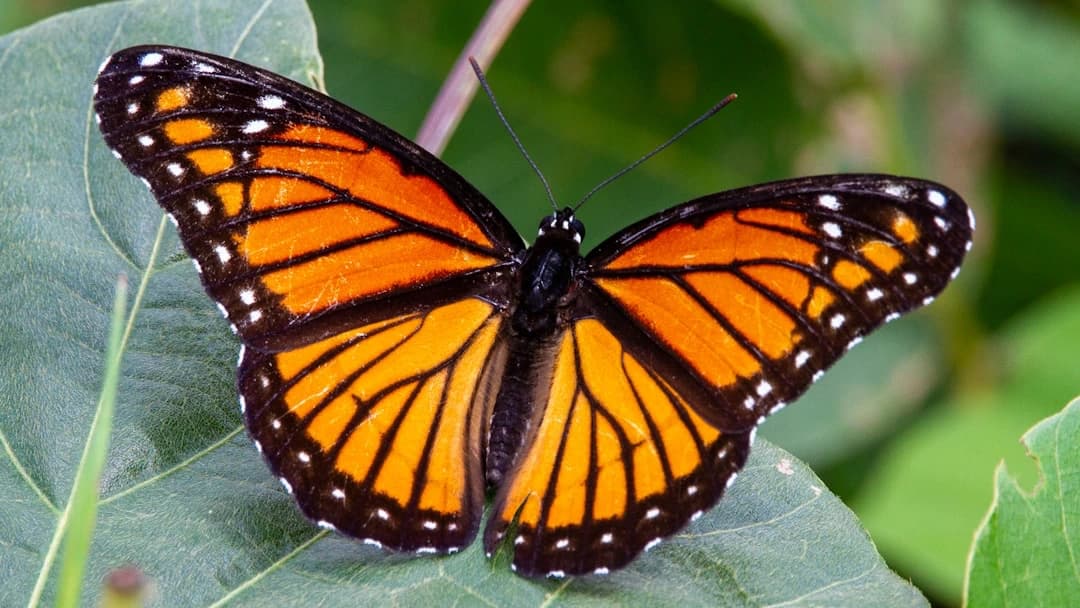
Monarch butterfly (Danaus plexippus)
The monarch is a large brush-footed butterfly (family Nymphalidae) recognized by its orange wings, bold black veins, broad black margins, and rows of white spots. Its wingspan is about 8.6–12.4 cm. Females usually show darker, broader-looking veins; males have a conspicuous scent-scale patch on each hindwing. The black-and-orange pattern is aposematic—a warning signal associated with the defensive chemicals many monarchs retain from their larval host plants. (butterfliesandmoths.org)
Danaus plexippus occurs across the Americas and the Caribbean, with additional populations established on various oceanic islands and in other regions. Breeding habitat is chiefly open, sunny country where milkweeds occur: meadows, fields, marsh edges, roadsides, gardens, and weedy ground. In North America, the best-known migratory populations breed across Canada and the United States. Autumn migrants east of the Rocky Mountains generally overwinter in high-elevation forests of central Mexico, while many western migrants use sheltered coastal groves in California. (animaldiversity.org)
Females place single eggs on milkweed leaves. The striped black, white, and yellow caterpillars feed on milkweed foliage and sometimes flowers, sequestering cardiac glycosides that can make them unpalatable to vertebrate predators. Adults drink nectar from many flowering plants and may transfer pollen while foraging. Development proceeds through egg, larva, chrysalis, and winged adult; the timing varies with temperature. Summer adults commonly live only three to five weeks, whereas the late-summer migratory generation can survive roughly eight to nine months. (butterfliesandmoths.org)
Migration makes the monarch ecologically distinctive: successive spring and summer generations recolonize northern breeding areas, while a specialized autumn generation delays reproduction, stores energy, and travels south. Dense winter roosts depend on protective forest microclimates and nearby resources. Monarchs contribute to flower visitation and milkweed herbivory, but their migration is vulnerable to loss of breeding plants and nectar sources, degradation of overwintering habitat, pesticides and herbicides, drought, extreme weather, and climate change. Conservation assessments and legal treatment vary by taxon and jurisdiction: the North American migratory subspecies has been assessed separately by IUCN, while the U.S. Fish and Wildlife Service currently describes the species as proposed for listing as threatened in the United States rather than finally listed. (iucn.org)