Mutton Snapper
Lutjanus analis
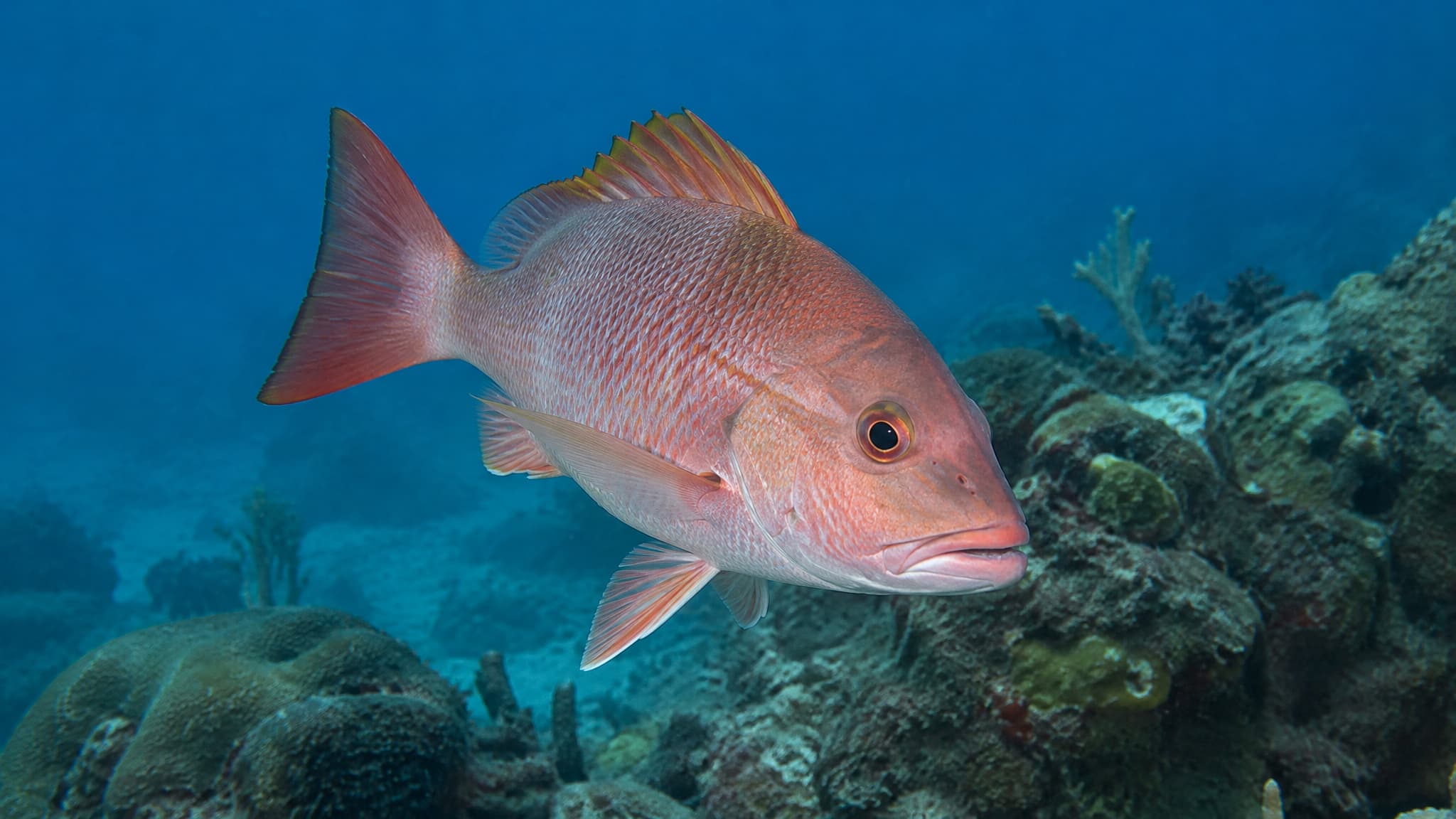 AI-generated
A mutton snapper is shown in right-facing side profile, swimming above a coral reef in clear blue water. Its deep reddish-pink body, large eye, pointed dorsal fin, and reddish forked tail are clearly visible. 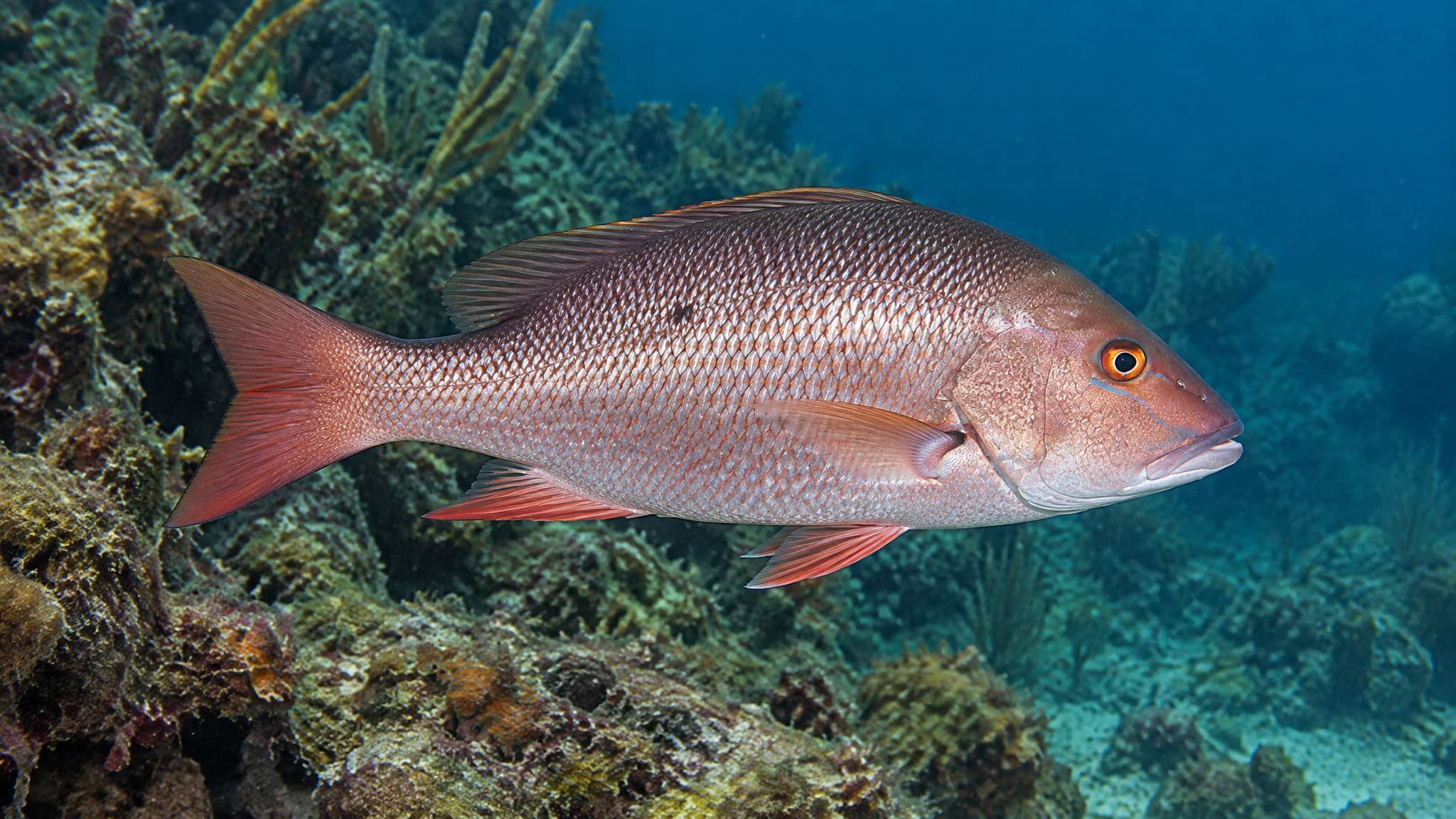 AI-generated
A side-profile mutton snapper swims to the right above a coral reef, showing a robust, laterally compressed body, reddish fins, a forked tail, and blue facial lines.
The mutton snapper (Lutjanus analis) is a large marine snapper in the family Lutjanidae. Fishers in the western Atlantic value it highly. Its body is deep and flattened from side to side, and it has a big mouth lined with fine, brush-like teeth. Its long pectoral fins reach back about as far as the anus. Among its relatives, it stands out for having 13–14 soft rays in the dorsal fin, behind 10–11 spines. Adults commonly reach about 50 cm. The largest recorded length is 94 cm, and the heaviest published weight is about 15.6 kg.
The species lives in the western Atlantic from Massachusetts and Bermuda south to southeastern Brazil, including the Gulf of Mexico and the Caribbean Sea. It is most abundant around southern Florida, the Bahamas and the Antilles. Young fish settle into shallow seagrass beds and estuaries near the coast. As they grow, they move to coral reefs and rocky bottoms farther offshore, down to about 95 m and possibly deeper. Once adults settle in an area, they tend to stay there.
Mutton snappers are predators that feed both by day and at night. The larvae eat plankton, while juveniles and adults take crustaceans such as crabs and shrimp, along with molluscs and small fishes. Their diet shifts as they grow. Adults are wary and mostly solitary, or they occur in small groups. The fish can change its colour pattern, showing darker bars when feeding near the bottom.
Outside the breeding season the species is fairly solitary, but each year it gathers in large spawning aggregations at predictable sites, especially in the Caribbean. It is a broadcast spawner with high fecundity. Hatchery studies suggest it matures at around three years of age. Lifespan can reach 29 years, and FishBase estimates the generation time at about seven years.
As a mid- to upper-level predator, the mutton snapper helps link seagrass, mangrove and reef food webs. It depends on several connected coastal habitats during its life. The IUCN lists it as Near Threatened. The main threat is heavy fishing, especially at spawning aggregations, which are easy to target. Overfishing has been reported in parts of Brazil and Colombia, and loss of seagrass and reef habitat adds further pressure.