Pacific Cleaner Shrimp
Lysmata amboinensis
 AI-generated
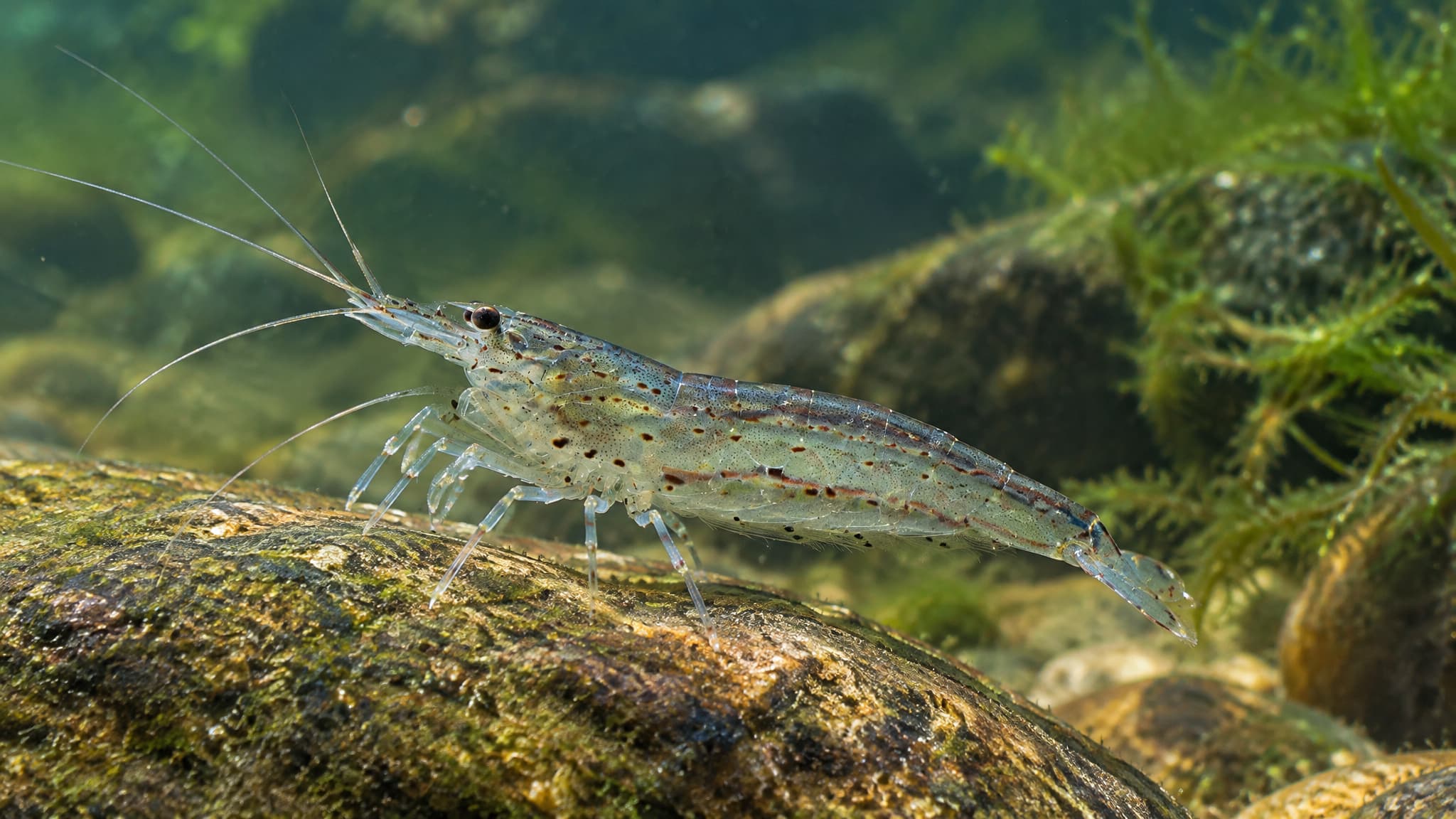
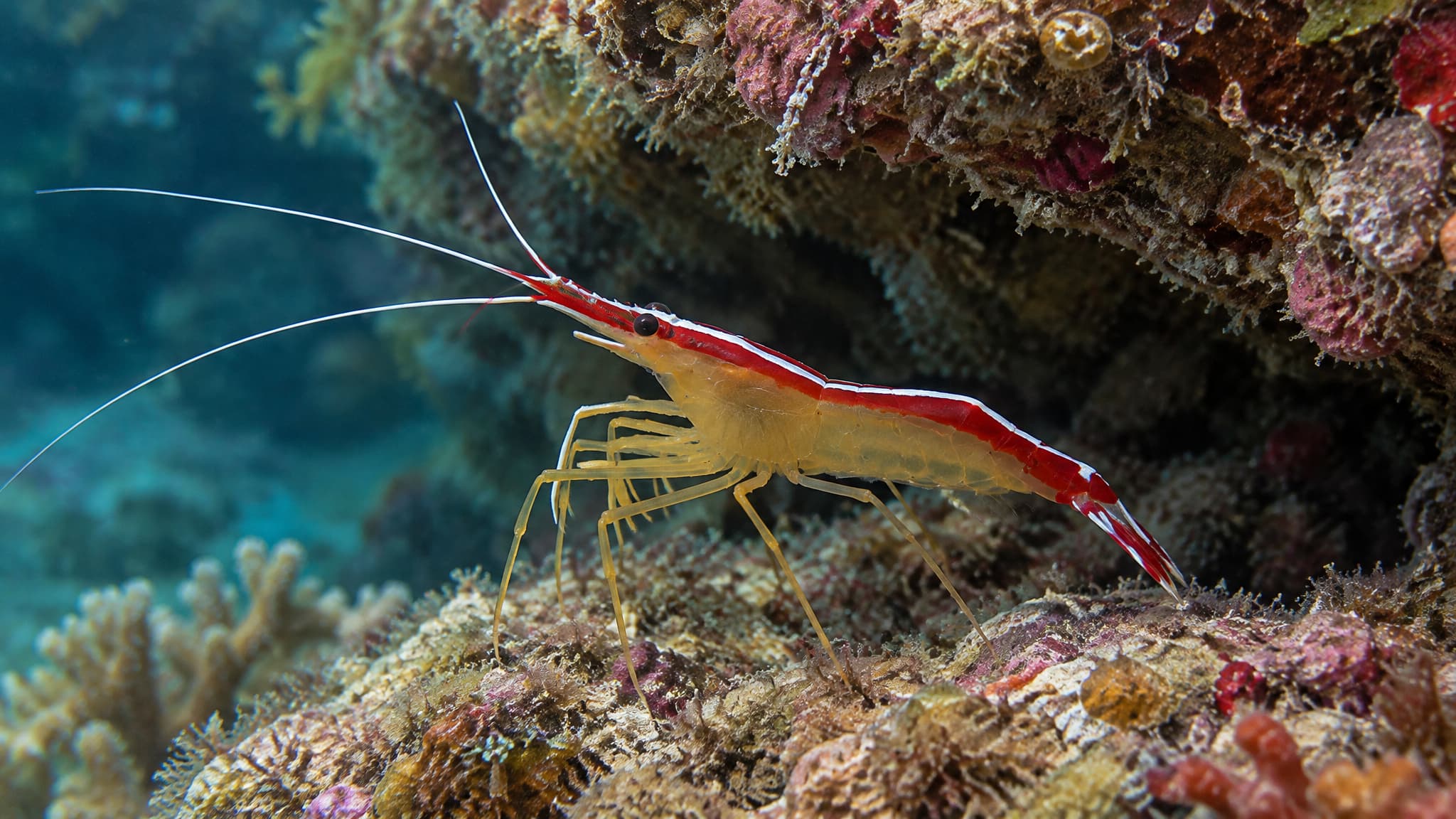
A Pacific cleaner shrimp rests side-on on a coral-encrusted reef ledge, with long white antennae, translucent yellow legs, and bold red-and-white stripes visible along its body and tail.
The Pacific cleaner shrimp (Lysmata amboinensis), also sold as the skunk or white-banded cleaner shrimp, is a small caridean shrimp described by de Man in 1888. Adults reach about 5 to 6 cm in body length. The slender body and legs are pale amber to light yellow, and a bright white stripe runs along the middle of the back between two broad scarlet bands. The red tail carries symmetrical white spots, and the long white antennae are forked at the front, so the shrimp seems to have three pairs. The first pair of walking legs ends in small pincers.
The species lives on tropical coral reefs of the Indo-West Pacific, from Kenya to Japan, French Polynesia and Hawaii, and also in the Red Sea. It is usually found at depths of about 5 to 40 m, sheltering in caves and under rock ledges, often in pairs rather than in large groups.
Its name comes from its work at reef cleaning stations. Most of its food is parasites and dead tissue picked from the bodies of visiting fish. When a fish arrives, the shrimp rocks from side to side and touches it with its antennae to signal that it is a cleaner, not prey. It often lives in caves alongside moray eels, which may give it protection. In a 2015 aquaculture study, these shrimp ate 63% of the eggs of the harmful fish parasite Neobenedenia during the day (14% at night) and 26% of its infective larvae, and they halved infection success on ornamental fish.
Every individual starts life as a male and, after a few moults, becomes a functional hermaphrodite that can act as either sex. Partners mate right after a moult, and each spawning yields 200 to 500 eggs carried under the abdomen. The larvae hatch at 3 to 4 mm, drift in the plankton for 5 to 6 months through at least 14 stages, and settle at about 2 cm. Adults moult every 3 to 8 weeks and live about 3 to 5 years.
The Pacific cleaner shrimp has not been evaluated by the IUCN. It is one of the most popular invertebrates in reef aquariums, and because its larvae are hard to rear, most animals in the trade are taken from the wild, a practice that some sources say could harm reefs.