Peppermint Shrimp
Lysmata wurdemanni
 AI-generated
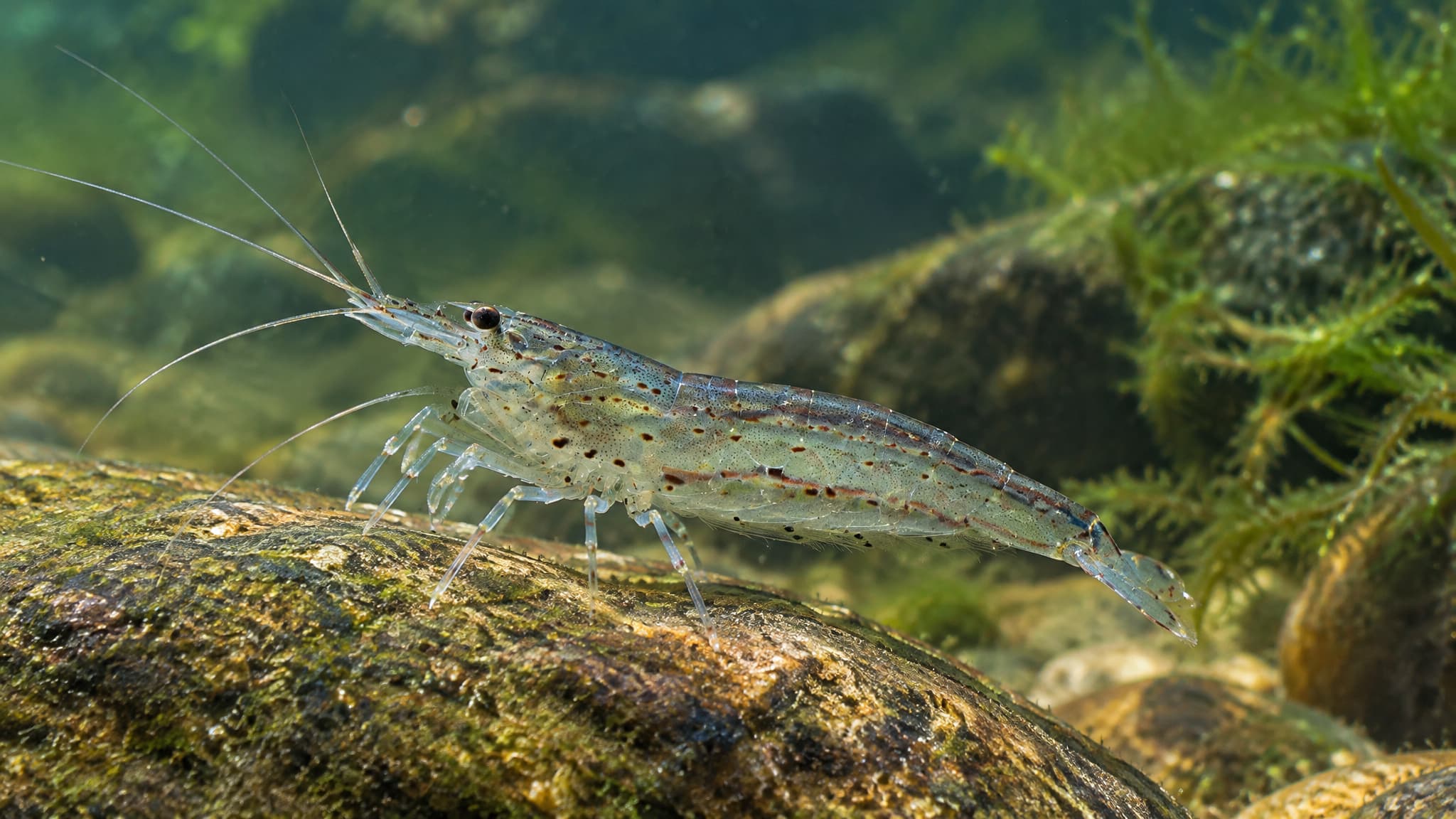
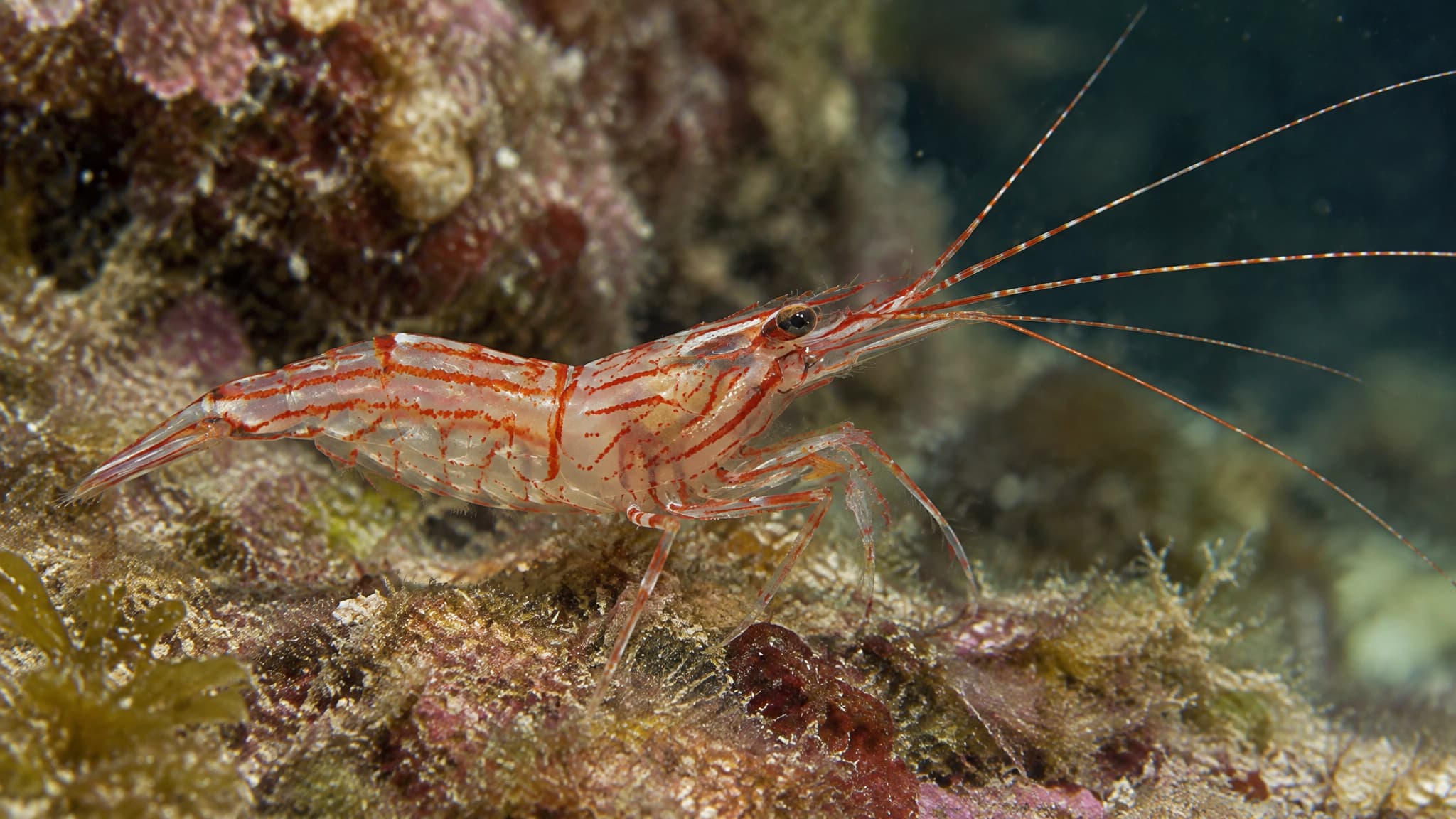
A peppermint shrimp rests in side profile on a textured, algae-covered reef surface, displaying its translucent body with red longitudinal markings, segmented abdomen, prominent eye, long antennae, and slender walking legs.
The peppermint shrimp (Lysmata wurdemanni) is a small caridean shrimp of the family Lysmatidae, first described by Gibbes in 1850 as Hippolyte wurdemanni. Most adults stay at around 5 cm, and the largest reach about 7 cm. The body is translucent and marked with bright red lines that run along its length, a candy-cane pattern that gave the species its common name. Females carry clusters of bright green eggs under the abdomen.
Its range lies in the western Atlantic. Recent accounts place it along the Atlantic coast of the United States, from Long Island to Florida, and along the Gulf of Mexico from Florida to Port Aransas, Texas; records from the northern Caribbean are unconfirmed. Older accounts gave a much wider range, reaching south to Brazil, because what was called L. wurdemanni is now known to be a complex of look-alike species. It is a benthic animal that lives on or near the sea floor, from the shoreline down to about 37 m.
The peppermint shrimp acts as a cleaner and scavenger, picking parasites, dead tissue and detritus from other animals and the bottom. It has been reported to eat glass anemones of the genus Aiptasia, pests that can harm corals, although in this species the habit is only occasional. It is a quiet, secretive shrimp that lives in groups and is mostly active at night.
Its sexual system is unusual among decapods. Each shrimp begins life as a male and, after about four moults, many become simultaneous hermaphrodites: they act as males between moults and as females just after moulting, while the new shell is still soft. Some never change sex. Males find receptive partners by searching and sensing their pheromones with organs on the antennules, and mating is brief. Hermaphrodites can fertilize others but cannot fertilize themselves. The planktonic zoea larvae hatch from the brooded eggs, and in captivity broods can be released about once a week. Its lifespan is not documented in the consulted sources.
The species has not been evaluated by the IUCN. It is collected for the marine aquarium trade, but SeaLifeBase rates its vulnerability to fishing as low, at 10 out of 100. Because several similar species share the name peppermint shrimp, many animals sold under it are actually other Lysmata, such as L. boggessi, which is the more reliable eater of Aiptasia.