Brownbelly leaf frog
Phyllomedusa distincta
 AI-generated
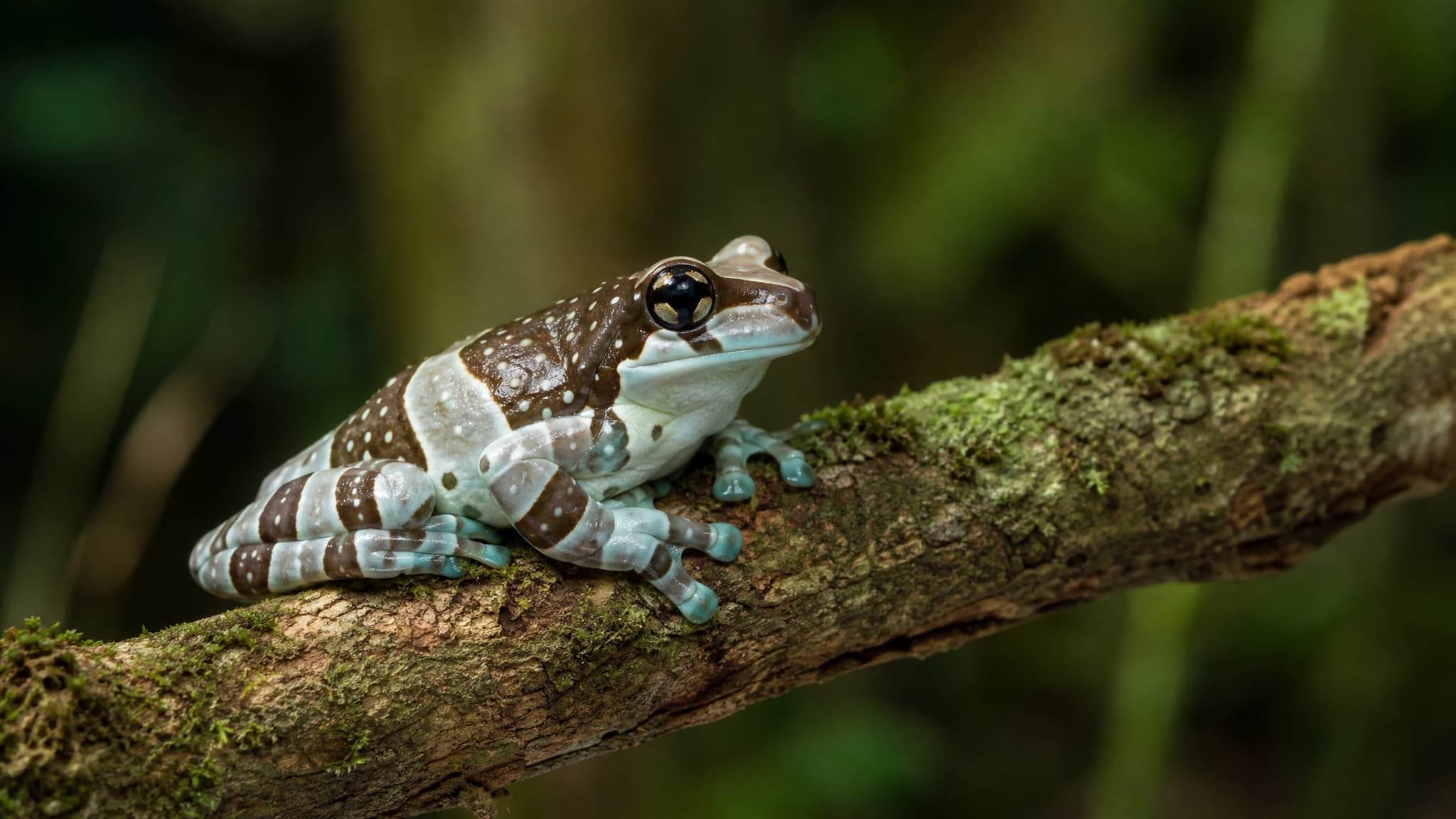
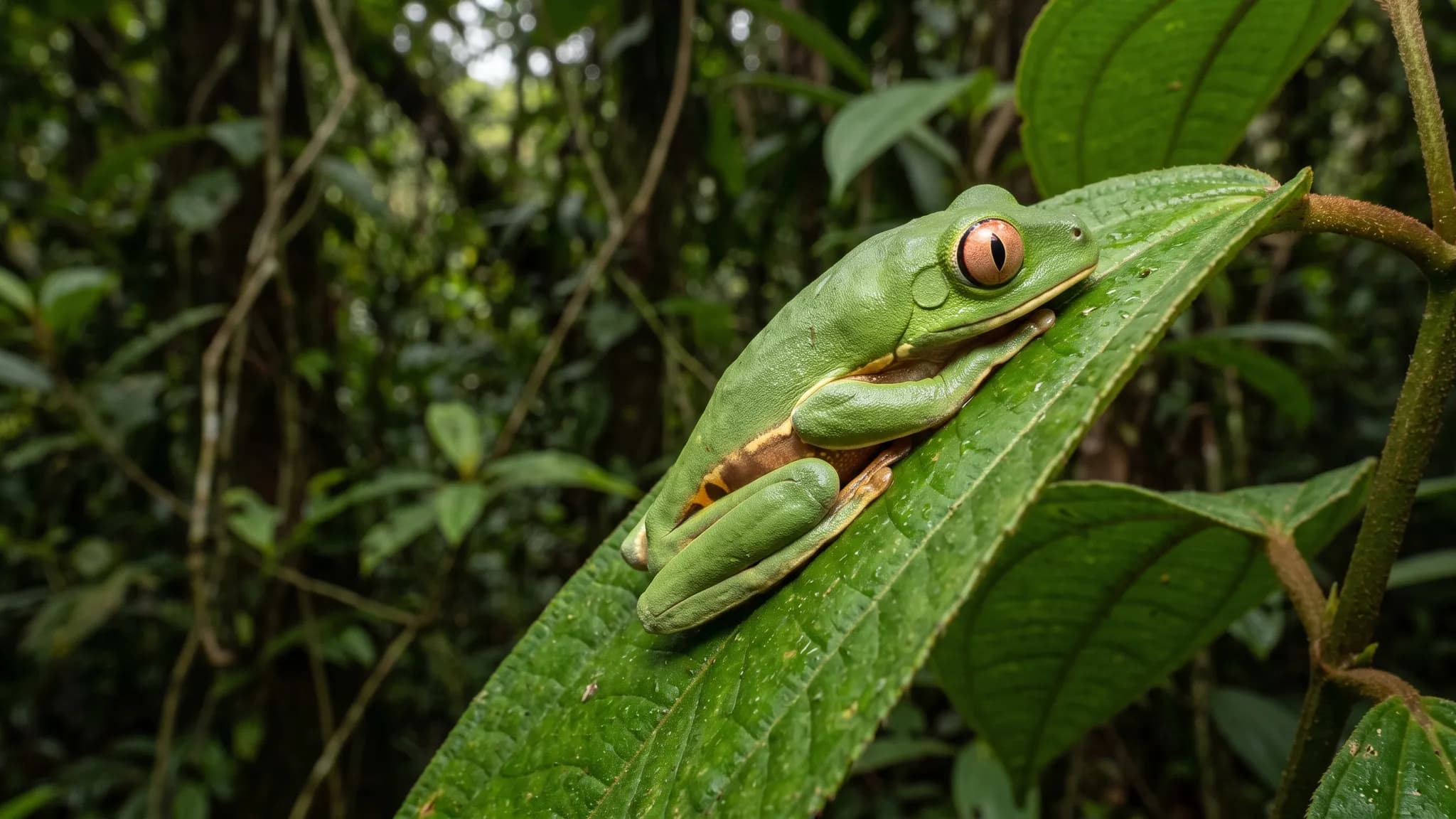
A Brownbelly leaf frog resting on a large green leaf in a forest environment, displaying its vibrant green coloration and large eyes.
Phyllomedusa distincta, commonly known as the brownbelly leaf frog, is a captivating arboreal amphibian endemic to the Atlantic Forest biome of Brazil. Described by B. Lutz in 1950, this species belongs to the family Phyllomedusidae (formerly placed within Hylidae). It is highly adapted to life in the trees, typically thriving in subtropical or tropical moist lowland primary and secondary forests, as well as freshwater marshes at elevations up to 1,000 meters above sea level. These frogs prefer heterogeneous microhabitats and are most frequently observed perching on shrubs near standing water, an environment critical for their reproductive success.
The reproductive behavior of the brownbelly leaf frog is particularly fascinating. Males advertise their presence using a distinct vocal call composed of three pulsed notes, usually grouped in pairs with a slightly descending frequency. The species is known to exhibit polyandry, a mating system where a single female may mate with multiple males simultaneously. During reproduction, females lay their eggs on foliage that directly overhangs permanent bodies of water. Upon hatching, the tadpoles drop from the leaves into the aquatic environment below to complete their metamorphosis into juvenile frogs.
Genetically, Phyllomedusa distincta is a diploid species with a karyotype of 2n=26. In certain syntopic regions of São Paulo State, it coexists with a closely related tetraploid species, Phyllomedusa tetraploidea (2n=52). Remarkably, the two species naturally interbreed to produce viable triploid hybrids (2n=39). These hybrids are not completely sterile, offering scientists a unique opportunity to study natural polyploidy and vertebrate evolution in the wild.
Ecologically, these frogs play a significant role in their habitat, but they face mounting challenges. While globally classified as "Least Concern" by the IUCN due to its broad overall range, the global population is declining. Regional assessments often consider it rare and highly threatened. Habitat fragmentation caused by urbanization, logging, agriculture, and silviculture is the primary global threat. Locally, emerging threats include the introduction of predatory fish like tilapia and devastating outbreaks of Ranavirus, which have caused mass mortalities among tadpoles.
Beyond its ecological importance, Phyllomedusa distincta holds significant biomedical value. Like many leaf frogs, it secretes a cocktail of active molecules from its skin glands. Most notably, these secretions contain antimicrobial peptides known as dermaseptins. Scientific research has demonstrated that these dermaseptins exhibit potent activity against Trypanosoma cruzi, the parasite responsible for Chagas disease, without harming mammalian cells. This unique property underscores the frog's potential in the development of novel therapeutic and prophylactic treatments.