Cuvier's foam froglet
Physalaemus cuvieri
 AI-generated
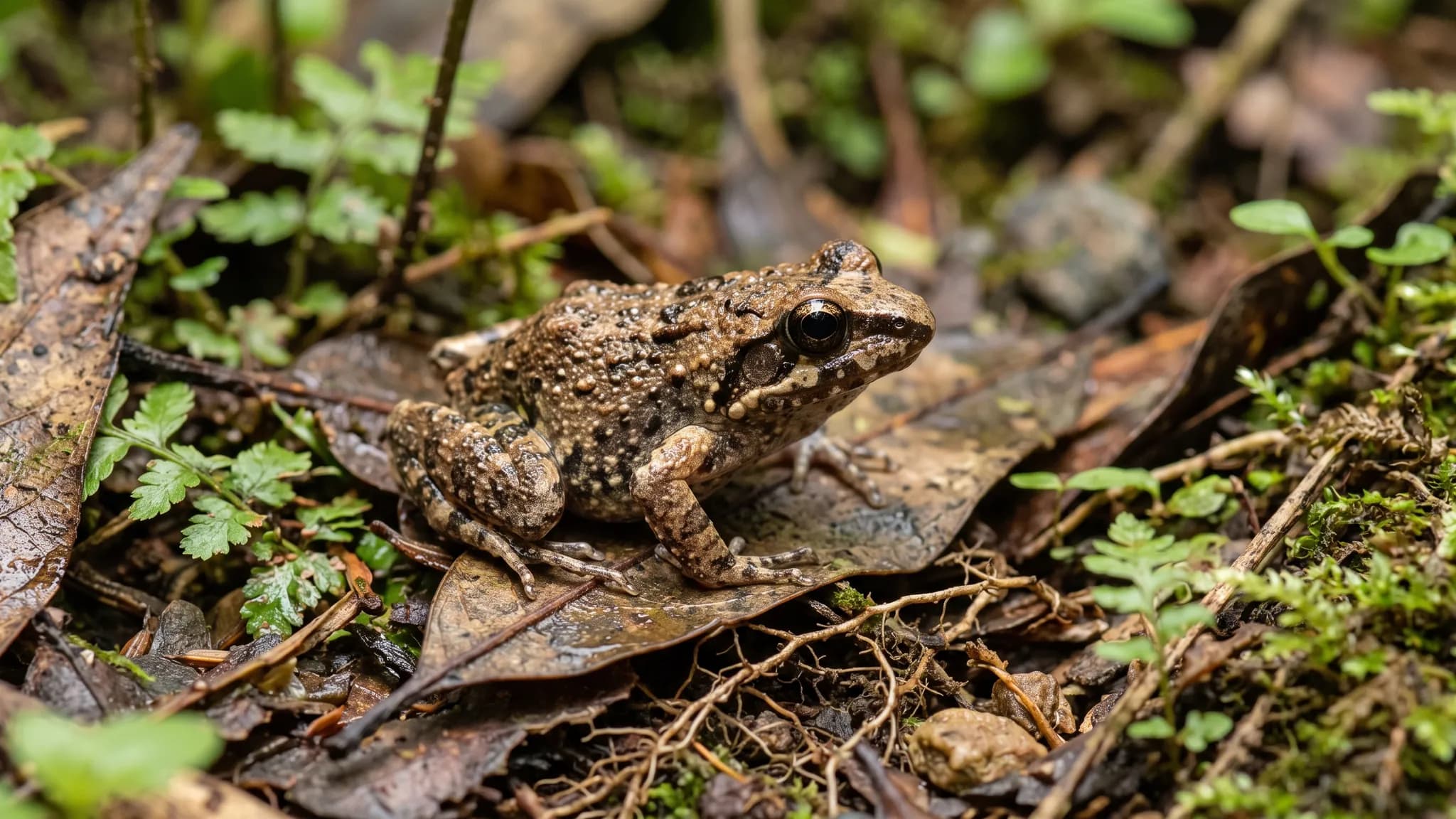
A small brown frog with textured skin sitting on a dry leaf.
Physalaemus cuvieri, commonly known as Cuvier's foam froglet or the Barker frog, is a widespread amphibian belonging to the family Leptodactylidae. Originally described in 1826 by Austrian zoologist Leopold Fitzinger, this species is well known across South America. In Brazil, it is famously referred to as the "rã-cachorro" or dog-frog because its distinctive vocalizations closely resemble the barking of a dog.
The geographic range of this adaptable frog is remarkably extensive, covering much of Argentina, Brazil, Paraguay, and Uruguay, with potential populations in Bolivia and Venezuela. Physalaemus cuvieri is highly adaptable and thrives in a diverse array of ecosystems. It inhabits dense canopies like the Atlantic Forest, open savannahs such as the Brazilian Cerrado, and heavily modified landscapes including flooded grasslands and livestock pastures. It can be found from sea level up to elevations of 2,000 meters (6,562 feet).
As an insectivore, the Barker frog plays a vital role in controlling local invertebrate populations. Studies analyzing stomach contents indicate a diet heavily reliant on termites (Isoptera) and ants (Formicidae). In complex ecological communities where it shares territory with other sympatric frog species, such as Physalaemus atim or Physalaemus kroyeri, this frog maintains a narrow but specialized dietary niche. This resource partitioning enables multiple amphibian species to coexist harmoniously without intense direct competition for food.
The reproductive biology of Physalaemus cuvieri is distinguished by the creation of specialized foam nests. Breeding typically occurs in temporary water bodies like seasonal ponds, small puddles, and even water-filled cow hoofprints. The adult constructs a protein- and carbohydrate-rich foam nest that adheres to blades of grass or vegetation near the water's edge. This nest provides a protective microenvironment that shields the eggs and developing larvae from desiccation, suffocation, and predators, while facilitating the vertical transfer of beneficial microbial communities to the offspring.
The International Union for Conservation of Nature (IUCN) assesses Physalaemus cuvieri as a species of Least Concern (LC). Its vast geographic distribution, large population sizes, and tolerance to habitat modification contribute to this favorable conservation status. However, local populations are not entirely immune to environmental pressures. Significant localized threats include habitat destruction from agricultural expansion, land clearing with fire, pollution of waterways by agricultural runoff and pesticides, and ecological damage caused by gold mining operations.