Red-eyed Tree Frog
Agalychnis callidryas
 AI-generated
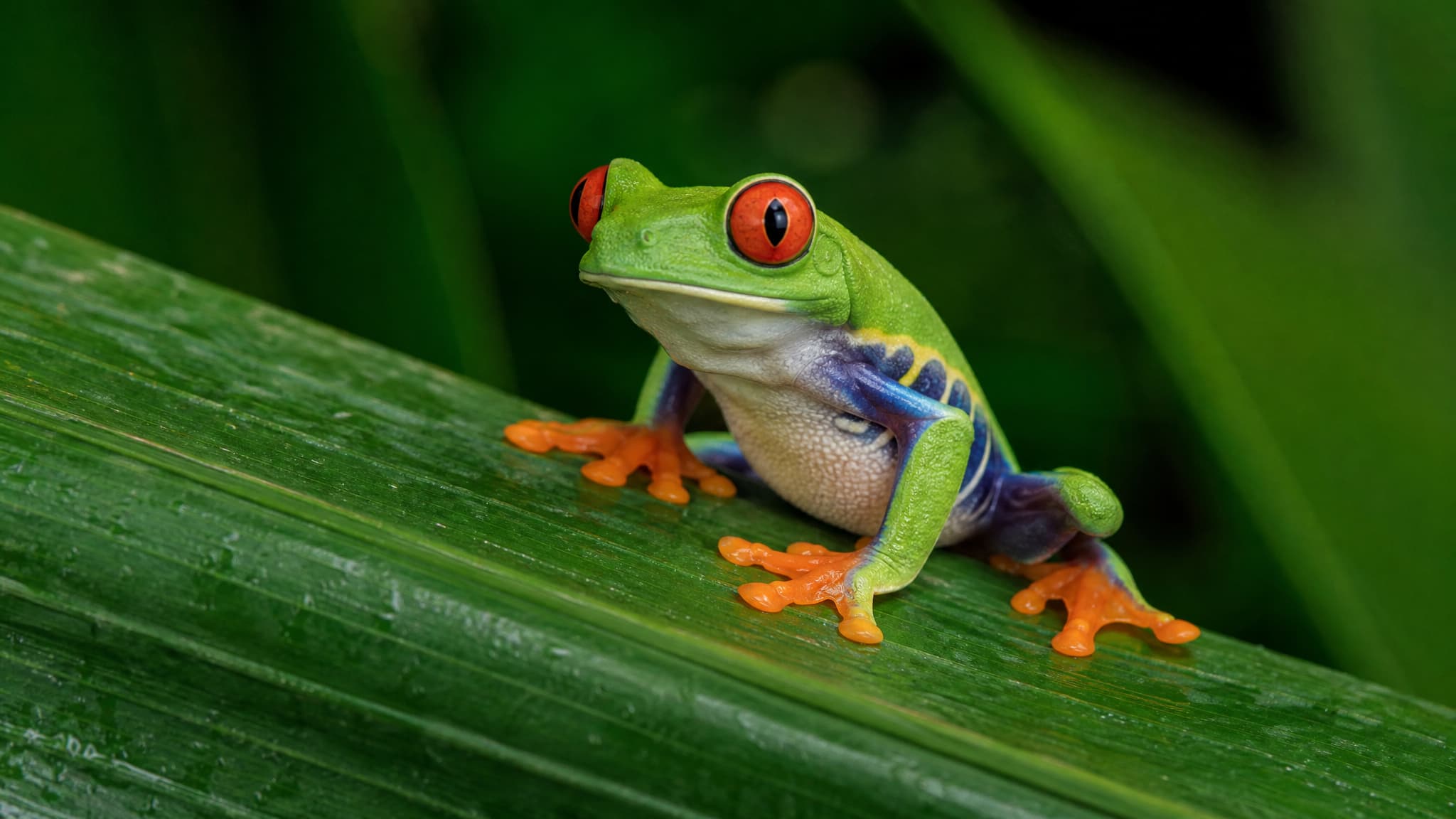
A red-eyed tree frog crouches on a broad green leaf, showing bright red eyes, a green body, orange toe pads, and blue-and-yellow markings along the flanks.
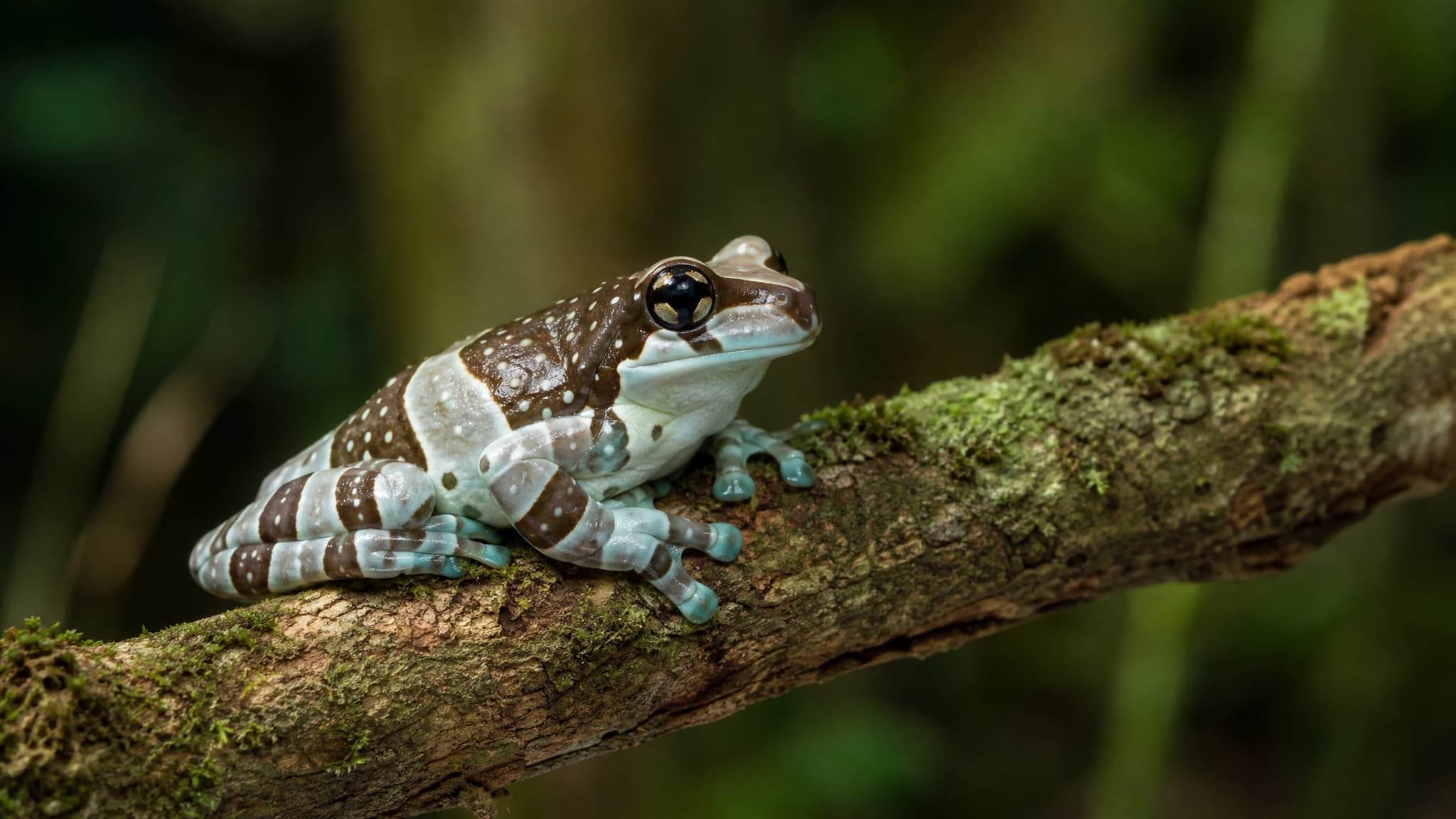
The red-eyed tree frog, Agalychnis callidryas (Cope, 1862), is a nocturnal, arboreal leaf frog in the family Phyllomedusidae. It is one of the best-known Neotropical frogs, recognizable by its leaf-green back, very large red eyes, orange to reddish-orange feet, pale underside, and blue flanks marked with yellow bars. Its smooth body, long limbs, webbed hands and feet, and adhesive toe pads are suited to moving and resting on vegetation. Adults are commonly about 4–7 cm long, with females generally larger than males. (amphibiansoftheworld.amnh.org)
This species occurs from Mexico and Central America south to Colombia, chiefly in humid tropical lowland forests; records extend from sea level to about 1,325 m. It is closely associated with still or slow, freshwater breeding sites such as ponds and swamps, while adults spend much of their time in shrubs and trees. During the day, a resting frog commonly folds its limbs against its body and keeps its eyes shut, so its green coloration blends with foliage; it becomes active at night. (amphibiansoftheworld.amnh.org)
Red-eyed tree frogs are carnivorous, taking insects and other small invertebrates, primarily during nocturnal activity. Males call in wet-season breeding periods and use acoustic and vibrational signals in interactions with other frogs. Reproduction involves external fertilization: eggs are deposited in gelatinous clutches on leaves or other vegetation overhanging water. Under ordinary conditions, embryos hatch after roughly six or seven days and the tadpoles fall into the water below, where they continue development before metamorphosing into froglets. (animaldiversity.org)
The embryos are especially notable for flexible, threat-responsive hatching. When egg-eating snakes, social wasps, flooding, fungal infection, or other hazardous conditions threaten a clutch, embryos can hatch prematurely; during a snake attack, hatching can begin within seconds. This escape strategy can save embryos from egg-stage predators, but it entails a trade-off because younger tadpoles are less developed and can be more vulnerable to aquatic predators. (journals.biologists.com)
Its broad range and occurrence in a variety of humid forest settings provide some resilience, but the species still depends on the persistence of forested habitat and suitable freshwater breeding sites. Habitat conversion, degradation of wetlands and forest edges, disease, and unsustainable collection can pose local pressures; conservation should therefore emphasize protection of connected tropical forest and breeding waters. The sources consulted here did not provide a directly retrievable current IUCN assessment page, so no current Red List category is asserted in this description.