Red king crab
Paralithodes camtschaticus
 AI-generated
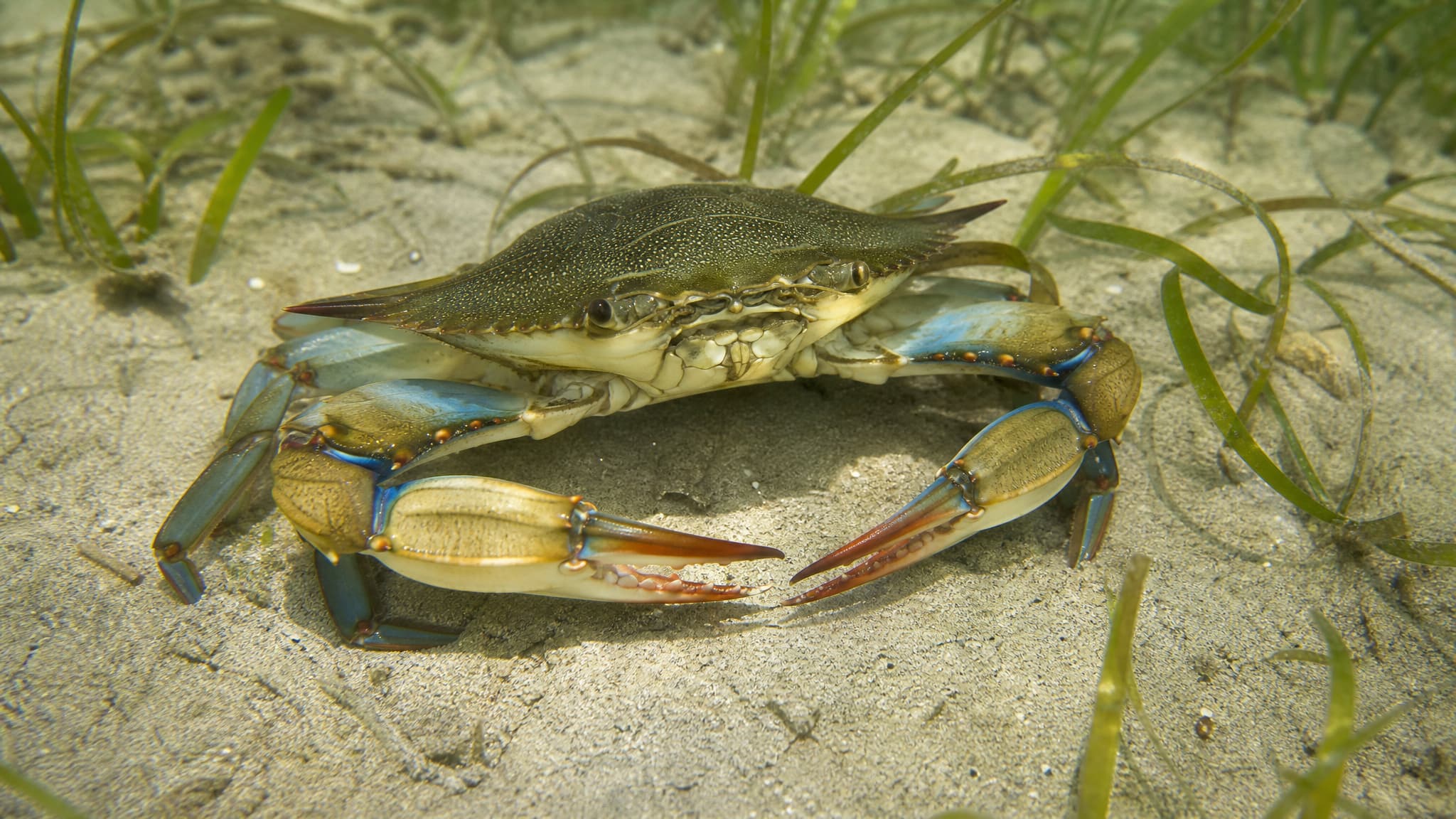
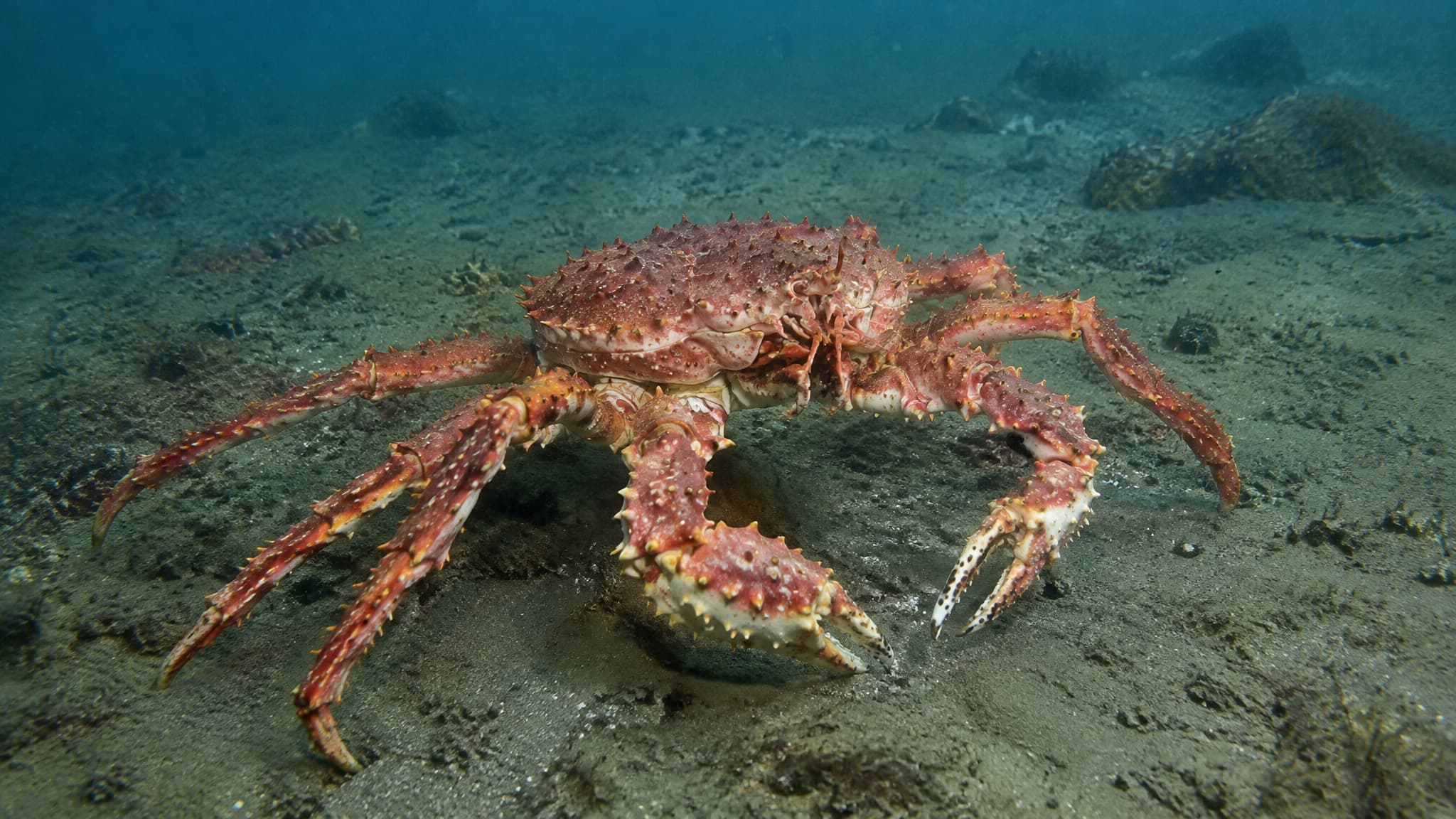
A red king crab rests on the seafloor, facing the camera with its broad, heavily spined reddish carapace, long jointed legs, and prominent claws visible.
The red king crab is a very large, cold-water anomuran crustacean, also called the Alaska king crab or Kamchatka crab. Its armor is dark red to burgundy and conspicuously spiny, with a broad, fan-shaped abdomen folded beneath the body. It has five pairs of legs: the first bears powerful claws, usually with the right claw larger; three pairs serve chiefly for walking; and the small final pair is held beneath the carapace. Males are generally larger than females and can approach a 1.5 m leg span.
This species is native to the northern Pacific and adjoining seas, from waters near Japan and the Russian Far East through the Bering Sea to northwestern North America. Adults live on the seabed, especially over sand and mud, from shallow coastal water to depths exceeding 200 m. It has also been introduced to the Barents Sea, where it is not native. Adults undertake seasonal movements: they generally approach shallower water in late winter and spring for hatching, molting, and mating, then shift offshore to feeding areas.
Red king crabs are opportunistic benthic predators and scavengers. Adults eat a broad range of animals, including mollusks, worms, crustaceans, echinoderms, and fish remains, while larvae feed in the plankton on microscopic plant and animal food. Juveniles may form dense aggregations, or pods, which can reduce the danger of predation and vulnerability during molts. In turn, the species is eaten by fishes, octopuses, sea otters, and other crabs; egg masses may be attacked by specialized ribbon worms.
Females carry thousands of fertilized eggs on abdominal appendages for about a year. The eggs hatch into free-swimming larvae that pass through several molts before settling to the seafloor as young benthic crabs. Sexual maturity is commonly reached after roughly four to six years, and large individuals may live about 20–30 years. The species is an important predator and prey item in northern marine food webs and supports valuable fisheries. It is not globally assessed on the IUCN Red List, but regional populations are closely managed because abundance, recruitment, fishing pressure, and fishery openings differ among stocks.